domingo, 29 de marzo de 2020

FOLLE ENVOLÉE DES STRADIVARIUS, VIOLONS D'EXCEPTION


Par Anna Rousseau 
Avec de réguliers records de prix, ces violons d’exception sont devenus de véritables placements. Ils attirent mécènes, spéculateurs et… mafieux.
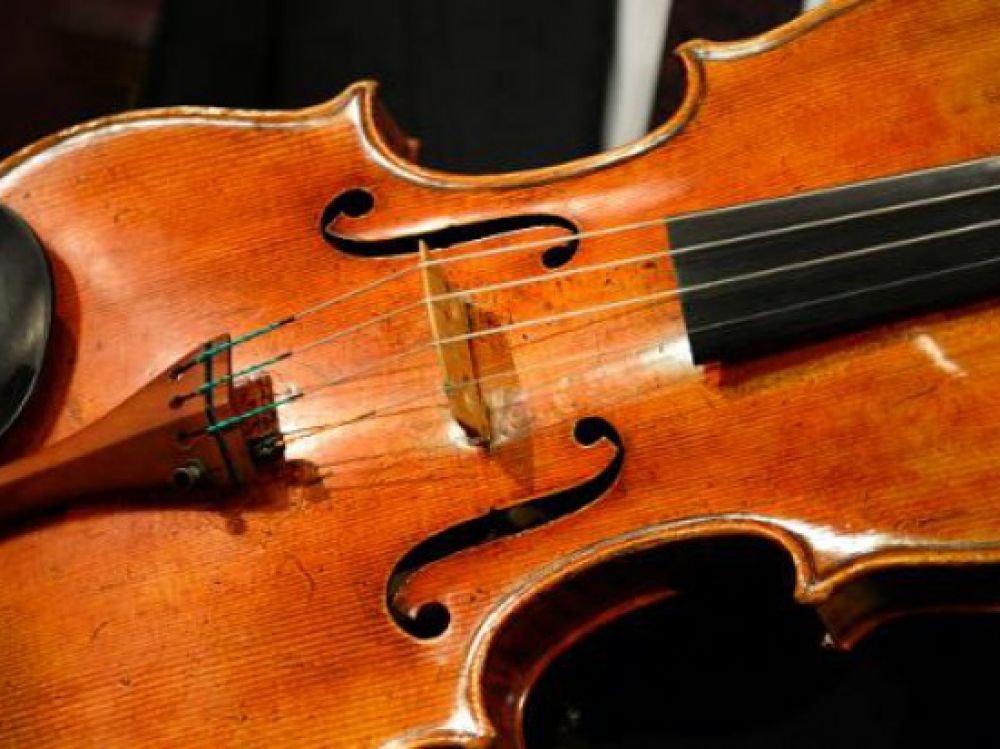


Le "Macdonald", alto conçu en 1719 par Antonio Stradivari (164-1737)

(C) AFP

Valentino Giordano est à terre, en sang, une balle dans l’estomac. Il sait qu’il va mourir mais refuse de parler. "L’un des malfrats s’empare alors du 7,65 et tire deux balles à bout portant dans la nuque du supplicié." Selon le rapport établi par les carabiniers italiens, c’est ainsi que la Carnazza, une branche turinoise de la mafia, exécuta Valentino Giordano, dit "le Gitan", à l’automne 1989. Deux ans auparavant, ce truand solitaire avait volé un stradivarius, baptisé le Kochanski. Au lieu de le donner à la Carnazza, comme convenu, il avait préféré le vendre lui-même, en se faisant rouler au passage par un receleur habile. "L’organisation a tué Valentino parce que la bande et le Gitan n’avaient pas les mêmes projets concernant le stradivarius : la Carnazza comptait en tirer un maximum d’argent ; en s’en débarrassant rapidement, et à bas prix, auprès d’un receleur, le Gitan signait son arrêt de mort", raconte le soliste Pierre Amoyal, propriétaire du Kochanski, dans son ouvrage de souvenirs, Pour l’amour d’un stradivarius (éditions de la Loupe, 2004).

Solistes chanceux
A l’époque du vol, en 1987, le Kochanski vaut 2 millions de francs suisses (l’équivalent de 1,1 million d’euros actuels). Il avait été acquis en 1975 pour 90 000 livres (176 000 euros) : sa valeur avait été multipliée par 6 en douze ans. Aujourd’hui, il est estimé autour de 6 millions d’euros. Les stradivarius n’ont jamais été bon marché, même à l’époque de leur fabrication. La famille Hill, dont l’expertise en instruments anciens remonte au XVIIIe siècle, avança l’hypothèse dans l’ouvrage de référence Stradivarius, His Life and Work (Dover Publications, 1902) que le maître luthier devait vendre ses violons autour de 4 louis d’or, une somme confortable pour l’époque.

La renommée du luthier, déjà célèbre de son vivant, augmenta sans discontinuer après sa mort. Les prix de ses instruments, cependant, restèrent abordables jusqu’au milieu du XXe siècle. Les meilleurs solistes pouvaient alors encore s’offrir leur propre stradivarius : "Mon Kreisler fut vendu en 1958 pour 8 000 dollars, racontait Maxim Vengerov en juin 2018 au magazine américain The Strad. Pour remettre les choses dans leur contexte, Nathan Milstein gagnait autour de 3 000 dollars par concert à l’époque, il ne lui aurait fallu que quelques concerts pour se l’offrir. Heifetz et Oistrakh possédaient deux ou trois stradivarius. Aujourd’hui, il faudrait payer l’équivalent d’une vie de cachets ou faire un gigantesque prêt."

Superstar mondiale, Vengerov fut l’un des derniers solistes au monde à pouvoir s’offrir son propre stradivarius, le Kreutzer, en 1998, pour 1,5 million de dollars. Car, au fur et à mesure que les siècles passaient sans altérer l’excellence des stradivarius, et surtout à partir des années 1960, où le Japon puis la Chine commencèrent à enseigner la musique classique à des millions d’enfants, le marché explosa. Violons, altos et violoncelles sont désormais des investissements décidés par de grands groupes industriels et financiers, qui les prêtent ensuite aux meilleurs solistes, chacun renchérissant la renommée de l’autre.

Vols commandités
C’est la politique de LVMH, qui possède trois stradivarius - deux violons et un violoncelle. "Nous assurons toutes les charges, l’entretien, les révisions, les travaux de fond et l’assurance, explique Jean-Paul Claverie, conseiller en mécénat du groupe. Notre récompense, c’est le succès des musiciens." Des musiciens devenus dépendants de ces prêts. "Cette spirale qui monte toujours plus haut ne s’arrêtera pas, affirme Michael Zuber, un violoniste suisse également expert en instruments anciens. Enchères après enchères, on a vu les violons italiens passer le million de dollars, puis quelques-uns les 5, les 10 millions. Désormais, les violons français du XIXe, Vuillaume en particulier, s’approchent du million à leur tour. Les nouveaux objectifs sont déjà en vue : une famille américaine a tenté de vendre un alto stradivarius plus de 40 millions de dollars aux enchères en 2015, mais cela a échoué - pour le moment. En revanche, un Guarnerius del Gesu a bel et bien passé la barre des 20 millions de dollars l’été dernier."

La valeur croissante de ces objets d’art n’a pas échappé au grand banditisme, qui a commencé à spéculer à sa façon : les vols commandités, soigneusement préparés, ont nettement augmenté ces quarante dernières années. Des instruments ont disparu de la surface du globe, comme le stradivarius Morini, volé dans un appartement de Manhattan en 1995 sans signes d’effraction, ou le Colossus, volé à Rome en 1998, sans qu’aucune porte n’ait été forcée. Le cas du stradivarius Marien, volé à Manhattan en 2002, est digne d’un Arsène Lupin : le violon disparut alors qu’il se trouvait dans une pièce fermée et sécurisée, alarme branchée, dans les locaux d’un marchand d’art, avec des employés dans les pièces attenantes…

Le braquage le plus violent date du 27 janvier 2014. Ce soir-là, après un concert de musique de chambre, le soliste au Milwaukee Symphony Orchestra, Frank Almond, traverse le parking désert pour prendre sa voiture. Soudain, un homme surgit, armé d’un taser. Il terrasse le musicien et s’enfuit avec son stradivarius Lipinski, estimé à 5 millions de dollars, à bord d’un minivan conduit par un complice. Moins d’un an plus tard, la police de Milwaukee, épaulée par la division Art Crime du FBI, retrouve l’instrument. Le vol était… un investissement. "Le plan de ces individus était de cacher le Lipinski pendant des années puis de le remettre sur le marché", expliqua Edward Flynn, le chef de la police de Milwaukee.

Marché infini
Les prix atteindront-ils un plafond ? "J’en doute, affirme Christian Bayon, l’un des plus grands luthiers contemporains. Un stradivarius coûte moins cher qu’un Andy Warhol, moins cher qu’un petit impressionniste, moins cher qu’un Banksy…" C’est un placement sûr, dans un marché mondial perpétuellement haussier. "Nous recevons tous les jours des appels de banques ou d’investisseurs à la recherche d’instruments anciens, confirme Etienne Laurent, commissaire-priseur de Vichy Enchères. Et cela atteint maintenant les archets : nous avons enregistré un record mondial fin 2017, avec un archet à 576 000 euros." Dans la petite ville de Crémone, on disait déjà, de son vivant, "riche comme Stradivarius". La voix populaire ne se doutait pas à quel point elle parlait d’or.


Les nouveaux maestros de la lutherie
Depuis une vingtaine d’années, une poignée de luthiers, comme Christian Bayon à Lisbonne, Stefan-Peter Greiner à Bonn, Patrick Robin à Angers ou Samuel Zygmuntowicz à New York révolutionnent la fabrication des instruments à corde. "Beaucoup d’instruments modernes sonnent aussi bien que des Stradivarius, et quelques-uns des miens sonnent même mieux !, confirme avec malice Christian Bayon. Même si les meilleurs des instruments anciens restent inégalés à ce jour." Comme ses confrères, le Français pratique des prix très modestes au regard de l’extrême qualité de ses instruments : 25 000 euros pour un violon, 50 000 pour un violoncelle. Zygmuntowicz est le plus cher : en mai 2019, l’un de ses instruments a été vendu 132 000 dollars aux enchères. Les solistes sont nombreux à préférer désormais acheter leurs instruments, qui leur permettent de ne pas dépendre d’un mécène et avec lesquels il est surtout moins risqué de voyager.

SOURCES : WILLIAM E HILL, LIFE AND WORK OF STRADIVARIUS (DOVER, 1902), SOLISTES, TARISIO.

https://www.challenges.fr/luxe/la-verite-sur-la-folle-envolee-des-stradivarius_704235#xtor=EPR-1-[ChaActu10h]-20200329

LA ÚLTIMA CANCIÓN EN MUCHO TIEMPO. BOB DYLAN PRESENTÓ "MURDER MOST FOUL", UN TEMA INÉDITO DE CASI 17 MINUTOS


Bob Dylan, en una mirada histórica sobre la decadencia norteamericana a partir del asesinato de J. F Kennedy Fuente: Archivo

Marzo 27 de 2020 además de ser otro día de estadísticas de infección y muerte alrededor del mundo quedará como la fecha en la que Bob Dylan publicó su primera canción nueva en ocho años . "Murder most foul" apareció esta mañana en Spotify y YouTube, y si bien no puede establecerse ninguna relación con la pandemia, la imagen del single virtual muestra una foto del presidente Kennedy antes de ser asesinado en Dallas, el 22 de noviembre de 1963.

En 17 minutos de extensión, Dylan, en modo Goyeneche, convierte la historia del mayor magnicidio de la posguerra en una suerte de saga nórdica donde los hechos se funden con una sucesión de citas a la cultura pop y el jazz, en lo que parece una inmersión al fondo del sueño y la pesadilla americana. Si bien la canción fue grabada tiempo atrás, la aparición del fantasma de Kennedy en estos días, una imagen que persigue a la conciencia estadounidense, no puede evitar leerse en la clave geopolítica del presente o de cómo el mundo fue de JFK a Donald Trump. Como hace casi sesenta años atrás, Dylan no es un cantor de protesta sino una conciencia expandida de la cultura en que se formó y a la que decididamente contribuyó a transformar.

"Murder most foul" es una larga excursión minimalista de piano, violín y ocasionales toques percusivos cuya estructura recurrente gira en círculos como en un loop. La idea pop de estrofa y estribillo deja lugar aquí a una narración informe donde las variaciones se registran con la sutileza de un sismógrafo: la canción, como la tierra, se mueve pero apenas lo podemos notar. Dylan comienza con un comentario de la historia, como si esta le fuera ajena a su propia época, un cuento venido de más lejos. "Era un día oscuro en Dallas, noviembre del 63, y ese día vivirá en la infamia, el presidente Kennedy estaba en lo alto, buen día para estar vivo y buen día para morir. Llevado a la carnicería como un cordero sacrificial. Él dijo 'Un minuto muchachos, ¿Saben quién soy yo?' 'Por supuesto que lo sabemos'. Y entonces le volaron la cabeza cuando todavía estaba en el auto. Bajado como un perro a plena luz del día".

El nombre de la canción, "El asesinato más asqueroso", impreso en letras góticas sobre la foto de JFK, hace referencia a una película inglesa de 1964 filmada por George Pollock en base a una adaptación libre de la novela de Agatha Christie Mrs McGinty's dead , editada por primera vez en los Estados Unidos en 1952. Fue la tercera interpretación de la actriz Margaret Rutherford de Miss Marple, uno de los personajes más notorios en la narrativa policial de Christie que la incluyó en trece de sus novelas. Pero Dylan no pretende ponerse aquí en el lugar de Miss Marple para ofrecer una tardía solución al caso (lo que la venerable anciana de Christie hacia para Scotland Yard) sino que usa su memoria como un drone que sobrevuela el tiempo que pasó desde el imborrable crimen político. Con la voz clara, lo oímos susurrar: "El lugar donde la fe, la esperanza y la caridad murieron. Dispárale mientras corre, chico. Dispárale mientras puedas. Mira si puedes dispararle al hombre invisible. Adiós Charlie, adiós Tio Sam. Francamente, señora Scarlett, me importa un carajo".

BOB DYLAN - MURDER MOST FOUL (OFFICIAL AUDIO)


De a poco, las reflexiones sobre la testa acribillada de JFK se entremezclan con el universo pop. "Silencio, chicos. Ya entenderán. Los Beatles están viniendo, van a sostener tu mano. Deslízate por la baranda, ve a buscar tu abrigo. Ferry cruza el Mersey y va por la garganta. Hay tres vagabundos que vienen vestidos de harapos. Recoge las piezas y baja las banderas. Voy a Woodstock es la era de Acuario. Luego iré a Altamont y me sentaré cerca del escenario". Dylan utiliza en ese párrafo (es mas pertinente que decir estrofa) el título de la canción "I want to hold your hand" como texto y como una introducción a una vista panorámica de los 60, a partir de la llegada de Los Beatles a Estados Unidos en 1964 (una inyección de vida tras el asesinato), la ambiciosa promesa de establecer una "nación" en Woodstock y el posterior desastre de Altamont, el Ezeiza de los Stones.

El primero y el último, Dylan va recogiendo del suelo de la memoria pop frases sueltas que hace suyas en esta voz de crooner crepuscular, extendido más allá de todo lo previsto. Canta, dice, "Don't let me be misunderstood" (The Animals); "Tommy can you hear me, I'm the acid queen" (The Who); "You got me Dizzy miss Lizzy" (Beatles); "What's new pussycat" (Tom Jones); "What I've said" (Ray Charles). Luego como si fuera el último a la mesa de un bar metafísico pide (¿A una orquesta? ¿A un pianista? ¿La radio?) que toquen Oscar Peterson, Stan Getz, Art Pepper, Thelonius Monk, Charlie Parker, Buster Keaton, Nat King Cole, "El mercader de Venecia", "Another one bite the dust" (¡!) y una larga, interminable, lista. Pide que toquen para Don Henley y Glenn Frey (The Eagles); para Lindsey y Stevie (Fleetwood Mac) y para Marilyn Monroe y él.

La nueva canción de Dylan, a los casi 79 años, es texto puro. Es la cultura pop como texto y eso es lo que a la larga el Nobel terminó reconociendo más allá de su estatus de poeta. Una larga meditación que se va como llega, un intercambio trémulo de notas de piano y el ronroneo sordo del arco sobre las cuerdas de un violín. Con esa calidad de meditación suspendida, al fin, el Kennedy de Dylan se parece más a las serigrafías pop de Warhol sobre Jackie que a las indagaciones de Norman Mailer sobre Harry Lee Oswald. Lacónico Dylan lanzó un breve comunicado para anunciar "Murder most foul": "Saludos a mis fanáticos y seguidores con gratitud por su lealtad y apoyo a lo largo de los años. Esta es una canción que grabamos hace un tiempo que podría interesarte. Mantente a salvo, mantente a atento y que Dios esté contigo. Bob Dylan".

https://www.lanacion.com.ar/espectaculos/musica/la-poesia-sigue-salvo-cancion-bob-dylan-nid2348121

ARE THESE THE MOST BEAUTIFUL GARDENS IN ART?


From Sargent to Sorolla, Jonas Wood to Winston Churchill, Berkshire to Bali — how artists have found solace and inspiration in gardens the world over

1Édouard Manet (1832-1883)The Monet Family in Their Garden at Argenteuil, 1874
On a summer’s day in 1874, Édouard Manet had just finished posing Claude Monet’s wife Camille and son Jean in the garden of the family home near Paris when their friend and fellow painter Pierre-Auguste Renoir appeared. Inspired by the scene but woefully unprepared, Renoir asked to borrow a canvas, a brush and some paint from Monet, so he could stand alongside and paint Monet’s family at the same time.


Edouard Manet, The Monet Family in Their Garden at Argenteuil, 1874. Oil on canvas. 61 x 99.7 cm. The Metropolitan Museum of Art, New York. Bequest of Joan Whitney Payson, 1975. Photo: © The Metropolitan Museum of Art / Art Resource / Scala, Florence

Monet’s garden at his rented house at Argenteuil was filled with mature trees and flowerbeds bursting with dahlias, poppies and hollyhocks, and while Manet painted him in this picture tending to his precious garden, in reality that afternoon Monet was standing behind both Manet and Renoir, also with brush in hand, painting Manet in a now lost work.

Later that day, Manet turned to Monet and said of Renoir: ‘He has no talent, that boy! Since you are his friend, tell him to give up painting!’

2Gustav Klimt (1862-1918)Farm Garden with Sunflowers, 1905-06
Farm Garden with Sunflowers  was painted during one of Gustav Klimt’s annual summer holidays at Lake Attersee, in the mountains outside Salzburg. It is thought that the unusual composition, with clusters of small flowers growing right the way up the canvas — higher, in fact, than the heads of the sunflowers — reflects the garden having been planted on a steep slope.


Gustav Klimt, Farm Garden with Sunflowers, 1905-6. Oil on canvas, 110 x 110 cm. Osterreichische Galerie Belvedere, Vienna, Austria. Photo Artothek  Bridgeman Images

Klimt’s use of thick brush strokes and pure colours in his flower paintings was, in part, inspired by his visit to a Van Gogh exhibition at the Galerie Mietthke in Veinna. By adopting the Dutch painter’s techniques and applying them to his own style of ‘Impressionism meets Pointillism’, Klimt was able to create these impactful, verdant pictures.

3John Singer Sargent (1856-1925)Carnation, Lily, Lily, Rose, 1885-86
Every evening for three months in 1885, the American artist John Singer Sargent would carefully arrange his models — 11-year-old Polly and seven-year-old Dolly, the daughters of the illustrator Frederick Barnard — in the gardens of Farnham House in Worcestershire, England. Then, he would paint rapidly for two to three minutes to capture the light of the setting sun. The house belonged to the American artist F.D. Millet, with whom Sargent was staying, and the original subject of this painting had been Millet’s son.


John Singer Sargent (1856-1925), Carnation, Lily, Lily, Rose, 1885-86. Oil on canvas. 218.5 x 197 cm. Photo © Tate

As autumn encroached and the light began to fade, Sargent had to replace the white lilies with artificial replicas. In the summer of 1886 he returned to the painting, this time in the garden of nearby Russell House, and finished it that October.

4The Master of the Tiburtine Sibyl The Virgin and Child in a Walled Garden, 1468
This is an important early devotional painting by the Master of the Tiburtine Sibyl, an anonymous master who is thought to have travelled to Haarlem sometime around 1480-82, where he established a thriving workshop.

This setting is a reference to the hortus conclusus, a sacred precinct dedicated to the Virgin and an earthly representation of Paradise. Mary’s luxurious robes reflect her status as Queen of Heaven. With her left hand, she picks one of three flowers from a single plant on the stone ledge that serves as her throne. These small white flowers may be read as a symbol of the Trinity.


 The Master of the Tiburtine Sibyl (active Leuven and Haarlem, c. 1470-1490), The Virgin and Child in a Walled Garden. Oil on panel. 14 x 9¼  in (35.6 x 23.5  cm), with an addition of approximately ¼  in along the right edge. Sold for £668,750 on 5 July 2018 at Christie’s in London

On the ground before them are wild strawberries, emblematic of the wounds of Christ. This fruit may also represent the Trinity, since the leaves on the stems of wild strawberry plants occur in sets of three.

5Pierre-Auguste Renoir (1841-1919)Woman with a Parasol in a Garden, 1875
In Woman with a Parasol in a Garden, Pierre-Auguste Renoir brilliantly creates the impression of a summer garden by applying flicks of pale pink, yellow, red, blue and green paint using the end of a large brush. The scene he creates is a wild, verdant landscape filled with light, movement and texture.


Pierre-Auguste Renoir, Woman with a Parasol in a Garden, 1875. Oil on canvas. 54.5 x 65 cm. Museo Nacional Thyssen-Bornemisza, Madrid. Photo Bridgeman Images

It is thought that Renoir painted Woman with a Parasol in a Garden  at his studio in Montmartre, in 1875 or 1876. The studio was surrounded by a large garden, and Renoir's friend, the art critic George Rivière, recalled the moment the painter first laid eyes on the space: ‘As soon as Renoir entered the house he was charmed by the view of this garden, which looked like a beautiful abandoned park’.

6Stanley Spencer (1891-1959)Wisteria at Englefield, 1954
Sir Stanley Spencer's Wisteria at Englefield  was painted across five weeks in the spring of 1954 in Cookham, Berkshire. It was the third of five commissions from Gerard Shiel, the owner of Englefield House, which was known locally for its gardens.


Sir Stanley Spencer, R.A. (1891-1959), Wisteria at Englefield, 1954. Oil on canvas. 30 x 20  in (76.3 x 50.8  cm). Sold for £962,500 on 25 June 2015 at Christie’s in London. Artwork © Stanley Spencer Gallery, Cookham, Berkshire, UK  Bridgeman Images

The finely detailed foliage of the wisteria’s finishing bloom, which consumes the contrasting brickwork, highlights Spencer’s skill and analytical eye when painting en plein air — as well as his love of his native Cookham, a place he called his ‘village in heaven’.

7Claude Monet (1840-1926)La Maison de l’artiste à Giverny, 1912
‘I owe it to flowers that I became a painter,’ Claude Monet, the most famous painter of gardens, once said. The garden the artist created at his home in Giverny attracts more than 600,000 visitors each year.


Claude Monet (1840-1926), La Maison de lartiste à Giverny, 1913. Oil on canvas. 28¾ x 36¼ (73 x 92  cm). Sold for $4,711,500 on 3 November 2004 at Christie’s in New York

Alongside the famous lily pond, Monet created a classic French flower garden — seen here from the northwest. In dozens of beds laid out at right angles along gravel paths, Monet planted roses, poppies, peonies, lilies, foxgloves and arches of climbing clematis, all carefully planned to provide changing seasons of colour.

8Joaquín Sorolla (1863-1923)Louis Comfort Tiffany, 1911
In May 1911 Louis Comfort Tiffany invited the Spanish painter Joaquín Sorolla to Laurelton Hall, his 84-room Moorish mansion set on 580 acres on Long Island.


Joaquín Sorolla y Bastida, Louis Comfort Tiffany, 1911. Oil on canvas, 162.6 x 238.8 cm. Gift of Mrs Francis M. Weld (née Julia DeForest Tiffany), 1950. Courtesy of the Hispanic Society of America, New York

Although formal portraiture was not Sorolla’s preference, he could usually be persuaded by the prospect of sunlight and painting outdoors. Tiffany, dressed in a crisp summer suit, posed with his dog before his own easel.

The setting is Laurelton’s waterfront patio, surrounded by huge, dense blooms of potted yellow, white and purple flowers, with the shimmering waters of Long Island Sound in the background. Laurelton hall burnt down in the 1950s; the painting is now owned by the Hispanic Society of America.

9Adrien-Jean le Mayeur de Merprès (1880-1958)Women Around the Lotus Pond, 1950-51
In 1932, aged 52, the Belgian artist Adrien-Jean le Mayeur de Merprès decided to settle on Bali. ‘There are three things in life that I love,’ he said. ‘Beauty, sunlight and silence. Now could you tell me where to find these in a more perfect state than in Bali?’


Adrien-Jean le Mayeur de Merprès (1880-1958), Women Around the Lotus Pond, circa 1950-1951. Oil on canvas. 150 x 200  cm (59 x 78¾  in). Sold for HK$30,360,000 on 30 May 2016 at Christie’s in Hong Kong. Artwork © DACS 2020

Le Mayeur de Merprès’ Women Around the Lotus Pond  depicts a group of 15 Balinese dancers parading around an ornamental pond decorated with Hindu carvings. The tropical oranges, reds and yellows cast a warm glow over their faces and bodies, just as the pink water of the pool reflects the sunlight streaming through the vines.

10Vincent van Gogh (1853-1890)Daubigny’s Garden, 1890
Two months before taking his own life, Vincent van Gogh relocated from an asylum in Provence to Auvers-sur-Oise, just outside Paris. ‘It is profoundly beautiful,’ he wrote to his brother Theo. ‘It is the real country, characteristic and picturesque.’


Vincent van Gogh, Daubigny’s Garden, June 1890. Oil on canvas, 50.7 x 50.7 cm. Van Gogh Museum, Amsterdam. Photo Bridgeman Images

Auvers-sur-Oise was also where one of van Gogh’s favourite artists, Charles-François Daubigny (1817-1878), had lived. Daubigny was a celebrated landscape painter and Van Gogh was eager to paint the garden of his former home.

Lacking the essential materials, he decided to use only what he had to hand — a red and white tea towel, possibly taken from the kitchen of the Auberge Ravoux, a local inn where he was staying. He covered the cloth with a thick, pink layer of ground which can still be glimpsed between the powerful, fluid strokes of paint.

11Winston Churchill (1874-1965)Garden Scene, circa early 1920s
Deflated by the horrors of World War I, where his ill-planned Gallipoli strategy had cost him his job, Winston Churchill turned to painting as a means for solace. ‘[It] came to my rescue in a most trying time,’ he later wrote in his book, Painting as a Pastime.

The statesman possessed a natural flair, working mostly en plein air around the British countryside. ‘Just to paint is great fun,’ he once remarked. ‘The colours are lovely to look at and delicious to squeeze out.’

Sir Winston Churchill, O.M., R.A. (1874-1965), Garden Scene, painted in the early 1920s. 29 x 24  in (73.6 x 61  cm). Sold for £170,500 on 21 June 2016 at Christie’s in London

Garden Scene was most likely painted in the grounds of Knebworth House in Hertfordshire, which was at the time owned by Lady Constance Bulwer-Lytton, a radical suffragette who in 1909 had been sent to prison for throwing a stone at the Chancellor of the Exchequer Lloyd George’s car. Today, Churchill’s studio at Chartwell, his former home in Kent, is run by the National Trust.

12Jan Brueghel II (1601-1678) and Hendrick van Balen (1575-1632)The Madonna and Child Seated in a Garden with Putti, Birds and Animals, 1626-27
This painting has been dated to 1626-27, just after Jan Brueghel II’s return from Italy following the unexpected death of his father, Jan Brueghel the Elder.


Jan Brueghel II (Antwerp 1601-1678) and Hendrick van Balen (Antwerp 1575-1632), The Madonna and Child Seated in a Garden with Putti, Birds and Animals. Oil on panel. 32⅛ x 47¾  in (81.5 x 121.3  cm). Sold for £388,750 on 11 July 2001 at Christie’s in London

Jan Brueghel the Younger chose to represent paradise as a garden of potted plants, with a fountain just visible in the background. His finely detailed flowers, leaves and fruits are testament to his skill as a painter of still lifes, as well as the 17th-century obsession with studying the natural sciences. In fact, his father was given the nickname ‘Flower Brueghel’. The staffage in this work was painted by the Antwerp-born artist Hendrick van Balen (1575-1632).

13John Leslie Breck (1860-1899)Garden, Ironbound Island, Maine, circa 1896
A pioneer of the early American Impressionist movement, John Leslie Breck spent several years at Giverny in the inner circle of Claude Monet, who undoubtedly influenced both the subject matter and stylistic execution of his garden paintings.

This is the garden of a house belonging to Margaret Blaney, the daughter of Breck’s fellow American Impressionist Dwight Blaney. The house is situated on Ironbound, a private island owned by the Blaneys in Maine, near Frenchman Bay.


John Leslie Breck (1860-1899), Garden, Ironbound Island, Maine, painted circa 1896. Oil on canvas. 28½ x 48½  in (72.4 x 123.2  cm). Sold for $1,447,500 on 22 November 2016 at Christie’s in New York

Monet’s influence is evident in In Garden, Ironbound Island, Maine, although the distinct New England landscape and the vibrant, high-keyed palette distinguish Breck’s brand of Impressionism. And as the historical garden expert May Brawley Hill points out, contemporary photographs of Margaret Blaney’s garden show there were few flowers, suggesting that Breck employed his artistic license when painting such an ‘an unlikely profusion’.

14English SchoolKing Charles II Being Presented with a Pineapple by the Royal Gardener, John Rose, in the Formal Gardens of an Estate, circa 1677
The garden and house in this painting are probably fictitious but represent the formal style employed by John Rose, the King’s Gardener, who also oversaw the gardens of St. James’s Park (opposite Buckingham Palace). Rose published The English Vineyard Vindicated  in 1666 with a dedication to Charles II: ‘The Prince of Plants to the Prince of Planters’.


English School, circa 1677, King Charles II Being Presented with a Pineapple by the Royal Gardener, John Rose, in the Formal Gardens of an Estate, 1677. Oil on canvas. 36⅝ x 43⅛  in (91.1 x 109.5  cm). Sold for £488,750 on 5 July 2018 at Christie’s in London

John Parkinson, Royal Botanist to his father, Charles I, had given the exotic, highly prized pineapple its name, describing it as ‘scaly like an artichoke at the first view, but more like a cone of the Pine tree, which we call a pineapple for the forme… being so sweete in smell… [tasting] as if wine, rosewater and sugar were mixed together’.

15Jonas Wood (b. 1977)Japanese Garden 3, 2019
The American artist Jonas Wood is best known for his paintings of potted plants and hanging baskets, which fill his Los Angeles studio. In Japanese Garden 3, though, the artist expands on his interest in leafy expanses. The canvas shows influences of Matisse and Calder, but most especially, the paintings of David Hockney.


Jonas Wood (b. 1977), Japanese Garden 3, 2019. Oil and acrylic on canvas. 88 x 98  in (223.5 x 248.9  cm). Sold for $4,928,500 on 15 May 2019 at Christie’s in New York

‘Hockney has always pushed the boundaries as a representational painter. That’s why I’m drawn to him — because of this constant invention,’ acknowledges Wood.


https://www.christies.com/features/The-most-beautiful-gardens-in-art-10362-3.aspx?sc_lang=en&cid=EM_EMLcontent04144B14Section_A_Story_1_0&cid=DM383361&bid=211551285

viernes, 27 de marzo de 2020

EL PAÍS CON CARLOS BOYERO. ESPACIOS ABIERTOS PARA JINETES EN LA TORMENTA


Llevo dos días viendo westerns, ese género del Oeste que muchos espectadores consideran indispensable para quedarse fritos en el sofá después de comer

CARLOS BOYERO


Fotograma de 'Los profesionales'

Léo Ferré asegura que el silencio nunca telefonea. Como certidumbre poética es original, pero afortunadamente, en estos tiempos terroríficos, el teléfono es un transmisor de vida, compañía, miedo, solidaridad, rellena huecos emocionales, te recuerda que ningún ser humano es un isla, aunque mucha gente sola se sienta como Robinson Crusoe y sepa que nunca encontrará las huellas en la arena de Viernes mientras que impere el aislamiento, y si este se acaba es probable que la mayoría de los perros sin collar sigan más perdidos y solitarios que la una. Gracias al teléfono, también puede estallar la bendita risa, lo más terapéutico.

En mi caso, careciendo de esos instrumentos tecnológicos que te conectan permanentemente con el universo, te saturan con información puntual y machacona sobre el temible y devastado estado de las cosas, y habiendo poseído uno excesiva capacidad de adicción a todo tipo de vicios, me niego al enfermizo y perpetuo enganche con las noticias que sin prisas y sin pausas vomitan las televisiones.

Prefiero ver ficciones terroríficas como Los pájaros y Psicosis a que me bombardeen sin tregua desde la tele sobre lo que está ocurriendo en el mundo real. O sea, información la justa o la mínima sobre la imparable evolución del monstruo. Con salir a aplaudir emocionado a la terraza a las ocho de la tarde a los guerreros forzados y admirables que están combatiendo al mal, otorgando grandeza al concepto de la profesionalidad, me siento lo suficientemente confortado. Otra parte del tiempo la dedico a seguir las instrucciones de aquel sabio poema que decía: “Guarda con celo tus mejores recuerdos y si llegas a viejo, que te sirvan”. También está a punto de saltar la lágrima con el SMS que me envía una vieja amiga a mi casi agonizante Nokia. Es un poema de Mario Benedetti. Dice así: 

“No te rindas, por favor, no cedas. Aunque el frío queme, aunque el miedo muerda, aunque el sol se ponga y se calle el viento. Aún hay fuego en tu alma, aún hay vida en tus sueños. Porque cada día es un comienzo nuevo. Porque esta es la hora y el mejor momento. Porque no estás solo. Porque yo te quiero”.

Y hablando de sueños, qué placer tan impagable cerrar los ojos y poder dormir durante infinitas horas. Hasta el momento, mis eternos somníferos siguen funcionando. Pero gente querida me cuenta a través del teléfono que están recibiendo la pegajosa, siniestra e intolerable visita del insomnio, algo que puede quebrar la resistencia más heroica. Y me cuesta demasiado esfuerzo concentrarme en la lectura. Y el equipo de música no funciona. Pero lo que no me falla, como siempre, es la revisión de películas que adoro. Constato que gran parte de ellas no figuran en las listas de los críticos sobre las mejores de la historia del cine. No me he engañado jamás en mis gustos. Como para hacerlo ahora, ante la amenaza del Apocalipsis.

Llevo dos días viendo westerns, ese género del Oeste que muchos espectadores consideran indispensable para quedarse fritos en el sofá después de comer. Supongo que tengo necesidad de espacios abiertos, de grandes horizontes, de jinetes en el amanecer o en la tormenta, de conversaciones nocturnas al lado de la hoguera en la que se dicen cosas que siempre se acallaban, historias épicas o de supervivencia, lirismo transparente o subterráneo. Vuelvo, cómo no, al plano final de Centauros del desierto, con ese Wayne tostándose bajo el sol del desierto, mudo y cercano en su gesto a la desolación, sin ya nada que hacer ni que sentir después de haber pasado gran parte de su obsesiva existencia buscando a la niña que raptaron los apaches, sabiendo que ya nada le espera, viendo cómo se cierra la última puerta y que, como el viejo caballero del que hablaba Allan Poe, ha terminado su inútil búsqueda del Dorado. O escuchando en La balada de Cable Hogue esta conversación entre el resistente Hogue y el taimado reverendo Joshua Douglas Sloan , después que la maravillosa puta Hildy se haya largado al amanecer hacia el Este para encontrar un marido rico. Dice Cable: “Por muchas mujeres que hayas conocido en tu vida, alguna vez llega una que te toca en lo más hondo”. El reverendo le responde: “Bueno, no es grave, Cable, supongo que se pasa con la muerte”.

Y acabo el día con este diálogo entre Lancaster y Palance en Los profesionales. Heridos ambos, antiguos amigos y ahora rivales, en medio de un desfiladero: “Cuando la revolución acaba, entierran a los muertos y los políticos empiezan a conjurar. Solo ha sido otra causa perdida. La revolución es como la más bella historia de amor. Al principio, ella es una causa pura, pero todos los amores tienen un enemigo temible: el tiempo. La revolución nunca fue una diosa, nunca fue virgen, siempre fue una puta. Pero sin un amor, sin una causa, no somos nada. Nos quedamos porque tenemos fe, nos marchamos porque nos desengañamos, regresamos porque nos sentimos perdidos, morimos porque es inevitable”.

https://elpais.com/cultura/2020-03-26/espacios-abiertos-para-jinetes-en-la-tormenta.html

BOOK, "21 LESSONS FOR THE 21ST CENTURY": NOAH HARARI


ABC News (Australia)
980.000 suscriptores
Stan Grant talks to historian Yuval Noah Harari about his new book ’21 Lessons for the 21st Century’


DÍA MUNDIAL DEL TEATRO - EL TEATRO DE LA ZARZUELA


Día Mundial del Teatro

El Teatro de la Zarzuela en casa

·          Las producciones del coliseo que se ofrecen en abierto a través de sus cuentas de YouTube y Facebook, una magnífica opción para celebrar el Día Mundial del Teatro sin moverse del sofá

Madrid, viernes 27 de marzo de 2020.- El Día Mundial del Teatro, tan esperado siempre por aficionados y profesionales de las artes escénicas, tiene este año que buscar nuevas fórmulas de celebración. Debemos permanecer ineludiblemente en casa, pero aun así, no deja de ser viernes. Este puede ser, por tanto, el día más apropiado para ponerse cómodos y darse el gusto de disfrutar de las producciones que el Teatro de la Zarzuela de Madrid ofrece en abierto a través de su canal de YouTube y de su cuenta de Facebook.

De la ‘Katiuska’ de Pablo Sorozábal con Ainhoa Arteta, Carlos Álvarez o Jorge de León, a ‘La Casa de Bernarda Alba’ de Miquel Ortega, galardonada con el Premio Ópera XXI a la mejor producción de ópera de la temporada 2018/2019; de la exitosa ‘Cecilia Valdés’ de Gonzalo Roig, primera zarzuela cubana que se presenta en el coliseo de la plazuela de Jovellanos en sus 163 años de historia, a la unánimemente elogiada ‘El barberillo de Lavapiés’ de Barbieri con la deslumbrante puesta en escena del Premio Nacional Alfredo Sanzol, o al homenaje que un nutrido grupo de nuestros más celebrados cantantes rindieron a Montserrat Caballé para abrir la presente temporada. El día, sin duda, se hará mucho más llevadero.

Esta es la lista completa de títulos (que van de junio de 2018 a la actualidad) y sus enlaces:

- 24 HORAS MINTIENDO de Francisco Alonso (julio de 2018)

https://www.youtube.com/watch?v=QwL50X68YkQ&list=PLGLWpLsLZlD3yQMXSUlr1j-8vWrBzctc-&index=11&t=703s


- KATIUSKA de Pablo Sorozábal (octubre de 2018)

https://www.youtube.com/watch?v=uOybl5IJLa8&list=PLGLWpLsLZlD3yQMXSUlr1j-8vWrBzctc-&index=10&t=0s


- LA CASA DE BERNARDA ALBA de Miquel Ortega (noviembre de 2018)

https://www.youtube.com/watch?v=z0MWgv-CNcc&list=PLGLWpLsLZlD3yQMXSUlr1j-8vWrBzctc-&index=9&t=5249s


- EL SUEÑO DE UNA NOCHE DE VERANO de Joaquín Gaztambide (febrero de 2019)

https://www.youtube.com/watch?v=FsjBueP1uyE&list=PLGLWpLsLZlD3yQMXSUlr1j-8vWrBzctc-&index=7&t=2509s


- LA VERBENA DE LA PALOMA de Tomás Bretón (marzo de 2019). Proyecto Zarza – Zarzuela hecha por jóvenes y para jóvenes

https://www.youtube.com/watch?v=VhwDGRh6NBQ&list=PLGLWpLsLZlD3yQMXSUlr1j-8vWrBzctc-&index=8&t=0s


- EL BARBERILLO DE LAVAPIÉS de Francisco Asenjo Barbieri (abril de 2019)

https://www.youtube.com/watch?v=9K-Jfx0HNfE&list=PLGLWpLsLZlD3yQMXSUlr1j-8vWrBzctc-&index=6&t=1272s


- DOÑA FRANCISQUITA de Amadeo Vives (mayo de 2019)

https://www.youtube.com/watch?v=MZ9hgW6mIL4&list=PLGLWpLsLZlD3yQMXSUlr1j-8vWrBzctc-&index=5&t=6712s


- HOMENAJE A MONTSERRAT CABALLE, Gala Lírica (septiembre de 2019)

https://www.youtube.com/watch?v=iDVjcKhJmMU&list=PLGLWpLsLZlD0DY_me_u3zPxXi5DD3eeZB&index=2&t=2741s


- EL CASERÍO de Jesús Guridi (octubre de 2019)

https://www.youtube.com/watch?v=Go_5nLTSLyY&list=PLGLWpLsLZlD3yQMXSUlr1j-8vWrBzctc-&index=3


- TRES SOMBREROS DE COPA de Ricardo Llorca (noviembre de 2019)

https://www.youtube.com/watch?v=KJL2dERkd3M&list=PLGLWpLsLZlD3yQMXSUlr1j-8vWrBzctc-&index=2


- CECILIA VALDÉS de Gonzalo Roig (febrero de 2020)

https://www.youtube.com/watch?v=QYRARfeHTH0&list=PLGLWpLsLZlD3yQMXSUlr1j-8vWrBzctc-&index=1


- AGUA, AZUCARILLOS Y AGUARDIENTE de Federico Chueca (marzo de 2020). Proyecto Zarza – Zarzuela hecha por jóvenes y para jóvenes

https://www.youtube.com/watch?v=OqArGDPoswE&t=2564s