|
|
Da Madrid a Maribor a Trieste e Lisbona

Dopo più di 60 anni che Lisbona non riceveva questo titolo è la produzione
della regista italo-madirelna che il direttore artistico del Teatro Nacional
Sao Carlos ha scelto per il ritorno di questo meraviglioso capolavoro verista
scritto da Umberto Giordano e Luigi Illica.
Punti Forti: I messaggio di Fratellanza sia di Andrea Chénier che della
produzione che lo rispetta infatti lo spettacolo si chiude con Vivez Amis, Vivez
en Paix. La produzione viaggerà in Spagna prossimamente.

Sarah Schinasi, encenadora de Andrea Chénier
Il light motive della bambina in rosso simbolo di futuro e di speranza appare prima in Chénier e segue le produzioni della Schinasi come nel Piccolo Marat produzione che ha prodotto per il Teatro Goldoni di Livorno previsto nelle prossime stagioni in Francia.
Teatro Nacional de São Carlos
24 (20h), 26 (16h) e 28 (20h) de junho de 2022
Andrea Chénier, de Umberto Giordano
Libreto de Luigi Illica
Direção Musical Antonio Pirolli
Encenação Sarah Schinasi
Cenografia William Orlandi
Figurinos Jesus Ruiz
CAST
Andrea Chénier Marco Berti
Maddalena di Coigny Elisabete Matos (24 e 28 de junho) / Svetla Vassileva (26 de junho) *
Carlo Gérard Claudio Sgura
Bersi Maria Luísa de Freitas
Condessa di Coigny / Madelon Cátia Moreso
Roucher / Pietro Fléville, José Corvelo
Mordomo / Fouquier Tinville, Christian Luján
Mathieu, Luís Rodrigues
Abade / Um «Incroyable» Sérgio Martins
Dumas / Schmidt João Oliveira
Coro do Teatro Nacional de São Carlos
(maestro titular Giampaolo Vessella)
Orquestra Sinfónica Portuguesa
(maestro titular Antonio Pirolli)
* Por motivos de saúde, Elisabete Matos será substituída na récita de 26 de junho por Svetla Vassileva.
VIDEO: https://www.facebook.com/watch/?v=1615324422186482
French paleontologist Yves Coppens, credited with the co-discovery of the famous fossil find known as "Lucy", died on Wednesday aged 87 after a long illness, his publisher said.
"France has lost one of its great men," publisher Odile Jacob tweeted, adding that beyond his science skills, Coppens had also been "a talented writer, storyteller and non-fiction author".

Coppens called himself one of Lucy's 'daddies'
He was, with Maurice
Taieb and Donald Johanson, part of the team that found the most complete
remnants of an Australopithecus afarensis ever discovered, in 1974 in Hadar,
Ethiopia.
The team nicknamed
the 3.2- million-year-old female hominid "Lucy" after the Beatles
song "Lucy in the Sky with Diamonds" which they listened to while
labeling the fossils.
Based on the large
part of Lucy they found, 40 percent of her skeleton, the scientists were able
to determine her height (one meter, 3.5 feet) and show that she was muscular
and able to climb trees as well as walk upright.
Coppens, who was
born in Britanny and was the son of a nuclear physicist father, co-signed six
hominid discoveries over his career.
"At six or
seven years old I already wanted to become an archaeologist," Coppens told
AFP in 2016. "All my holiday time was spent at digs," he added.
Coppens was admitted
to France's prestigious CNRS scientific center in 1956 when he was still only
22.
He began traveling to Africa from the 1960s, starting with Algeria and
Chad.
His first major discovery came in 1967, a 2.6-million-year-old fossil in
the Omo valley in Ethiopia.
Then in 1974 came the international expedition in Ethiopia's Afar triangle
that was to make Coppens, his friend and fellow Frenchman Taieb and Donald
Johanson, an American, world famous for the discovery of Lucy.
Coppens often
referred to himself as one of Lucy's "daddies" ("papas" in
French).
For a long time
after the find, which comprised 52 bone fragments,
scientists believed that she was a direct ancestor of humanity.
But this claim is no
longer widely believed, and Coppens as well as other paleontologists came
instead to view Lucy as a distant cousin of mankind.
Later Coppens ran digs in Mauritania, the Philippines, Indonesia, Siberia,
China and Mongolia.
Back home, he became director of the Musee de l'Homme (Museum of Mankind)
in Paris, was given the paleontology chair in the prestigious College de
France, and joined France's Academy of Science.
He also won several prizes, served as an advisor on environmental questions
to the French government, and wrote several books and more than a million scientific articles.
Besides the
discovery of Lucy, Coppens once told AFP, he was particularly proud to have
"made an irrefutable link between the emergence of man and climate change".
As forests gave place to savannas, man stopped climbing trees, began to walk upright and needed to develop brain power to keep carnivores at bay, he said.
https://phys.org/news/2022-06-french-co-discoverer-lucy-dies.html
Lucy In The
Sky With Diamonds (Remastered 2009)
The Costume Institute’s In America: An Anthology of Fashion is the second portion of a two-part exhibition exploring fashion in the United States.
Presented in collaboration with The Met’s American Wing, this section of the exhibition will highlight sartorial narratives that relate to the complex and layered histories of the American Wing period rooms.
Men’s and women’s dress dating from the eighteenth century to the present will be featured in vignettes installed in select period rooms spanning ca. 1805 to 1915: a Shaker Retiring Room from the 1830s; a nineteenth-century parlor from Richmond, Virginia; a panoramic 1819 mural of Versailles; and a twentieth-century living room designed by Frank Lloyd Wright, among others.
These interiors display a survey of more than two hundred years of American domestic life and tell a variety of stories—from the personal to the political, the stylistic to the cultural, and the aesthetic to the ideological.
The exhibition will reflect on these narratives through a
series of three-dimensional cinematic “freeze frames” produced in collaboration
with notable American film directors. These mise-en-scènes will explore the
role of dress in shaping American identity and address the complex and layered
histories of the rooms.
https://www.metmuseum.org/exhibitions/listings/2022/in-america-anthology

Palacio Euskalduna. 20:00
h.
PROGRAMA LUGAR Y FECHAS
‘Gernika 85.’ es el proyecto más personal y de mayor envergadura
del compositor contemporáneo Aitor Etxebarria.
Esta obra sinfónica que combina estéticas minimalistas y paisajes
excéntricos se estrenará el 30 de junio en el Palacio Euskalduna. Será
interpretada por la Orquesta Sinfónica de Bilbao y la coral Gaudeamus de
Gernika junto a la percusionista solista internacional Evelyn Glennie, ganadora
de dos premios Grammy, y el propio Etxebarria al piano e instrumentos
electrónicos.
Además, se proyectarán algunos de los últimos testimonios grabados
para el museo de la paz de Gernika. La música del guerniqués junto con palabras
expuestas por personas que vivieron aquel trágico día en primera persona como
homenaje a Gernika en el 85 aniversario de su bombardeo.
https://bilbaorkestra.eus/conciertos/gernika-85/
ET.....
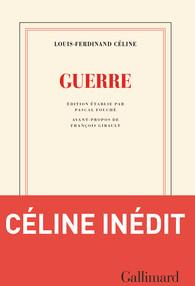
LE MANUSCRIT RETROUVÉ DE LOUIS FERDINAND CÉLINE, "GUERRE"
August 7–October 16, 2022
The exhibition In the Light of the Garden introduces the work of two Spanish masters in the context of the light and color emanating from their gardens—a vibrant source of inspiration in their final creative periods. Joaquín Sorolla (Spanish, b. 1863−1923) designed the garden at his home, now the Sorolla Museum in Madrid, between 1909 and 1911, conceiving of it as a reflection of his own creativity and a work of art in itself. Art and nature became one in this private place of inspiration and retreat. For Sorolla, as for the other artists of the time, the garden was part of the realm of the senses.

Joaquín Sorolla, Rosebush at
the Sorolla House, 1918 –19. Oil on canvas,25 ¼ x 37 ¼ in. Museo
Sorolla, Madrid.
Almost half a century later, in 1964, Esteban
Vicente (American, born Spain, 1903 ̶ 2001) and his wife Harriet acquired a Dutch
colonial-style farmhouse in Bridgehampton, New York, on Long Island, where he
set up a studio for painting in an 18th-c. barn on the property and cultivated
a beautiful garden, an ever-changing field of color.
In the Light of the Garden is presented in
collaboration with the Museo de Arte Contemporáneo Esteban Vicente in Segovia,
Ana Doldán de Cáceres, Director. The presentation at the Parrish Art Museum,
organized by Chief Curator Alicia Longwell, is supported by the Harriet and
Esteban Vicente Foundation.
https://parrishart.org/exhibitions/joaquin-sorolla-and-esteban-vicente-in-the-light-of-the-garden/
ET UN LIVRE:
Dopo oltre 50 anni dall’uscita delle tavole originali su Sg. Kirk, Rizzoli Lizard esce con una riedizione delle prime tre storie de “Gli Scorpioni”, riportandoci nel cuore dell’Africa Orientale durante la Seconda Guerra Mondiale insieme al capitano polacco al servizio di Sua Maestà e al poliedrico gruppo di uomini che lo affianca.
Un’edizione in grande formato, che nasconde una sorpresa preziosa: per l’occasione le tavole sono state ricolorate a mano da Patrizia Zanotti, seguendo le indicazioni originarie di Hugo Pratt.

“Assassini? Uomini perduti? Eroi? Strano come la guerra cambia gli
uomini…ma Hassan, Kord e Koïnsky non ci pensano. Nel deserto l’unica cosa che
conta è mettere un piede davanti all’altro”
Gli Scorpioni del deserto
1940.
Il tenente Koïnsky e i suoi uomini si aggirano per l’Africa orientale al
servizio di Sua Maestà Britannica: li chiamano “Gli Scorpioni del deserto”. Sul
loro stemma campeggia uno scorpione dorato, quello del Long Range Desert Group,
e sarà lo scenario duro e ostile del Sahara che accompagnerà gli uomini nell’avventura,
o nella follia.
Il volume include i primi tre capitoli della
saga de Gli Scorpioni del deserto: la prima, che porta il titolo omonimo, cui
si aggiungono Piccolo Chalet e Vanche Dancale. Tre storie dove rincontreremo
alcuni personaggi già incrociati nel cammino di Corto Maltese e altri che
nascondono – ma nemmeno troppo – alcuni spunti biografici della vita di Hugo
Pratt durante il periodo africano.
Ancora una volta il segno grafico di Pratt, la
sua cultura storica e l’esperienza degli scenari di guerra, danno vita ad una
serie di personaggi cinici e complicati allo stesso tempo, sospesi tra la disciplina
militare e le debolezze interiori. Seguendo lo sguardo severo e profondo del
capitano Koïnsky incontreremo il tenente fascista Stella, opportunista ma con
una morale tutta sua, e Cush, il fiero e intransigente guerriero dancalo amico
di Corto Maltese, il capitano Palchetti – uno scalmanato amante dell’opera che
comanda un fortino nel deserto come se fosse su di un palcoscenico teatrale – e
la bellissima Kismet.
https://cortomaltese.com/gli-scorpioni-del-deserto/
ET UN LIVRE:
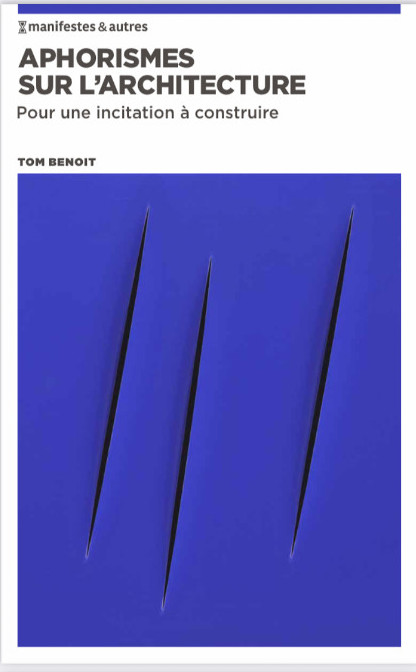
"APHORISMES SUR L´ARCHITECTURE"
"Aphorismes sur l’architecture", le dernier ouvrage de Tom Benoit, le philosophe de Chroniques, est paru au début du mois de juin 2022 chez NBE-éditions.* La préface est signée Rudy Ricciotti. Quelques bonnes feuilles en quelques énoncés.
Dans sa préface, Rudy Ricciotti explique avoir perçu cet ouvrage « comme un fait d’armes littéraire, un manifeste glorifiant le digne combat de l’attachement à la matière et au réel, également comme l’engagement républicain d’un philosophe qui décline les mortifères suggestions d’une époque à laquelle il ne semble pas parvenir totalement à échapper ».
« Il s’agit d’un témoignage de l’arrogance existentielle comme instinct de survie, d’un refus de l’humilité version sans panache de la vanité, et de la paranoïa comme lecture exacte de la fourberie de notre temps », écrit-il encore.