sábado, 29 de octubre de 2022

VENICE’S ENDURING MAGIC: HOW THE FLOATING CITY INSPIRED ARTISTS FROM CANALETTO TO MANET. CHRISTIES


The Italian destination’s distinct combination of architecture, water, and light has captivated artistic visionaries for centuries, as seen in the collection of Paul G. Allen 

‘Venice has an air of romance and mystery, so you feel you’re taken back into previous eras...’

Paul G. Allen

For many, Venice occupies a unique place in the imagination. A floating city amidst the sheltered waters of a lagoon in the Adriatic Sea, it is an extraordinary location both intensely familiar and otherworldly.

The intricate network of canals ensures that water is a constant presence throughout the cityscape. Magnifying its atmosphere, light can be seen shining between buildings or at the end of a narrow street, bouncing off the water's surface and causing reflections to dance along walls or on the undersides of bridges.


The Paul G. Allen Collection, being offered at Christie’s in New York from 9-10 November, contains a number of artistic treasures devoted to the city, each composition a reflection of the individual voices who found in Venice a subject rich with possibilities.

From the compositions of Canaletto from the mid-1700s, to the dreamlike visions of J.M.W. Turner almost a century later, and the paintings of Thomas Moran and John Singer Sargent, Edouard Manet, Henri-Edmond Cross, and Henri Le Sidaner, these works reveal the ways in which artists working in a myriad of styles and media responded to the enchanting city. 

https://www.christies.com/features/how-venice-inspired-artists-from-canaletto-to-manet-12500-7.aspx?sc_lang=en&cid=EM_EMLcontent04144C24Section_A_Story_1_1&COSID=42665747&cid=DM483985&bid=329287334#fid-12500

viernes, 28 de octubre de 2022

THE RAPE OF LUCRETIA. ROYAL OPERA HOUSE, LONDON. Y EL LIBRO "AMOR Y MORRIÑA", DE THEODOR KALLIFATIDES,


 22 NOVEMBER 2022

LINBURY THEATRE

OPERA AND MUSIC

In a world brutalised by conflict, one woman’s experience of horrific violence becomes the defining moment of an era.

Benjamin Britten’s shattering chamber opera explores some of the darkest drives in the human psyche – and what happens when power and war give them free rein. 

In this contemporary new staging, Oliver Mears directs, while Corinna Niemeyer conducts a cast drawn from the Jette Parker Artists Programme and the Britten Pears Young Artist Programme.

There are six wheelchair spaces and step-free routes to seats on the right-hand side of the auditorium only. If you have a mobility impairment, you should book tickets for the right-hand side. An Assisted Hearing Facility is available.

Some performances are adapted to suit different access needs.

https://www.roh.org.uk/tickets-and-events/the-rape-of-lucretia-by-oliver-mears-details


Y UN LIBRO...

AMOR Y MORRIÑA 

GALAXIA GUTENBERG 

Resumen de AMOR Y MORRIÑA

Christo ha dejado a sus padres en Atenas y se ha mudado a Estocolmo. A sus poco más de veinte años, una beca del gobierno sueco le da la oportunidad de estudiar historia de las ideas en la universidad, algo con lo que siempre había soñado. 

Pero está demasiado solo en Estocolmo, donde sobrevive con trabajos precarios en empresas regentadas por otros emigrantes como él. 

No domina todavía el idioma y Grecia continúa presente en su cabeza y en su corazón. Pero cuando conoce a Rania, todo su mundo se pone patas arriba. Amor y morriña, la novela más reciente de Theodor Kallifatides, es una historia cálida y llena de humanidad sobre los muchos obstáculos con los que topa un emigrante, también y especialmente a la hora de enamorarse.

MUSÉE DU LOUVRE: "LES CHOSES. UNE HISTOIRE DE LA NATURE MORTE DEPUIS LA PRÉHISTOIRE". MODE ET SECOND EMPIRE

Présentation d'exposition

Par Laurence Bertrand Dorléac, historienne de l'art

En live

Dans notre monde bavard, les artistes nous invitent à prêter attention à tout ce qui est silencieux et minuscule. En donnant une forme aux choses de la vie et de la mort, ils parlent de nous, de notre histoire depuis toujours :  de nos attachements, de nos peurs, de nos espoirs, de nos caprices, de nos folies.

Cette exposition est dédiée à leurs représentations. Elle ouvre sur le dialogue entre les œuvres du présent et celles du passé, entre nos mentalités d'aujourd'hui et celles de nos ancêtres. 

Les peintres, les sculpteurs, les photographes, les cinéastes ou les vidéastes nous font entrer dans l’univers singulier de ces choses qui ont été tour à tour, au cours de l’histoire, méprisées, admirées, craintes. 

Dans une atmosphère aujourd’hui dramatisée par les défis de l’écologie et de la robotisation, toutes ces représentations de choses nous touchent en prenant forcément un sens nouveau.

Laurence Bertrand Dorléac est Professeure des universités, auteure de textes et d'expositions, directrice de la collection œuvres en sociétés aux presses du réel.

Parmi ses ouvrages : L'Art de la défaite. 1940-1944, Seuil, 1993; Contre-déclin ; Monet et Spengler dans les jardins de l’histoire, Gallimard, 2012 ; Pour en finir avec la nature morte, Gallimard, 2020 ; Un ours dans la tête. Greta Thunberg, Folio, 2022.

Elle était co-commissaire avec Jacqueline Munck de : "L’art en guerre, France 1938-1947", Musée d’art moderne de la Ville de Paris, 2012 ; Guggenheim de Bilbao, 2013 ; commissaire générale des "Désastres de la guerre. 1800-2014", Louvre-Lens, 2014; commissaire avec Jérôme Neutres de "Artistes & Robots" au Grand Palais, 2018.

Elle est présidente de la Fondation nationale des sciences politiques et du Conseil scientifique du Festival de l'histoire de l'art.

https://www.louvre.fr/en-ce-moment/evenements-activites/les-choses-une-histoire-de-la-nature-morte-depuis-la-prehistoire

Mode et Second Empire
Crinoline versus robe à tournure

Le Second Empire est connue pour avoir été avant tout l'ère de la crinoline. Pourtant, cette pièce du vestiaire féminin vit ses dernières heures avec l'apparition vers 1865-1870 d'un accessoire moins contraignant sous l'impulsion du couturier Worth : la robe à tournure, ou « à faux-cul », qui perdurera jusqu'à la Belle Époque.

Fondation Napoléon


CHRISTIE´S AND YOUR CONCISE NEW YORK ART GUIDE FOR NOVEMBER 2022

Editor’s picks


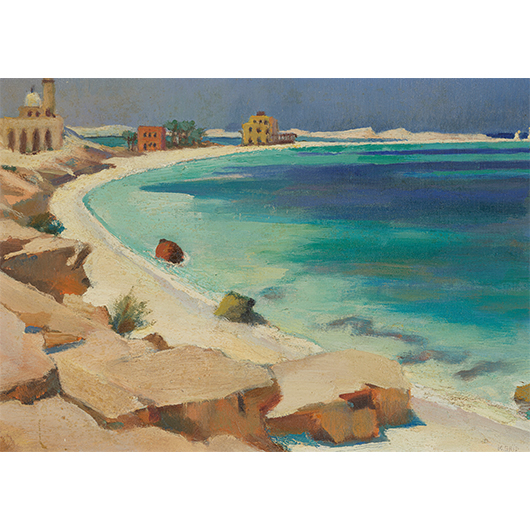
Mahmoud Saïd was the son of Egypt’s prime minister, and for much of his career he was a judge as well as a painter. This sun-drenched view of the bay at Marsa Matrouh dates from 1948, around the time he gave up the law and devoted himself to art. It was a gift to his niece, Queen Farida of Egypt
 
Estimate: £70,000-100,0002 November, London


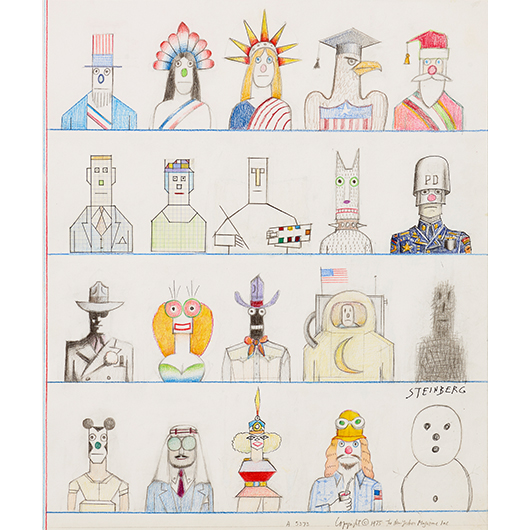
This Saul Steinberg drawing, Twenty Americans (Twenty Professions), appeared on the cover of The New Yorker on 20 October 1975. The Romanian-born artist saw the value of his outsider status in America. ‘Being an immigrant made one into a child,’ he said. ‘A child who talked funny and noticed things natives never did’


GUIDE FOR NOVEMBER 2022


Your list of must-see, fun, insightful, and very New York art events this month, including the Latin American Art Triennial, Baldwin Lee, Triton Mobley, and more.

by Billy Anania

Jimmy DeSana, "Sofa" (1977-78) (courtesy the Jimmy DeSana Trust, P·P·O·W, New York, and Brooklyn Museum)

November is upon us, which means it’s once again time to commemorate a settler holiday and undergo some unsettling midterm elections. 

Rather than linger on present tensions, however, the city’s art spaces are reflecting on the last year of programming and looking ahead to 2023 with exhibitions dedicated to the abolitionist roots of skateboarding, traditions of community organizing in Brooklyn, and the Indigenous roots of Latin American art. Stay warm, New York, and don’t let Daylight Savings get you down!

Baldwin Lee

Chinese-American photographer Baldwin Lee is widely known for portraits and landscapes from the rural South. In a new retrospective, Howard Greenberg Gallery highlights his commitment to unearthing post-Reconstruction disinvestment in Black communities. Workers, families, and childhood friends congregate in Lee’s expansive frames, occasionally juxtaposed with towering symbols of state power and often in dismal living conditions. 

Many of them gaze directly into the camera, making Lee’s oeuvre appear as an archive of untold stories.

The Greatest American Art Form

Court Tree Collective is giving Brooklyn a much-needed vernacular study of skateboarding in New York City. Photographs of contemporary skaters complement their self-designed decks in a nearby installation, revealing how skaters perceive the board as an extension of the body. 

A collaboration between photographer Clarence K. and pro skater Louis Sarowsky, the three-part exhibition unpacks skating as a realm devoid of judgment and opposed to police violence from the start.

Triton Mobley: Keloid Archives

Artist and educator Triton Mobley’s first New York exhibition examines how technology often misinterprets race and class. Curated by multidisciplinary artist Melissa Joseph, Keloid Archives repurposes archival materials from the African diaspora into a sprawling glitch in the cultural matrix. 

The computational animations in Mobley’s Outside the Loop series, for example, purposely conflate Black migration patterns with the spreading of Black Death as a critique of technological anti-Blackness. In this way, Mobley exemplifies the artistic responsibility to resolve systemic disruptions.

Las Nietas de Nonó: Posibles Escenarios, Vol. 1 LNN

Siblings mulowayi and mapenzi nonó identify as one artist in their immersive world-building project, Las Nietas de Nonó. Across the ground floor of Artists Space, the artist’s first solo exhibition gathers elements of performance, video, and mixed media into a journey of radical possibility. 

Several dreamlike “scenarios” occur in rapid succession across the gallery, guiding visitors through biodegradable installations and surreal workspaces. In this way, Nonó cleverly implicates us all as actors in this history…………

https://hyperallergic.com/771978/your-concise-new-york-art-guide-for-november-2022/

LA GALERIE DIOR, PARIS Y CUENTOS COMPLETOS DE D.H. LAWRENCE. EDITORIAL PÁGINAS DE ESPUMA

Au gré d'une scénographie unique, La Galerie Dior témoigne de l’audace visionnaire de Christian Dior et de ses six successeurs : Yves Saint Laurent, Marc Bohan, Gianfranco Ferré, John Galliano, Raf Simons et Maria Grazia Chiuri.

Les œuvres textiles étant particulièrement fragiles, celles-ci feront par ailleurs l’objet d’une rotation complète, qui permettra au public de découvrir à sa réouverture une nouvelle présentation des collections de Dior.


« Les couturiers incarnent un des derniers refuges du merveilleux. Ils sont en quelque sorte des maîtres à rêver… »

Christian Dior, Christian Dior et moi, 1956

« De ma maison, que puis-je vous dire ? Comment parler du présent et de ce que l’on vit ? Elle est, en effet, toute ma vie. »

Christian Dior, Je suis Couturier, 1951

https://www.galeriedior.com/


Y UN LIBRO, CUENTOS COMPLETOS DE D.H.LAWRENCE


martes, 25 de octubre de 2022

LES PLUS BELLES EXPOS EN RÉGION. LE PEINTRE PIERRE SOULAGES, EST MORT ET, "DÉJEUNONS SUR L'HERBE". UN LIVRE DE GUILLAUME DURAND

Jérôme Lachasse avec AFP
Pierre Soulage, avant l'inauguration de son musée à Rodez, le 28 mai 2014.

Pierre Soulage, avant l'inauguration de son musée à Rodez, le 28 mai 2014. - -

L'artiste, devenu centenaire en 2019, a marqué l’histoire de l'Art avec ses tableaux aux nuances infinies de noir.

Le peintre français Pierre Soulages, maître du noir et de la lumière, est mort à l’âge de 102 ans, a annoncé à l'AFP Alfred Pacquement, ami de longue date du peintre et président du musée qui porte son nom à Rodez (Aveyron).

L’artiste, devenu centenaire en 2019, a marqué l’histoire de l’Art avec ses tableaux aux nuances infinies de noir. Créateur sans compromis, il n'a cessé d'explorer les mystères de ce pigment et de peindre.


ET AUSSI...

Guillaume Durand


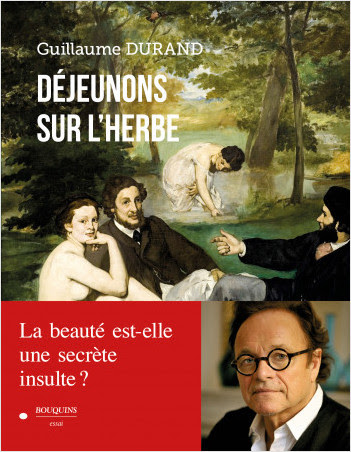
S’il y a un peintre français qui, par son seul génie, a bouleversé le monde entier, c’est bien Édouard Manet.

Depuis l’enfance, j’aime ses œuvres, ses noirs, ses ivoires, ses énigmes, ses amoureuses. La violence extrême qu’il a suscitée est inimaginable aujourd’hui. Je vous propose une balade personnelle et intime dans sa vie.

Ado, j’avais trois idoles : lui, Jacques Monory, le peintre des meurtres bleus, et Led Zeppelin. Vous allez les retrouver ainsi que des conversations sur le bel Édouard avec Koons, Barceló, Longo, Condo, Tabouret, Lavier, Yan Pei-Ming, Traquandi, Mivekannin et ceux qui font l’art vivant.

Je ne suis pas historien, ce qui me permet de convoquer des surprises dans le secret des ateliers : Picasso, Warhol, De Niro père et fils, Hockney, Visconti, César, Niki de Saint Phalle, La Casa de Papel, Laurence des Cars, Bourdieu, la maladie brutale, le journalisme, mes parents, modestes marchands de tableaux et ceux du monde entier…

Notre Hitchcock de la peinture a inventé l’art moderne pour le reste de la planète. Il adorait la vie et il a fini, presque paralysé, par peindre des fleurs déchirantes. Étant passé tout proche du ravin rejoindre mon père, je me suis autorisé ce roman vrai avec des reproductions magnifiques.

Édouard Manet a vécu la mort aux trousses en revenant tout jeune du Brésil, à cause de la syphilis qui l’a tué à 51 ans. Comme Baudelaire à 46 ans. Il lui ferma les yeux.

Il repose au cimetière de Passy, à Paris. Il incarne la preuve que l’art contemporain n’existe pas car le Déjeuner sur l’herbe est vivant pour l’éternité.

https://www.lisez.com/livre-grand-format/dejeunons-sur-lherbe/9782382920664