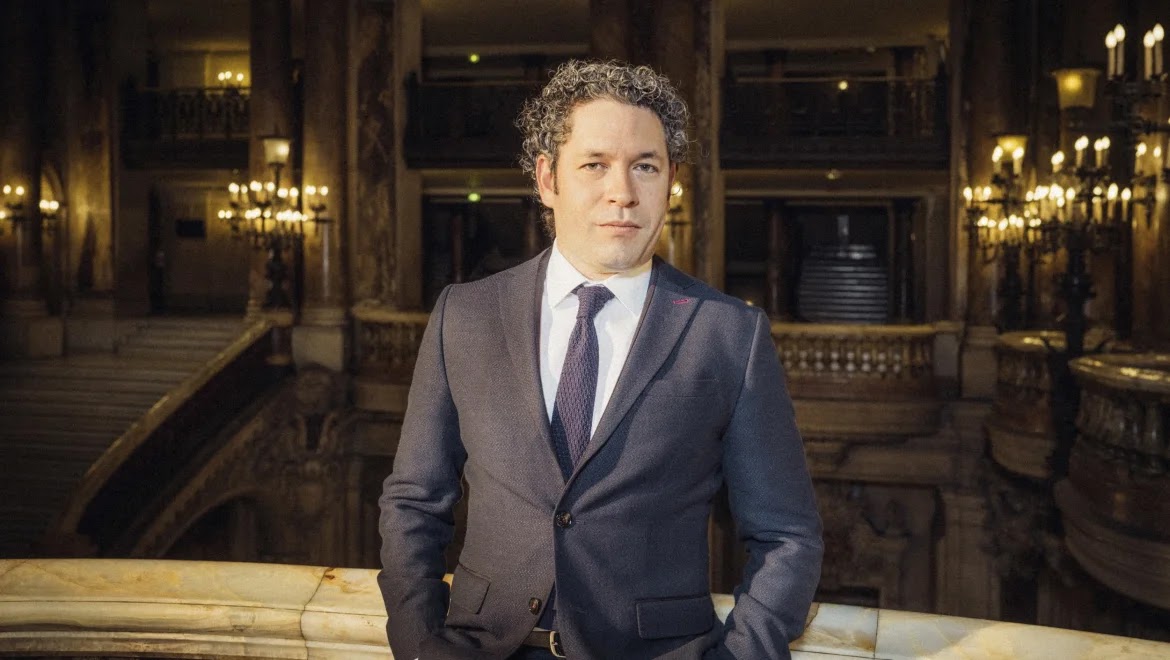
L’Opéra national de Paris annonce la démission de Gustavo Dudamel
de ses fonctions de directeur musical, pour raisons personnelles, à l’issue de
la saison 22/23.
Alexander Neef, directeur général de l’Opéra national de Paris,
prend acte de sa décision et souhaite prendre un temps de réflexion quant au
choix de la personnalité qui lui succèdera, tant la fonction est essentielle au
rayonnement de l’institution.
Propos de Gustavo
Dudamel :
« C’est avec le coeur lourd, et après mûre réflexion, que j’annonce
ma démission du poste de directeur musical de l’Opéra de Paris afin de passer
plus de temps avec ma famille.
Ce fut un privilège de partager de si beaux moments avec
l’Orchestre, les artistes des Choeurs et les équipes artistiques de l’Opéra de
Paris au cours des deux dernières saisons. Nous vivons une époque qui, je
crois, a profondément et intimement bouleversé nos êtres et j’en retire une
plus grande appréciation de la vie, et je réalise à quel point l’art et la
musique enrichissent mon quotidien et celui de celles et ceux qui m’entourent.
Je n’ai pas d’autres projets que d’être avec mes proches. Je leur
suis profondément reconnaissant pour leur soutien dans ma détermination à
toujours grandir et me dépasser, tant dans ma vie personnelle qu’artistique, jour
après jour ».
Reasserting the importance of collaborative
efforts among European museums, the Musée du Louvre has formed a partnership of
unprecedented scope with the Museo di Capodimonte for 2023.
THE MUSEO DI CAPODIMONTE
The royal palace (reggia in Italian), which
once served as a hunting lodge for Naples’s Bourbon monarchs, is now one of the
largest museums in Italy, as well as one of the most important picture
galleries in Europe in terms of both number and quality of works. Capodimonte
is one of the few museums in Italy whose collection covers all schools of
Italian painting. It also houses the second largest department of drawings
(after the Uffizi) and a remarkable collection of porcelain.
AN EXHIBITION AT THE HEART OF THE COLLECTION
Approximately 60 major masterpieces from
Capodimonte will be exhibited in three different places in the Louvre.
Salon Carré, Grande Galerie and Salle Rosa
(Denon wing, Level 1)
The Musée du Louvre and the Museo de
Capodimonte decided to join forces to mount a special exhibition showcasing
masterpieces from the two museums. This exceptional six-month event will
provide a unique insight into Italian painting from the 15th to the 17th
century and offer a fresh perspective on the two collections.
The display will feature thirty-three
paintings from the Museo di Capodimonte, considered some of the greatest
Italian masterpieces. They will resonate with the Louvre’s collection of
paintings by artists including Titian, Caravaggio, Annibale Carracci and Guido
Reni, and shed light on Italian schools that have little or no representation
in the Louvre – particularly the remarkable Neapolitan school, characterised by
the dramatic and expressive style of artists such as Jusepe de Ribera,
Francesco Guarino and Mattia Preti.
Exhibition highlights will include a poignant
painting of the Crucifixion by Masaccio (a major artist of the Florentine
Renaissance who is not represented in the Louvre’s collections), a large
history painting called Transfiguration of Christ by Giovanni Bellini, without
equivalent in the Louvre, and three of the finest paintings by Parmigianino,
including his famously enigmatic Antea. The display of these works alongside
the Louvre’s paintings by Correggio will undoubtedly be one of the high points
of the exhibition.
Salle de la Chapelle (Sully wing, Level 1)
The diversity of artworks in the Museo di
Capodimonte collection stems from its singular history.
Before the unification
of Italy (with the annexation of the Kingdom of the Two Sicilies in 1861), the
Farnese, Bourbon and Bonaparte-Murat dynasties all contributed significantly to
the creation of this impressive collection.
The fabulous loans on show in the Salle de la
Chapelle will introduce visitors to the diversity of the Capodimonte
collection. They include such major paintings as Titian’s Portrait of Pope Paul
III and his Grandsons and El Greco’s Portrait of Giulio Clovio, together with
some spectacular sculptures and objets d’art.
Among the latter are the Farnese
casket (which, like the golden salt cellar made by Benvenuto Cellini for King
François I, is one of the most precious and refined artefacts by Renaissance
goldsmiths), and Filippo Tagliolini’s extraordinary biscuit porcelain group,
The Fall of the Giants. The overall display reflects the various golden ages of
the Kingdom of Naples.
Salle de l’Horloge (Sully wing, Level 2)
The department of drawings in the Museo di
Capodimonte boasts over 30,000 works of art. Some of these treasures once
belonged to the humanist scholar Fulvio Orsini, librarian to the ‘Great
Cardinal’ Alessandro Farnese, a grandson of Pope Paul III.
Orsini took a
revolutionary approach to collecting art and compiled the first collection in
the world to include preparatory drawings and studies, among which are four
remarkable cartoons initially thought to have been drawn by Raphael and
Michelangelo.
Two of those four are now recognised as rare drawings by the
masters themselves: Moses before the Burning Bush by Raphael and Group of
Soldiers by Michelangelo were preparatory cartoons for the decorations in the
Vatican; however, the cartoons for the Madonna of Divine Love and Cupid Kissing
Venus are thought to have been made by members of their circles.
Tina Turner, the Queen of Rock 'N' Roll, has died at the age of 83.
The iconic singer died at her home in Küsnach near Zurich Switzerland today following a long, unspecified illness.
'With her, the world loses a music legend and a role model,' her representatives said in a statement.
AND
VICTORIA AND ALBERT MUSEUM EXHIBITION ON MAKEUP
Makeup is an essential part of fashion across time and around the
world. This course offers a broad survey of the history of global makeup, from
ancient Egypt and the Indus valley to the 21st century.
Learn from our world-class experts wherever, whenever: watch
lectures live or view the recording later in your own time.
Time to explore: more than 12 hours of study over 6 weeks.
Consolidate your learning: download lecture notes, copies of the
presentations, and additional study materials from our secure Microsoft Teams
learning environment.
Join the conversation: share your perspective with your fellow
students, and support each other in your further enquiries outside of class
time.
Learn at your own pace: lecture recordings and study materials are
available for up to 6 weeks after the course ends, so you'll never miss a
minute.
Makeup is an essential part of fashion across time and around the
world. This course offers a broad survey of the history of global makeup, from
ancient Egypt and the Indus valley to the 21st century.
Learn from our world-class experts wherever, whenever: watch
lectures live or view the recording later in your own time.
Enhancing the face is an essential part of
fashion across time and around the world. This course offers a broad survey of
the history of makeup, from ancient Egypt and the Indus valley to the 21st
century, and across the globe. Included are discussions of makeup material
culture—what pigments and materials did people use to colour and accentuate
their faces? What parts of the face were highlighted and why?
How did styles of
makeup change over time? The varieties of containers of glass, ceramics and paper to hold
makeup will be examined. We will also explore the history of the mirror—that
other essential tool for painting one’s face.
Various cultures held conflicting opinions on the propriety of
makeup, based on age, class, gender and religion and these moral concerns will
be studied. Many makeup traditions began with the facial enhancements required
for performance on stage and the course will look at the influence of stage and
film on 20th-century makeup in North America and Europe.
The course will address the question: Is 21st-century makeup global
or local or both?
La mostra “L’istante e l’eternità. Tra noi e
gli antichi”, attraverso circa 300 pezzi eccezionali tra opere greche, romane,
etrusche e italiche, medievali, moderne e contemporanee, esplora in modi
inaspettati e spettacolari il rapporto complesso e variegato che noi
intratteniamo con gli antichi.
Per l’occasione riaprono al pubblico, dopo
decenni, alcune delle Grandi Aule delle Terme di Diocleziano, che ospitarono
nel 1911 la Mostra Archeologica nell’ambito delle celebrazioni per il primo
cinquantenario dell’Unità d’Italia e che conservano, ancora oggi, parte
dell’allestimento storico degli anni Cinquanta.
La mostra, visitabile dal 4 maggio al 30
luglio 2023, è promossa dal Ministero della cultura italiano e dal Ministero
della cultura e dello sport della Grecia (Eforato per le Antichità delle
Cicladi) e testimonia la centralità e l’importanza della collaborazione tra i
due Stati.
L’evento espositivo, organizzato dalla Direzione generale Musei e
dal Museo Nazionale Romano in collaborazione con Electa, è ideato e curato da
Massimo Osanna, Stéphane Verger, Maria Luisa Catoni e Demetrios Athanasoulis,
con il sostegno del Parco Archeologico di Pompei e la partecipazione della
Scuola IMT Alti Studi Lucca e della Scuola Superiore Meridionale.
Il nostro rapporto con gli antichi è
sostanzialmente doppio: da una parte, si è costruito attraverso un lungo e
discontinuo processo storico di trasmissione intellettuale e artistica che ha
plasmato la nostra cultura classica fra continuità, fratture e manipolazioni;
dall’altra, ha talvolta preso la forma di un rapporto di immedesimazione,
sviluppato con persone che, pur vissute molto tempo fa, hanno affrontato, come
noi, tutte le vicende della vita, dalle più gioiose alle più drammatiche, e a
queste hanno dato voci e forme che sono giunte fino a noi. Per questo gli
antichi ci sembrano allo stesso tempo lontani e vicini.
Accompagnano il visitatore, in questo percorso
di scoperta e confronto, alcune opere straordinariamente rappresentative
provenienti non solo dai principali musei italiani, nell’ambito
del Sistema Museale Nazionale coordinato dalla
Direzione Generale Musei, ma anche da importantissimi istituti della Grecia.
Molte delle opere in mostra sono presentate al pubblico per la
prima volta: nuove scoperte, come il carro da
parata di Civita Giuliana e la statua di Ercole del Parco Archeologico
dell’Appia Antica; nuove acquisizioni, come la Tabula Chigi del Museo Nazionale
Romano, e soprattutto numerosi capolavori solitamente conservati nei depositi
dei musei dell’Italia e della Grecia, come la statua di Santorini.
La mostra rappresenta così un’ulteriore
opportunità per il progetto Depositi (Ri)scoperti, ideato e promosso dal Museo
Nazionale Romano, permettendo non solo di proseguire l’iniziativa, ma anche di
incrementarla con la realizzazione di nuove tappe espositive negli istituti
della Direzione Regionale Musei Lazio a Nemi e a Sperlonga.
Sono inoltre disponibili testi in linguaggio
facilitato realizzati dal Servizio Educativo del MNR, in collaborazione con il
progetto Museo per tutti di L’abilità Onlus (museopertutti.org), specificamente
destinati a persone con disabilità cognitiva e ai loro caregiver per permettere
la preparazione della visita e facilitare la comprensione del percorso
espositivo a questo pubblico con esigenze speciali.
ORQUESTA NACIONAL DE ESPAÑA. David Afkham, director. Sinfónico 20.
Domingo 21 de mayo, 2023
PROGRAMA:
Gustav Mahler (1860-1911): Sinfonía
núm. 7 en Mi menor
Langsam. Nicht Schleppend.Allegro Risoluto, ma
non troppo.
Nachtmusik. Allegro moderato-Molto moderato
Scherzo. Schatenchaft. Fliessender aber nicht
schnell. Trio.
Nachtmusik. Andante amoroso. Aufschwung.
Rondo-Finale. Allegro Ordinario. Allegro
moderato ma energico.
Langsam (Adagio) - Allegro risoluto, ma non
troppo
En una publicación de la Mahler
Foundation, Lew Smoley explicaba
que” Si el alcance de la crítica negativa
es una indicación, la Séptima Sinfonía es la obra más problemática de Mahler.
En su primera actuación, la séptima fue recibida con frialdad, muchos críticos
no sabían qué hacer con sus movimientos aparentemente inconexos, su vasta
estructura en expansión y su riqueza de diversas ideas musicales…Muchos especialistas mahlerianos, entre ellos
Derek Cook y Hans Redlich, han llegado a la conclusión de que la sinfonía es un
fracaso en su mayor parte, a pesar de su reconocimiento de su colorida
orquestación, fascinantes imágenes y riqueza de interesantes ideas musicales”.
Al contrario de lo que sucede con otros creadores, la imagen y la
apreciación que se ha hecho del corpus de Mahler ha ido cambiando con el
tiempo. Es sorprendente, por ejemplo, lo que el director Daniel Barenboim refiere con respecto a su acercamiento al
compositor, que no le atraía en sus primeros tiempos como músico, incluso ya
consagrado.
Ha seguido a Mahler en su trayectoria- explicó-incorporándolo poco a poco. (Por cierto, en la
España de los años 70/80, casi exclusivamente (¿alguien se acuerda?) el
vicepresidente del gobierno de entonces, Alfonso Guerra, manifestaba estar
embelesado con Mahler. En los conciertos al uso en aquellos tiempos, pocos
rastros. Resalta ahora en cambio Barenboim, que ha incorporado al músico vienés
en su repertorio frecuente,y también
(molesto) el abuso que se hace de la interpretación biográfica y sobre todo
freudiana de la existencia personal y artística de este judío excepcional, sin
embargo bien enmarcado entre otros artistas de la época, especialmente
escritores (como Joseph Roth, Stephan Zweig y muchos otros).
Efectivamente, Gustav Mahler, se ha conformado como parte vital de
nuestro acervo colectivo, inconsciente y más aún consciente, deseado y
valorado. No así su séptima sinfonía, sobre cuyo último movimiento,
desgraciadamente, todos los oyentes y especialistas tienen algo que objetar.
Falta de flexibilidad crítica y aún emocional estos apriorismos
sobre lo que debe escribir un compositor por su trayectoria o por lo que se
espera de él, mientras, gozosamente se libera de condicionamientos de todo tipo
para celebrar la vida, entre la travesura, la sorpresa y el regocijo.
Disonancia cognitiva (fantástico aquí el término musical para referirse ámbito
de la cognición o el modus operandi del cerebro humano), es decir, lo que no
consta entre el espectro de lo esperado, de lo previsible, en última instancia
de la comodidad de la continuidad tímbrica, sonora, molesta, obliga al oyente,
al intérprete, a repensar el todo. Como se dice ahora repetidamente, lo aleja
“de su zona de confort”.
Recuerdan los expertos que la Sinfonía n.º 7 en mi menor de Gustav
Mahler, llamada Canción de la Noche, vio la luz entre 1904 y 1905. Es la
sinfonía del compositor que más tardó en ser llevada al disco (1953), y la
menos popular y consta de cinco movimientos.
La dificultad de delimitar la unidad entre los distintos
movimientos de la Séptima es quizá debida al hecho de que los dos Nachtmusiken
se hayan compuesto antes de los tres movimientos restantes. Mientras que Mahler
trabajaba aún sobre su Sexta Sinfonía, creó los dos nocturnos. Era la primera vez
en que trabajaba simultáneamente sobre dos partituras. Encontró un año más
tarde la inspiración para los tres movimientos restantes, que escribió
solamente en cuatro semanas. El estreno tuvo lugar en Praga el 19 de septiembre
de 1908, dirigiendo el propio Mahler a la Orquesta Filarmónica Checa.
La séptima sinfonía es la última de las tres sinfonías intermedias
puramente instrumentales 5 a 7. Como la Quinta sinfonía, consta de cinco
movimientos en lugar de los cuatro clásicos. Mahler aplica su cromatismo más
progresivo y en algunos lugares supera los límites de la tonalidad. Único en
las obras de Mahler y extremadamente inusual para grandes sinfonías es el uso
de la guitarra y la mandolina. Los dos movimientos de música nocturna, que
también son muy especiales, ayudan a crear una imagen de las visiones
románticas Wagner describe el comienzo de "ese otro mundo", en la
frontera entre la noche y el día.
Aparte del compositor de Los maestros cantores, resuenan ecos de la
Sinfonía Fantástica de Berlioz, de Offenbach, de Bruckner, intensa paleta de referencias y colores, una especie de
reducción de mucha literatura contemporánea al autor vienés. Es una forma
sonata el primer movimiento, con una introducción lenta, en tono menor
misterioso y lunar, oscuro. La sombría melodía, interpretada por un tenorhorn,
contribuye a crear este ambiente en un accelerando hasta alcanzar el Allegro,
en el que se alternan los tonos mayor y menor.
El tema principal se desarrolla a partir del motivo de la marcha de
la introducción y en este estilo recuerda a la trágica sexta sinfonía anterior.
Según Mahler, habría una idea de condensación espiritual en una
"perspectiva de un mundo mejor". La visión se desvanece abruptamente con el inicio de la
recapitulación y el tema recurrente de la marcha. El estilo sombrío imprime
buena parte del primer movimiento, aunque, por fin, con un cambio evidente, el
tema principal reaparece en un mi mayor radiante, lo que lleva al cierre
jubiloso del movimiento.
El segundo movimiento es la primera Nachtmusik ("música
nocturna") de las dos músicas nocturnas que Mahler insertó en la sinfonía.
Dos seguidores de Mahler, Alphons
Diepenbrock y Willem Mengelberg,
señalaron que la inspiración para la composición de este movimiento le llegó a
Mahler después de contemplar "La ronda de noche", de Rembrandt, en el Rijksmuseum de Amsterdam. Mahler vuelve a
presentar aquí un tema de marcha de estilo militar, una característica de su
música que se remonta a su infancia en la ciudad de guarnición de Iglau. El
siguiente trío está ambientado en el estilo elegante de Piotr Chaikovskyi.
El tercer movimiento es un scherzo, marcado como “Schattenhaft. Fliessend aber nicht schnell” (“Fantasmagórico. Fluido, pero no
rápido”). La atmósfera fantástica (schattenhaft) se vislumbra desde el inicio
del movimiento. Hay una desfiguración del ritmo de vals vienés, con un marcado
carácter expresionista, con frecuentes disonancias y efectos orquestales, como
el que requiere a los instrumentistas de la cuerda grave un pizzicato ejecutado
con tal violencia (marcado fffff) haciendo que la cuerda golpee sobre la madera
del mástil del instrumento. Más tarde, Béla
Bartók reutilizaría con frecuencia este recurso.
El desarrollo del movimiento permite una adecuada conexión con la
música nocturna precedente. El scherzo crea una imagen inquietante y a veces
grotesca de la noche, como es típico de Mahler también en este misterioso
movimiento.
El cuarto es el segundo Nachtmusik con una fuerte presencia del
arpa, de la guitarra y también de la mandolina. Si se lo compara con los otros
cuatro movimientos, el carácter de este es más íntimo y de cámara, lo que
Mahler también logra al reducir la orquesta, con un sonido parecido a una
serenata mediante el uso de guitarra, arpa, mandolina, trompa solista y violín
solista(gran actuación del concertino Miguel Colom Cuesta, como siempre). En
esta ocasión se dibuja una imagen del romanticismo alemán que recuerda a Joseph
Eichendorff, como señala Alma Mahler.
El peculiar y muy citado quinto y último movimiento se titula Rondó-Finale.
A través de la impresión sombría previa, la sinfonía alcanza la luz brillante
de una culminación solemne, un climax presentido sin embargo, a pesar de las
críticas y el malestar por una conclusión diferente a la esperada. Vuelve el
recuerdo de la obertura de los Maestros Cantores de Richard Wagner. Se declina
aquí un sinfonismo gozoso, lleno de pentagramas acuciados por el compositor y sentido
como una revivificación con los intérpretes y el director (es curioso, a muchos
de ellos se los veía relajados, disfrutando, con una sonrisa franca, a pesar
del esfuerzo de este finale).
De esta manera se cierra la séptima, en una violenta stretta final
a cargo de toda la orquesta, en la que también se retoma el tema principal del
primer movimiento. Y las interpretaciones, entonces, ad libitum y ad nauseam
además…A pesar del camino recorrido, esta obra no suele ser de las más
revisitadas de Gustav Mahler.
Imponente, para saciarse, el sonido, la eficacia y la brillantez de
la Orquesta Nacional de España, perfectamente organizada aquí por un David Afkham que demuestra claramente
su sintonía y su empatía por Mahler. El maestro alemán está cómodo, se disloca
en todos los movimientos posibles para conectar con sus músicos, el gesto
amplio, amplificado de las manos y el cuerpo. Entre cada sección, rotación
ligera del cuello para aflojar la tensión, ajuste de las mangas de la chaqueta
del traje y golpecitos del brazo en la pierna derecha para anunciar que está
listo, que al ataque.
La sala está muy completa, incluso en las localidades más lejanas
del foso, a las que Afkham saluda efusivamente, igual que a sus intérpretes,
por secciones. Hay mucha satisfacción entre los músicos y el público, que se
rinde ante la belleza conmovedora y emocionante de Mahler, cargado como cada
vez, de luces y sombras, de búsquedas, de interrogantes.
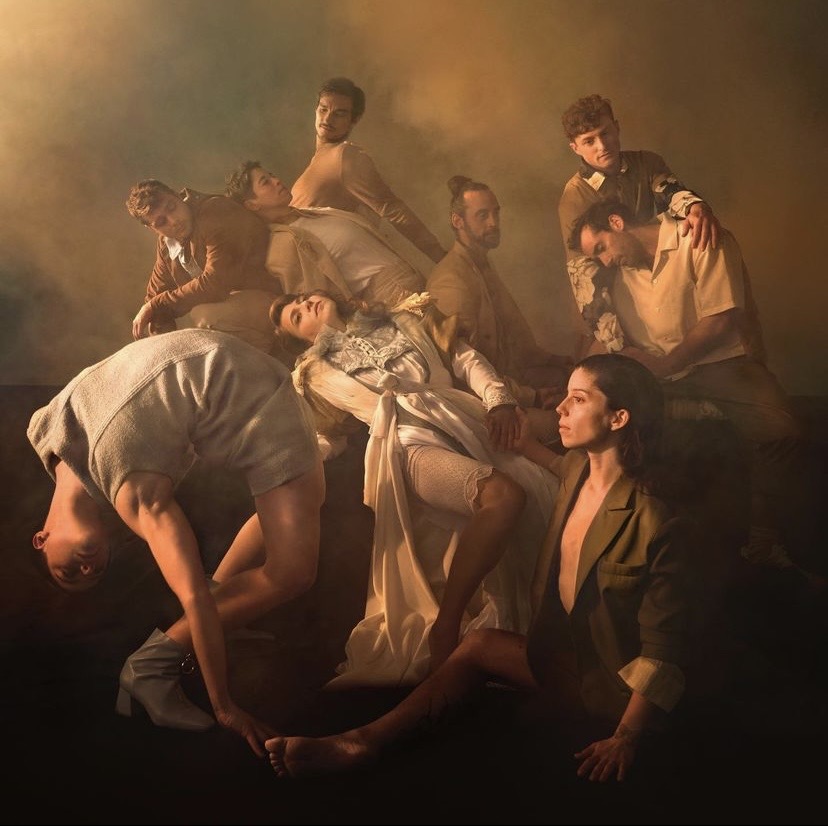
Pour son prochain spectacle, LeBon Marché Rive Gauche s'associe au Cirque Leroux et présente une coproduction exclusive et immersive, « Entre Chiens et Louves », à découvrir du 1er septembre au 31 décembre 2023.
Pour cette nouvelle création, à la nuit tombée, après la fermeture du magasin, laissez-vous plonger dans un univers historique teinté d’onirisme et d’humour, où se mêlent plusieurs arts de la scène. En plein cœur du magasin, les virtuoses défient les lois de la gravité pour une épopée de haut vol.
AND
HELMUT BERGER DIED
He was perhaps best known for starring in a pair of historical
dramas, “The Damned” and “Ludwig,” directed by his partner Luchino Visconti
By Harrison Smith
Filmmaker Luchino Visconti, left, instructs actors Helmut Berger
and Romy Schneider during the making of the 1973 historical drama “Ludwig.” Mr.
Berger played Ludwig II, the “Swan King” of Bavaria. (AP)
Helmut Berger, a golden-haired star of European cinema known for
playing sinister but seductive characters in films by Italian master Luchino
Visconti, his partner of more than a decade, died May 18 at his home in
Salzburg, Austria. He was 78.
His death was announced in a statement by his agent, Helmut Werner,
who did not cite a cause.
Mr. Berger, an Austrian actor equipped with piercing blue eyes, a
coiled intensity and an unsettling knack for projecting menace and charm with a
single look or gesture, rose to prominence in the late 1960s and ’70s, when he
starred in three feature films by Visconti and emerged as an international sex
symbol.
The German press hailed him as “the most beautiful man in the
world,” while one of his co-stars, British actress Charlotte Rampling, was more
dismissive, describing Mr. Berger in a BBC documentary as “a skiing waiter with
a big bum.” He was photographed nude by Andy Warhol, featured on the cover of
British Vogue (fully clothed, this time) and traveled with Brigitte Bardot,
Bianca Jagger and Eliette von Karajan, emerging as one of the jet set’s most
flamboyant members even as he largely shunned the American film scene.
Hollywood was a “plastic world,” he insisted, although he made an
exception to appear in American movies, including the drama “Ash Wednesday”
(1973), as a playboy who seduces Elizabeth Taylor, and “The Godfather Part III”
(1990), as a Vatican banker who tries to swindle the Corleone family.
Mr. Berger said that he owed “everything” to
Visconti, whom he met during a 1964 visit to Volterra, Italy, where the filmmaker
was shooting the drama “Sandra.” Mr. Berger, who was learning Italian at a
nearby college and turned 20 that spring, had taken acting lessons in London
and wanted to see how a film set operated. The director, 38 years his senior, was happy to oblige.
They soon struck up a relationship, and in 1969 Mr. Berger
delivered his breakout performance in Visconti’s “The Damned,” an operatic
drama that followed a German industrial family in the 1930s, with Hitler on the
verge of consolidating power.
Mr. Berger, who appeared alongside Rampling and Dirk Bogarde,
portrayed the patriarch’s psychotic grandson, who molests his younger relatives
and rapes his own mother. His character is introduced in drag, playing Marlene
Dietrich with help from a top hat, boa and stockings before his performance is
interrupted by the news that a fire has broken out at the Reichstag.
New York Times movie critic Vincent Canby wrote that Mr. Berger
gave “the performance of the year,” calling the film “a spectacle of such
greedy passion, such uncompromising sensation and such obscene shock that it
makes you realize how small and safe and ordinary most movies are.”
Mr. Berger went on to earn a David di Donatello Award, the Italian
equivalent of an Oscar, for starring in Visconti’s historical epic “Ludwig”
(1973) as the titular “Swan King” of Bavaria, whom he portrayed as a closeted
gay man, petulant and tragically isolated. (“I’m a night person like him,” Mr. Berger told Germany’s Gala magazine in
2012. “That’s the only
thing we have in common.”)
He appeared in 70 movies and TV shows in all, including as the
foppish title character in “Dorian Gray” (1970), an Oscar Wilde adaptation set
on the streets of swinging London; as the frail son of a wealthy Jewish family
in Vittorio De Sica’s “The Garden of the Finzi-Continis” (1970), which won the
Academy Award for best foreign language film; and as a petty criminal who
embarks on an affair with the disgruntled wife of a novelist (Glenda Jackson,
married on-screen to Michael Caine) in “The Romantic Englishwoman” (1975).
Mr. Berger also worked with Visconti one last
time in “Conversation Piece” (1974), which paired him with American actor Burt
Lancaster. He was still partners with the filmmaker when Visconti died in 1976
after a stroke. Mr. Berger fell into a depression and tried to kill himself,
later saying that he was saved when his housekeeper discovered him by chance,
arriving at his house that morning instead of at 5 p.m. as scheduled.
Over the next few decades, Mr. Berger appeared
to increasingly struggle with drug and alcohol use, becoming better known to
some viewers for his talk-show appearances than his acting. He appeared
inebriated during some interviews and film festivals, and was charged with
cocaine possession in Italy, where he was acquitted by an appeals court in
1987. Some of his misadventures were chronicled in a 1998 autobiography, simply
titled “Ich” (“Me”), and in a 2012 photo book, “Helmut Berger: A Life in
Pictures.”
The latter opened with a declaration of
defiance, written in French: “Je ne regrette rien” (“I regret nothing”).
“That says it all,” Mr. Berger told Gala,
before lamenting that the freewheeling ethos of the 1960s and ’70s no longer
seemed to exist. “There’s no more dolce vita today. I caught just the right
time.”
Helmut Steinberger — Berger was a stage name —
was born in Bad Ischl, an Austrian spa town, on May 29, 1944. He grew up in
Salzburg, where his parents ran a hotel, and said he ran away from home,
fleeing an abusive father who “only ever hit me.”
Mr. Berger lived in England, supporting
himself with a job as a waiter and then as a model, before moving to Italy and
making his screen debut with help from Visconti, who cast him in a small role
in “The Witches” (1967), an anthology film of five comic stories.
At times, his relationship with the filmmaker
was strained.
“I always did what he wanted. Well, at night I sometimes snuck out
through the back door,” said Mr. Berger, who was bisexual and recalled dating
American actress Marisa Berenson while still with Visconti. “I had stashed the
key for the back entrance. After that, when I slept all day, he initially
thought I was ill and he sent me to a psychoanalyst. Later he knew exactly what
I was doing. But he never said anything.”
In 1994, Mr. Berger married Francesca Guidato, an Italian actress
and model. They separated more than two decades ago but never divorced,
according to his agent. Complete information on survivors was not
immediately available.
Mr. Berger starred as a criminal genius in the
French miniseries “Fantômas” (1980), appeared as a Brazilian business tycoon on
season four of “Dynasty” (1983) and played aging fashion designer Yves Saint
Laurent in the French movie “Saint Laurent” (2014). He also ventured onstage in
Berlin, performing in Catalan writer-director Albert Serra’s play “Liberté” in
2018 and starring in a film adaptation the next year.
Soon after, he announced his retirement from
acting, telling the German tabloid Bild, “I’ve danced at every party. Now it’s
time to say goodbye and enjoy the rest of my life with one last drink in my
hand.”
He wanted to spend his “remaining time away
from the public,” he added, with a nod to the German American actress he once
impersonated on-screen: “That’s what Marlene Dietrich did at the end of her
career.”
Nota al artículo y al vídeo de una de sus películas, The Damned.
Helmut Berger encajaría mal en estos tiempos pacatos donde todo es objetable, opinable y sobre todo denunciable.
Su carrera floreció como la de tantos grandes del cine y el teatro, de la mano de enormes directores. Eran un coctail de talento, audacia y ese modus operandi/vivendi que los colocaba siempre por encima de los mediocres, de los pusilánimes, de los partidarios de la repetición, del decoro ante todo y la aurea mediocritas.
Aquí aparece como Marlene Dietrich, otra artista peculiar, llena de humor, de gustos indiscretos, no apta para todos los públicos ni para todas las morales pequeñoburguesas.
Por cierto, Berger tenía unas piernas fantásticas y una capacidad de transmutarse en cualquier personaje, de cualquier sexo que fuera. Estaba más allá de los géneros y del mandato de hacer opciones de este tipo.
Para recordar su Ludwig (de Visconti, con Romy Schneider), o la dolorosa El jardín de los Finzi Contini. Aprovechen para rever algunos de sus films. Son de otra época, perdidos y reencontrados en mitad de alguna estrella, que ya extinguida hace años luz, sigue brillando sin embargo y encandilando màgicamente, un presente más opaco y más pobre-
Alicia Perris
The Damned (1969) - Martin's performance as Marlene Dietrich in "The Blue Angel"