News
Royal Ballet and Opera cancels ‘Tosca’ production in Israel after staff backlash
4 August 2025, 16:42 | Updated: 4 August 2025, 16:49


The production at The Israeli Opera in Tel Aviv will not go ahead, after 182 members of staff at RBO signed an open letter to management.
Listen to this article
The (RBO) has pulled its 2026 production of Puccini’s in Israel following backlash from staff.
This comes after Alex Beard, Chief Executive of the RBO, said the company was “reviewing its internal protocols” following an onstage demonstration in which a dancer during a curtain call at the Royal Opera House.
Artists for Palestine UK (APUK) said it saw an email from Beard sent to staff that read: “We have made the decision that our new production of Tosca will not be going to Israel.” The network described the move as a ‘welcome breakthrough.’
The Israeli National Opera website has now dropped its reference to the Royal Opera House.
Read more:

On 19 July, dancer Danni Perry held up a Palestinian flag during the final curtain call of Verdi’s Il trovatore. The RBO’s director of music Oliver Mears attempted to tug the flag off them, and reportedly told Perry they would never work at the opera house again.
Following the event, more than 180 members of the Royal Ballet and Opera, including artists, technicians and administrative departments, penned an open letter expressing "deep concern" about their company’s decision-making regarding the ongoing conflict in Gaza.
The Guardian reported that 40 signatories signed with their names while the others signed anonymously for fear of reprisals.
The letter also touched on the RBO’s recent hiring out of its production of Puccini’s Turandot to the Israeli National Opera. “The decision cannot be viewed as neutral,” it stated, continuing that the partnership means that the RBO “is clearly making a strong political statement.”
The letter also drew comparison with the RBO’s response to Russia’s invasion of Ukraine in February 2022, praising the institution for its ‘swift’ and ‘decisive’ action: “We organised Concerts for Ukraine, we played the Ukrainian national anthem before performances, and we publicly displayed the Ukrainian flag as a gesture of solidarity with its people.
“We understood then that silence was unacceptable. Why is it different now?”
Read more:
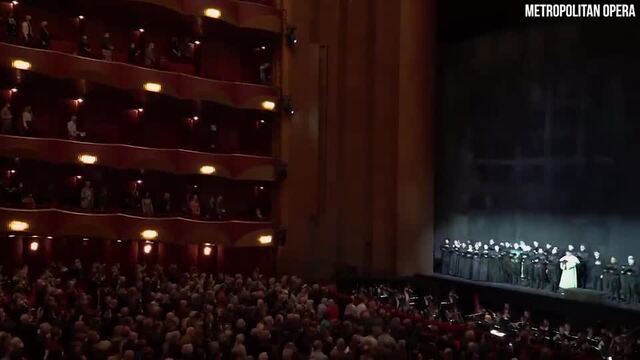
Beard responded to the letter by saying he is “appalled by the crisis in Gaza and recognise the deep emotional impact this has had across our community and wider society.”
“On this issue, we acknowledge and respect the full range of views held by our staff, artists and audiences.
“The events at the curtain call on 19 July were without precedent. We have reflected carefully and reviewed our internal protocols.
“We always endeavour to act with integrity and compassion. We want our stage to remain a space for shared cultural appreciation, free from individual political statements.
“Our support for Ukraine was aligned with the global consensus at the time. As the world’s geopolitics have become more complex, our stance has changed to ensure that our actions reflect our purpose and values,” Beard added.
A spokesperson for Artists for Palestine UK said: “This is a welcome breakthrough for institutional accountability—and a victory for grassroots organizing.
“Across the cultural sector too many institutions, faced with genocide, have opted for silence or worse. The RBO staff’s open letter is an essential ethical uprising against this refusal to speak out.”
MOSTRA AL PALAZZO DUCALE: L´ORO DIPINTO
Dal 30 aprile al 29 settembre 2025 Venezia, Palazzo Ducale – Appartamento del Doge A cura di Chiara Squarcina, Katerina Dellaporta, Andrea Bellieni

Un filo dorato unisce le vicende storiche, artistiche, gli
equilibri diplomatici e la devozione nel Mediterraneo lungo la rotta tra
Venezia e Creta, la Candia dal XIII secolo, perla dello Stato da Mar della
Serenissima.
.jpg)
L’oro dipinto, che fa risplendere di luce spirituale le icone, è il protagonista della mostra e fa da sfondo ad una lunga storia di intense relazioni pittoriche tra due isole. Dopo la Caduta di Costantinopoli (1453) Candia diventa il più importante polo artistico per l’antica tradizione bizantina, alla quale si richiamano fedelmente oltre cento botteghe di “madoneri”, soprattutto autori di immagini devozionali popolari.
.jpg)
Parallelamente Venezia – come una nuova Bisanzio – vede l’arrivo di un numero sempre maggiore di opere e di artisti dall’isola dell’Egeo: “pittori iconografi” in viaggio o immigrati tra Creta, le isole dello Ionio e la capitale.

.jpg)
Le sette sezioni della mostra scandiscono e illustrano cronologicamente tale singolare percorso pittorico; al centro dell’avvincente racconto di storia e di pittura si colloca il suo rappresentante più celebre e stravagante: Dominikos Theotokopoulos, El Greco (1541-1614), che nella natia Creta muove i primi passi nell’educazione alla tradizione postbizantina per giungere a Venezia intorno al 1567.
Completa
l’esposizione un focus dedicato all’icona, indagata nei suoi aspetti materiali
e tecnico-esecutivi: un essenziale contributo conoscitivo per il visitatore
realizzato in collaborazione con l’Istituto Nazionale di Fisica Nucleare –
CHNet Cultural Heritage Network.
.jpg)
https://palazzoducale.visitmuve.it/it/mostre/mostre-in-corso/loro-dipinto-

No hay comentarios:
Publicar un comentario