martes, 26 de abril de 2022

LIVRE ACTUEL: UNE ODIEUSE PASSION, ANALYSE PHILOSOPHIQUE DE LA HAINE. MARION COTTILLARD EN EL TEATRO REAL


Philippe Saltel

À propos

La haine est souvent donnée comme terme dernier d'une explication des conduites agressives, ainsi traitée comme un phénomène humain que l'on constate et réprouve.

Ne peut-on aller plus loin et en proposer une analyse ? telle est la tentative du présent ouvrage, qui prend le parti de recourir à la tradition philosophique pour décomposer cette passion en ses éléments constitutifs. haines de choses, haines de gens, haines de soi montrent des intentions, des raisons et des états d'âme étroitement combinés, une passion étant peut-être une réalité plus complexe qu'on ne le croit.

Et une telle analyse, qui met en évidence les faiblesses et les forces de cette passion si largement condamnée qu'on peut l'estimer " odieuse " (c'est-à-dire " haïssable ") invite à réfléchir aux réponses qu'on lui oppose : dépasser la haine, mais comment ? et comment ne pas se prendre au piège de l'odium, qui appelle la haine en retour ? ce livre propose, sur la base d'une compréhension philosophique de la passion hostile, une visée éthique appuyée sur la générosité et la fermeté d'une inquiétude du bien ; il entend contribuer ainsi à la constitution d'une morale de la résistance, si l'on veut bien entendre sous ce nom chargé d'histoire une consistance morale soucieuse de l'avenir.

https://www.librairie-gallimard.com/livre/9782296037601-une-odieuse-passion-analyse-philosophique-de-la-haine-philippe-saltel/


Y....

EL DIARIO. ES

Marion Cotillard será Juana de Arco en el Teatro Real con La Fura dels Baus

Marion Cotillard será Juana de Arco en el Teatro Real con La Fura dels Baus

0

Madrid, 27 abr (EFE).- La actriz francesa Marion Cotillard interpretará el papel titular del oratorio dramático “Juana de Arco en la hoguera” (“Jeanne d’Arc au bûcher”) de Arthur Honegger (1892-1955), con dirección de escena de Àlex Ollé, de La Fura dels Baus, en ocho funciones en el Teatro Real del 7 al 17 de junio.

Esta obra, que se estrenó en España en 1954 en el Liceu de Barcelona con Ingrid Bergman como Juana de Arco y Roberto Rossellini en la dirección de escena, necesita una gran actriz como protagonista ya que su actuación vertebra toda esta obra inclasificable, tanto desde el punto de vista formal como musical, señala en una nota el coliseo madrileño.

Cotillard ya interpretó este papel en el Teatro Real en 2015, también de la mano de La Fura y con dirección musical entonces de Josep Pons (esta vez toma el relevo Juanjo Mena).

El oratorio dramático (un tipo de obra que normalmente no cuenta con puesta en escena, vestuario ni decorados) tiene libreto de Paul Claudel (1868-1955) y es una nueva coproducción del Teatro Real y la Ópera de Frankfurt.

Sobre el brutal, fantasmal y simbólico “poema escénico” de Paul Claudel, Honegger creó una partitura que es un mosaico ecléctico de influencias, del contrapunto al jazz, del folclore a las ondas martenot, con una orquestación muy rica y original al servicio de una dramaturgia que reivindica el patriotismo, la justicia y la libertad.

Cotillard actuará junto al actor Sébastien Dutrieux (Padre Dominique), las sopranos Sylvia Schwartz (la virgen) y Elena Copons (Marguerite), la mezzosoprano Enkelejda Shkoza (Catherine), el tenor Charles Workman (Porcus), el bajo-barítono Torben Jügens (Heraldo), el Coro y Orquesta Titulares del Teatro Real y los pequeños cantores de la Joven Orquesta de la Comunidad de Madrid (JORCAM).

La obra será precedida por la cantata “La damoiselle élue” (“La doncella bienaventurada”), de Claude Debussy (1862-1918) sobre libreto de Dante Gabriel Rossetti, protagonizada por la soprano Camilla Tilling y la mezzosoprano Enkelejda Shkosa.

Las ocho funciones tendrán lugar los días 7, 8, 10, 11, 12, 14, 16 y 17 junio.

MUSEI IN MUSICA A FIRENZE. MORTO IL FOTOGRAFO ROBERTO MASOTTI


Quando spartiti e opere d’arte dialogano: domenica 22 maggio in programma un nuovo concerto gratuito all’interno dei musei civici fiorentini

Musei in musica, si chiama così il nuovo progetto sviluppato dai Musei Civici Fiorentini, da MUS.E e dall’orchestra filarmonica fiorentina La Filharmonie con la finalità di stimolare forme sempre nuove di incontro con le arti e con la cultura.

Un programma inedito di concerti, costruito sulla storia e sull’iconografia dei musei fiorentini e aperto al grande pubblico che, a partire dal 23 aprile darà la possibilità di prendere parte a una serie di esperienze artistiche d’eccezione, nelle quali il testo visivo e lo spartito musicale si rispondono vicendevolmente.

In primavera sono previsti tre appuntamenti: il primo, il 23 aprile (alle 11:30 e alle 15), nel Cappellone degli Spagnoli di Santa Maria Novella, antica sala capitolare sulla cui parete centrale campeggia la Crocifissione trecentesca di Andrea Bonaiuti vedrà il quartetto d’archi de La Filharmonie eseguire Le sette ultime parole di Cristo sulla croce di Franz Joseph Haydn. Si prosegue domenica 22 maggio (alle 15) con un appuntamento per bambini: fra le sculture lapidee della Fondazione Salvatore Romano, dove gli animali compaiono in ricco numero, prenderà vita la fiaba musicale Pierino e il lupo di Sergej Prokof’ev proposta nella riduzione a 5 elementi più una voce recitante; mentre domenica 19 giugno (alle 11:30 e alle 15) sarà la volta del Museo Stefano Bardini: nelle suggestive sale del museo, allestite a fine Ottocento secondo un gusto estetico straordinario, saranno eseguiti i Deux arabesques di Claude Debussy per arpa, viola e flauto, tra i primi brani musicali impressionistici che seguono la forma dell’arte visuale francese.

Tutti gli appuntamenti prevedono un’introduzione storico-artistica a cura di MUS.E seguita dall’esecuzione musicale a cura di La Filharmonie, hanno una durata di un’ora e un quarto circa e sono fruibili con la regolare bigliettazione dei musei.

https://cultura.comune.fi.it/dalle-redazioni/musei-musica


E ANCHE...

Lutto nel mondo dell'arte: è morto il fotografo ravennate Roberto Masotti

Nel corso della sua carriera, Masotti ha ritratto alcune delle più grandi star del panorama italiano e internazionale, lavorando da solo o in coppia con la compagna di vita Silvia Lelli

Ravenna e il mondo dell'arte e dello spettacolo piangono il fotografo ravennate Roberto Masotti che si è spento nella notte fra domenica e lunedì, all'età di 75 anni. Attraverso la sua lunga e straordinaria carriera, da solo o in coppia con Silvia Lelli, Masotti ha immortalato alcuni dei più importanti artisti italiani e internazionali.

Nel 2017, insieme alla compagna di vita Silvia Lelli, era stato protagonista della mostra fotografica “Musiche” al Mar, un'esposizione che aveva accompagnato e arricchito il cammino della XXVIII edizione del Ravenna Festival. Una collezione di 85 scatti in bianco e nero raccolti in quasi quarant’anni di attività. Masotti sarebbe dovuto essere protagonista anche del Ravenna Festival 2022: era prevista infatti per il 1° luglio alla Sala Corelli la presentazione dei libri fotografici di Masotti dedicati a John Cage e Franco Battiato, due figure fondamentali della musica del nostro tempo che il fotografo ravennate ha immortalato nel corso degli anni.

Sul web sono in tanti ha rivolgere il proprio commiato all'artista ravennate. Fra loro anche il musicista e cantautore Eugenio Finardi: "Che tristezza! Ho appena saputo che ci ha lasciato Roberto Masotti, grande fotografo ed amico, che ha documentato la storia della musica ritraendo con il suo stile inimitabile i grandi del rock, del jazz e della classica. Suo lo scatto di copertina di Sugo del retro di Diesel e del Festival del Parco Lambro 1976. Stavo riguardando le sue bellissime foto così piene di futuro. Che peso sul cuore, un altro amico di quell'epoca straordinaria che non rivedrò più... Ci rimane il suo lavoro. Addio Roberto. Un abbraccio a Silvia Lelli, compagna di lavoro e di vita".

"Ci colpisce profondamente la prematura scomparsa di Roberto Masotti, un grande artista, un grande fotografo - afferma il Consiglio direttivo dell’Associazione Dis-Ordine di Ravenna - Solo di pochi mesi fa gli ultimi contatti per intraprendere nuovi progetti assieme, con Silvia e Roberto Soci Onorari del Dis-Ordine. Roberto ci disse che avrebbe voluto iscriversi all’Artistico, ma i suoi genitori non vollero perciò scelse il Liceo Scientifico. Troveremo il modo di riscattare questo suo desiderio in memoria. Sincero cordoglio e un saluto affettuoso alla moglie Silvia, al fratello Franco e alla famiglia".


IRIS CANTOR: A LEGACY OF PHILANTHROPY. MET MUSEUM

Met Trustee Iris Cantor speaks on her long history of giving to the Museum

Iris Cantor has been a Trustee of The Metropolitan Museum of Art since 1990, but her legacy of philanthropy to the Museum, along with her late husband Bernie, spans over forty years. The Cantors have left a lasting mark on The Met, which can be seen in the galleries (The Iris and B. Gerald Cantor Roof Garden, The Iris and B. Gerald Cantor Exhibition Hall), numerous acquisitions, and a generous endowment fund that supports everything from exhibitions to publications.

Here Clyde Jones, The Met’s Senior Vice President for Institutional Advancement, speaks to Iris about her deep history of philanthropy at the Museum and the importance of supporting its mission.

Clyde Jones:

Your support of The Metropolitan Museum of Art is decades-long and has enabled the Museum to transform in multiple directions. Why choose The Met as the beneficiary of your philanthropic support?

Iris Cantor:

The Met holds special significance for me and for the Cantor Foundation. It was at The Met in 1945 that a young Bernie Cantor first encountered a work by Auguste Rodin, the sculptor’s marble rendering of The Hand of God. This experience inspired my late husband’s “magnificent obsession” with Rodin, a lifelong passion that encompassed collecting as well as support of exhibitions and scholarship.

Over the years Bernie and I personally, as well as our Foundation, took pleasure in enabling the creation or reopening of indoor and outdoor exhibit spaces at The Met; nourishing its Rodin collections by gifting a number of major works; and presenting exhibitions on Rodin and other artists. Today The Met remains a treasured partner.

Jones:

We want to thank you for your generosity in supporting The Met’s 150th anniversary, which among other activities was to support a gala for the anniversary. Unfortunately, the pandemic caused the cancellation of this event. You kindly shifted your support to the exhibition Fictions of Emancipation: Carpeaux Recast. What piqued your interest in this show?

Cantor:

While the art of Rodin is still a cornerstone of the Cantor Foundation, it has long been our tradition to support exhibitions featuring the work of other significant artists. Jean-Baptiste Carpeaux is a perfect example. Rodin admired Carpeaux and was influenced by his techniques. They emerged from similar working-class backgrounds in France. This exhibition sheds light on Carpeaux’s creative process as well as the broader historical and societal context in which he worked.

Jones:

This exhibition enables a conversation about race and representation through an iconic piece from our European Sculpture and Decorative Arts collection. We’d love to hear your reflections on why you’ve chosen to support this type of scholarship and presentation.

Cantor:

A museum should be more than a place to see works of art—it should be a place to explore, through art, the universal issues we all face as human beings. Supporting the Carpeaux exhibition is a reflection of that commitment. Art is not created in a vacuum; it is impacted by a multitude of factors—some unique to the artist, others informed or inspired by what is going on in the world at the time. Similarly, one’s interpretation and enjoyment of art are subject to any number of influences. With this exhibition, we view Carpeaux’s 1868 Why Born Enslaved! through the lens of history and that of today. This is both fascinating and important. The exhibition can be appreciated on multiple levels, and there is much to be learned from it.

Jones:

Your support for the Museum literally runs from the ground floor to the Roof Garden, and reflects The Met’s efforts to continually invest in new generations of visitors. Talk for a bit on why you think museums are critical for our cultural landscape, notwithstanding all the virtual access provided by digital devices.

Cantor:

One of the guiding principles I embraced alongside Bernie is that fine art should be accessible to the public and, to the greatest extent possible, part of our daily lives. Enabling others to marvel at great works of art, just as we did, became a driving force. Beyond this, art should contribute in a meaningful way to the life of a community and to our collective understanding of who we are, where we came from, and even where we might be headed. And there is still no better place for all of this to happen than at museums, which preserve and showcase the results of human creativity.

Jones:

Finally, you’re a New Yorker, and I’m sure it has been challenging to watch our city struggle through the pandemic. Yet you have the benefit of having seen New York through the lens of many decades. What if any reflections do you have on the future of New York, and how the Museum and our city’s leaders can bring renewal again?

Cantor:

I am a proud New Yorker. I was born in Brooklyn and worked on Wall Street when few women had that opportunity. Today I enthusiastically support iconic New York institutions at the forefront of healthcare, education, and the visual and performing arts. Like these world-class institutions that grace our city, the people of New York are strong and enduring. We know how to rise to a challenge, overcome adversity, and emerge even stronger than before. And we are doing it again.

https://www.metmuseum.org/perspectives/articles/2022/4/iris-cantor-philanthropy-carpeaux

domingo, 24 de abril de 2022

UN LIBRO: "LA BORGATA RIBELLE" - WALTER DE CESARIS. ET EN FRANCE, CENTRE DE LA MÉMOIRE D´ORADOUR-SUR-GLANE

Giuseppe Vecchio del Consorzio Teleambiente presenta La Borgata Ribelle di Walter De Cesaris, Odradek Edizioni. Presenti in studio l'autore e Claudio Del Bello della Odradek Edizioni.


ET AUSSI, EN FRANCE, À LA SECONDE GUERRE MONDIALE:

CENTRE DE LA MÉMOIRE D´ORADOUR-SUR-GLANE 


L’architecture et la scénographie du Centre de la Mémoire

  • C’est à une équipe dirigée par Yves Devraine (scénographe du Mémorial de Caen), composée notamment des architectes Jean-Louis Marty et Antonio Carrilero que l’on doit l’architecture et la scénographie du centre de la mémoire.
  • Le parcours invite le visiteur à se plonger dans l’histoire d’Oradour, de la Seconde Guerre mondiale jusqu’à l’après-guerre, dans un bâtiment où forme architecturale et mise en scène des espaces intérieurs évoquent de manière symbolique le massacre et ses conséquences.
  • Le choix a été fait d’une « non-architecture » : le bâtiment, situé entre les ruines et la vallée de la Glane, adossé à un talus, s’efface au profit du village martyr. Sa surface vitrée reflète une campagne paisible.  En son milieu, deux lames d’acier fichées à la verticale déchirent le paysage idyllique, matérialisant tout à la fois la rupture du 10 juin 1944 dans l’histoire d’Oradour et la violence de la destruction subie.
  • À l’intérieur, l’austérité des matériaux bruts cède la place aux images, films et textes explicatifs, rehaussés des effets graphiques des cimaises.

NOTA BENE:

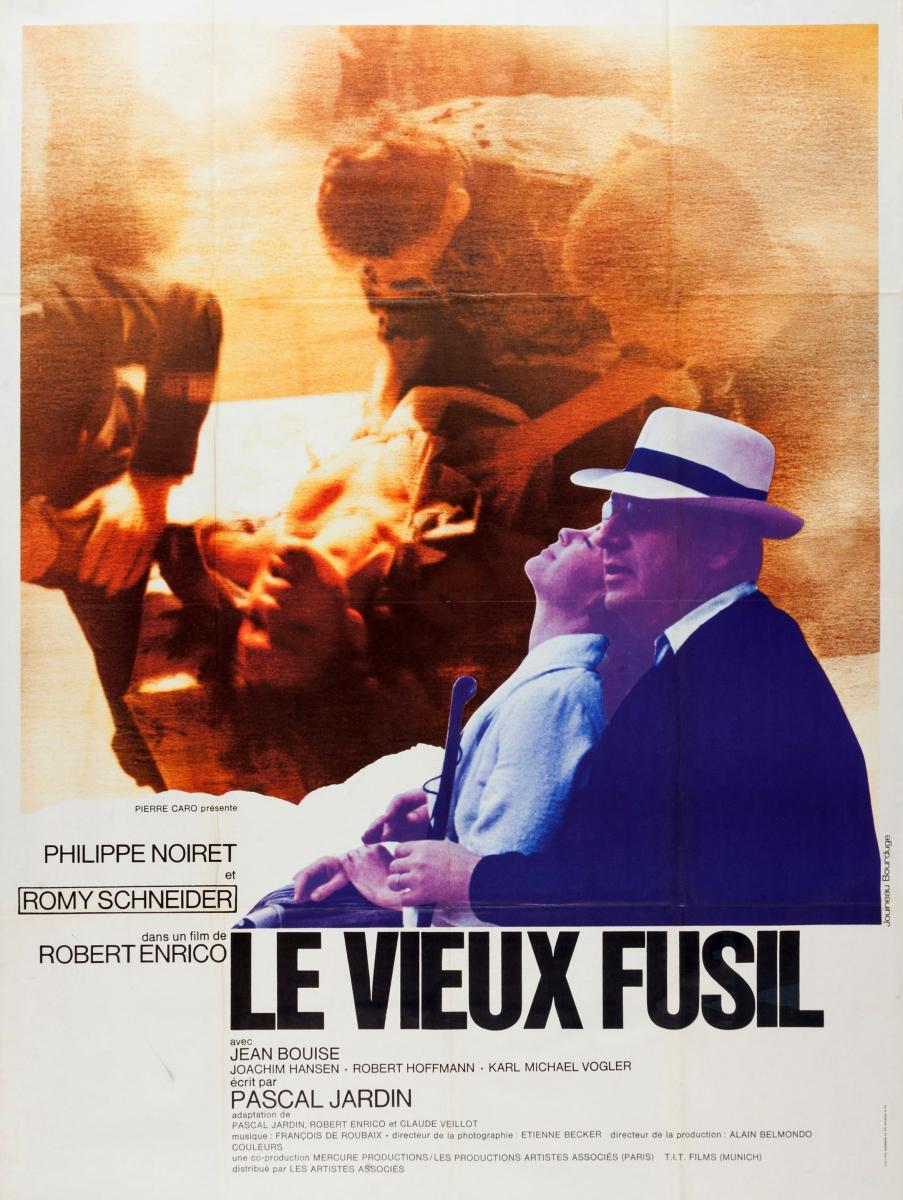
REGARDEZ AUSSI CETTE HISTOIRE DANS LE FILM "LE VIEUX FUSIL"

El viejo fusil

El viejo fusil
Votación
6,5
584
votos
Disponible en
Suscripción
Amazon Prime Video
 
Filmin
Alquiler
Filmin
Título original
Le vieux fusil
Año
Duración
102 min.
País
Francia Francia
Dirección
Guion
Robert Enrico, Pascal Jardin, Claude Veillot
Música
François de Roubaix
Fotografía
Étienne Becker
Reparto
Productora
Les Productions Artistes Associes, Mercure Productions, TIT Filmproduktion GmbH
Género
ThrillerDrama | II Guerra MundialVenganzaNazismo
Sinopsis
Durante la Segunda Guerra Mundial (1939-1945), en la Francia ocupada por las tropas alemanas, un viejo médico (Philippe Noiret) pierde a su mujer y a su hija por culpa de los nazis. Jura entonces vengarse de los responsables de su desgracia. (FILMAFFINITY)
Premios
1975: 3 Premios César: Mejor película, actor (Philippe Noiret) y banda sonora. 9 nomin.
1975: Premios David di Donatello: Mejor actor extranjero (Philippe Noiret) (ex aequo)

A VERCELLI, ITALIA. TEATRO CIVICO: MUSICHE DI TAN DUN, GERASSIMEZ, HAMILTON, BACH, SADLO, CURTONI

Generalmente, nell’esposizione di commenti e riflessioni  pubbliche, le situazioni personali vengono lasciate fuori dalla porta, ma in questo caso mi sembra doveroso  considerare  che in  oltre due anni ho avuto pochissime occasione di frequentare teatri e sale da concerto, a causa di motivi personali, aggravati da una generale situazione pandemica; finalmente il 23 aprile 2022 avevo diverse opportunità tra cui scegliere per tentare di riprendere in mano il “mio vivere l’arte” e non è stato difficile scegliere, in quanto ho semplicemente rispettato il mio assenso al primo invito ricevuto ed accettato !  


Sabato 23 Aprile 2022
Vercelli | Teatro Civico

SIMONE RUBINO percussioni

Programma

Tan Dun
Water Spirit
(cadenza dal Water Concerto for Water Percussion and Orchestra)
Alexej Gerassimez
Asventuras
per rullante solo
Bruce Hamilton
Interzones

per vibrafono e nastro magnetico
Casey Cangelosi
Bad Touch
per percussioni e nastro magnetico
Johann Sebastian Bach
Ciaccona, dalla Partita n. 2 in re min. per violino BWV 1004
trascrizione per vibrafono di Eduardo Egüez
Peter Sadlo 
Variations on Fuga C II
Lamberto Curtoni
“Io guardo spesso il Cielo”
“Quel metro che ci avvicina”
“La Preghiera più alta”

(testi di Mariangela Gualtieri)

Durante il concerto, peraltro un “Unicum” nel suo genere una domanda sorge spontanea: “ la voce umana e la Musica sono orizzontali o verticali?” E’ strano che su di un  palco teatrale vengano poste domande sull’orizzontalità o sulla verticalità della Musica, ma Simone Rubino il versatile percussionista in calendario per il Viotti Festival, da buon anchor man intrattiene il pubblico instradandolo verso la musica che andrà ad eseguire attraverso profonde riflessioni o pratiche considerazioni. Ecco che infatti espone quanto la voce umana soprattutto nella fluidità armonica della lingua italiana sia da considerarsi in una orizzontale fluttuazione grazie anche alle vocali che legano le ben più dure consonanti; le percussioni essendo invece colpi che percuotono superfici varie sono da considerarsi verticali e la riflessione non fa una grinza!

Venendo alla Musica nella sua essenzialità, così come la propone il geniale Simone Rubino, si palesa attraverso la finitudine del suono ricercato maniacalmente, però con apparente leggerezza e semplice giocosità. L’artista è spudoratamente stupefacente nella fantasmagorica rapidità con batteria e percussioni, così come è dolce nella poetica melodia al vibrafono. Claude Debussy ha saputo trasformare i suoni della musica nella voce dell’acqua e Rubino ha utilizzato la voce dell’acqua per creare suono e musica.

Anche se il concerto è risultato fruibile e coinvolgente in ogni brano,  sottolineo la particolarità dell’interpretazione della Ciaccona di Bach nella trascrizione di Eduardo Egüez, dove scaturisce eterea liricità con impalpabili suggestioni, avvolte da tenui colori e profondità espressive che conducono all’evocazione della ineluttabile accettazione della fine…

Di contemporaneo impatto visivo ed emotivo è il profondo senso del ritmo quando muove rocambolescamente un bastone alla luce wood, o schiaffeggia l’acqua per creare suono!

Presentatore, intrattenitore, soprattutto musicista, ma anche filosofo, Rubino riflette sul “limite” che il mondo ha e che l’uomo deve accettare, limiti superabili solo con l’arte e la musica! Vengono  citati Kant e Platone, ricordandone il pensiero: “la democrazia è possibile solo se lo stato ha un popolo educato ad essa” e vengono riportate riflessioni di Mariangela Gualtieri “saranno i bambini a salvare il mondo e gli animali..tutti i cuccioli del mondo”! E con queste riflessioni e questi testi dallo stesso Rubino cantati sull’avvolgente dolcezza della piacevolissima  musica composta da Lamberto Curtoni, si conclude il concerto lasciando  agli spettatori il desiderio del bello, della speranza e della semplicità oggettiva!

La Musica vince sempre.

Renzo Bellardone

sábado, 23 de abril de 2022

DESTINED FOR GREATNESS: ONE OF MICHELANGELO’S FIRST KNOWN STUDY OF A NUDE

A recently rediscovered drawing by the Renaissance master is likely to shatter auction records when it comes to auction at Christie’s Paris in May

A nude figure stands in front of two others, his shoulders hunched, his arms crossed. His stance is recognisable as that of the shivering man waiting to be baptised by Saint Peter in the fresco The Baptism of the Neophytes (1426-27) in the Brancacci Chapel in Florence.

Part of the church of Santa Maria del Carmine, the chapel was painted with a cycle of scenes from the life of the apostle by Masaccio (1401-28), together with his colleague Masolino and later completed by Filippino Lippi. Marking an important shift in the development of Renaissance art, it soon became a site of devotion for artists as well as churchgoers, among them the young Michelangelo Buonarroti (1475-1564).

He made several studies from the frescoes, including a recently rediscovered drawing, A nude man (after Masaccio) and two figures behind, that will be sold at Christie’s Paris on 18 May in the single-lot auction, Michelangelo’s First Nude: A Drawing Rediscovered.

While the position of the central figure in Michelangelo’s version is the same as in Masaccio’s fresco, he has added a more defined musculature. ‘It’s so much more than a copy,’ says Stijn Alsteens, International Head of Old Master Drawings at Christie’s. ‘Michelangelo has decided to make the figure into something that corresponded more to his aesthetic by making him much more robust and monumental, while at the same time keeping the fragility of the figure, who is exposed and shivering.’ He did this by ‘subtly shifting the position of the feet and redrawing the head a little, but especially by emphasising the back and the buttocks of the man.’

The skill with which this effect has been produced suggests the work of an accomplished draughtsman. It is hard to put a specific year on the work, but Alsteens says it probably dates to 1496, when Michelangelo, about 21, ‘was already remarked by many as an exceptional artist and was about to be offered prestigious commissions’.

As well as altering the main figure, Michelangelo added two men who ‘bear no relation’ to those in the fresco but recall figures that can be found in a drawing by the artist in the Teylers Museum in Haarlem. These two figures are drawn in a sketchier style than the central one, and can be seen as further examples of what Alsteens calls Michelangelo’s talent for ‘telling stories that convey beauty and drama with the help of the human figure, in particular the male figure’.

The drawing offers a remarkable insight into the development of the artist’s eye, says Alsteens. Through the three figures we can see Michelangelo ‘formulating the subjects and the style on which he is going to build most of his œuvre’. One of the earliest surviving works by Michelangelo, A nude man (after Masaccio) is thought to belong to a small group of drawings now in major museums in Europe, based on the Brancacci frescoes and other works by Masaccio.

Michelangelo’s interest in the chapel is recorded in Giorgio Vasari’s book The Lives of the Most Excellent Painters, Sculptors and Architects, first published in 1550. He notes how the artist ‘copied those works with so much judgement that the craftsmen and all other men were astonished, in such sort that envy grew against him together with his fame’.

As well as being hugely exciting for academics and admirers of Michelangelo’s work, the drawing also represents a major event for the art market. ‘His drawings are very rare, and there are no known paintings or sculptures by him outside public collections,’ says Alsteens.

The drawing would have remained in private hands, overlooked and misattributed, were it not for a chance discovery in 2019, when Christie’s was asked to value a collection in France. On the basis of a photograph, Furio Rinaldi, then associate specialist in the Old Master Drawings department in New York, suggested it could be a genuine Michelangelo. He had assisted with the exhibition Michelangelo: Divine Draftsman and Designer at the Metropolitan Museum of Art the previous year.

Rinaldi was convinced the drawing was related to the others in the Brancacci group, and his theory was soon confirmed by leading scholars, such as Paul Joannides, Emeritus Professor of Art History at Cambridge University. ‘Every year a great drawing comes up for sale somewhere,’ says Alsteens, ‘but what is exceptional here is that not only is it a great drawing, it’s a drawing no one knew existed.’

While it was never recognised as a Michelangelo by its owners, the drawing has been well looked after, including by Modesto Genevosio, a collector from Turin who was its custodian in the 18th century. He thought it was the work of a minor artist called Pietro Faccini, but nonetheless went to the trouble of mounting it.

After Genevosio, its provenance is, as is often the case with drawings, a little vague. ‘In some way it found its way through the world,’ says Alsteens. Eventually it ended up in an auction at the Hôtel Drouot in Paris in 1907, where it was sold to the famous pianist and conductor Alfred Cortot. It was given the attribution ‘school of Michelangelo’ and only a brief catalogue entry.

The drawing will now return to the saleroom with significantly more fanfare. It is expected to easily break the previous record set for the artist by another nude male study, The Risen Christ, which sold at Christie’s London in 2000 for £8.1 million.

‘We’ve seen great demand for works by Michelangelo and other great Italian artists from European, American and Asian collectors,’ says Alsteens. But A nude man (after Masaccio) and two figures behind won’t just be of interest to collectors of Old Master drawings, he suspects. ‘I think the work will also appeal to people who collect paintings or sculptures. It’s a fairly large drawing, it's very well preserved and in many ways is very modern. One could see it appealing to someone who also collects Lucian Freud.’

The work’s appearance at pre-sale viewings in New York and Hong Kong this month is sure to draw crowds, and rightly so, says Alsteens. After all, for scholars, collectors and art lovers alike, ‘this is an exceptional drawing by one of the greatest figures in Western art’.

https://www.christies.com/features/michelangelos-first-known-study-of-a-nude-12204-1.aspx?sc_lang=en&cid=EM_EMLcontent04144C05Section_A_Story_1_0&COSID=42665747&cid=DM476703&bid=307302812#fid-12204