martes, 5 de febrero de 2019

EXPOSICIÓN DE CHAGALL A MALÉVICH: ARTE EN REVOLUCIÓN. FUNDACIÓN MAPFRE


Proveniente de una exposición matriz que tuvo lugar en el Grimaldi Forum de Mónaco en 2015, aquella fue más amplia, debido también a la capacidad enorme de las salas. Comisariada en su día como esta de ahora en Mapfre por Jean-Louis Prat, Caballero de la Legión de Honor Francesa y uno de los especialistas galos en arte ruso y organización de proyectos como este, ex director de la Fundación Maeght, también estuvo al mando de la de Chagall en el Museo Thyssen de Madrid, hace algunas temporadas.

"La muestra propone un recorrido a través 92 obras de 29 artistas que en las primeras décadas del siglo XX, rompieron con los moldes establecidos y se adelantaron a la modernidad de un modo nunca visto antes en Rusia. Se complementa con 24 publicaciones del período que demuestran cómo las vanguardias rusas, que buscaban su aplicación a todos los ámbitos de la vida, establecieron un fértil diálogo con la literatura y el diseño editorial.
Marc Chagall y Kazimir Malévich son, en esta exposición, las dos figuras representativas que encarnan dos polos opuestos en las innovaciones de la vanguardia pictórica. Entre ambos se presenta la obra de Natalia Goncharova, Liubov Popova, El Lissitski, Nathan Altman, Vassily Kandinsky o Alexandr Ródchenko, entre otros".


Kazimir Malévich. Suprematismo, 1915-1916 inv. КП-10432 Ж-358 © Museo Regional de Arte de Krasnodar en Honor a F. A. Kovalenko, en colaboración con el Museo Estatal y Centro de Exposiciones ROSIZO

La exposición presentada a la prensa el día 7 de febrero pasado, cambió de sala:de la tradicional al final del patio de carruajes, coqueto entorno amaderado y acústico, bien preparado, se pasó a la más luminosa terraza, donde la primera muestra desde el cambio de dirección de las exposiciones de la Fundación Mapfre, reflejó un evidente cambio de estilo, junto a su nueva directora, Nadia Arroyo, reemplazando al anterior director Pablo Jiménez Burillo, ya retirado.

Aparte de las obras, algunas rutilantes y envolventes, hipnóticas, de muchos de los autores ofrecidos, la presencia contenida, elegante y con un chic y un conocimiento artístico muy propios, de Sylvie Bianchieri, Directora General del Grimaldi Forum, escoltada por Nathalie Varley, Gerente de Comunicación del Grimaldi Forum y el hipervigilante y atento comisario de la muestra, el talentoso y claro ya mencionado Jean Louis Prat, también un caballero ·tout court".

Alicia Perris 

A 130 AÑOS DEL NACIMIENTO DE BORIS PASTERNAK, EL AUTOR DE “DOCTOR ZHIVAGO” . EL MICRÓFONO DE ALICIA PERRIS


http://www.radiosefarad.com/a-129-anos-del-nacimiento-de-boris-pasternak-el-autor-de-doctor-zhivago/

 “Doctor Zhivago” de Boris Pasternak, escritor ruso y judío, de atribulada vida, “sigue siendo una de las cumbres de la narrativa europea de este siglo; los rusos comenzaron a comprenderlo así en su primera rehabilitación, y la situación actual les permitirá entrar en un mejor contacto con toda la obra de Pasternak, especialmente con su poesía. Occidente haría bien en releerla ahora con esta óptica; no como un trozo de muro de Berlín o como un arma contrarrevolucionaria,… sino como una muestra auténtica de un genio poético y de un amplio talento narrativo”.
Estas fueron las palabras, que el periodista de El País, Eduardo Haro Tecglen, le dedicó al poeta y novelista en vida, hace ya muchos años. Identificado por el gran público como el alter ego de aquel Yuri tierno y delicioso, sensible y solidario de “Doctor Zhivago”, el personaje se encarnó en él y a menudo sus existencias complicadas e inmisericordes se confunden. El Micrófono de Alicia Perris intenta echar alguna luz sobre las cuestiones que tradicionalmente nos inquietan a todos, esas que conmocionaron a Boris Pasternak: la libertad, la creación, la belleza, la política, el amor y el posicionamiento, diferente en cada uno, ante la vida. El 10 de febrero se cumplen 129 años de su nacimiento, un número raro, pero, a veces, parece que el escritor de la dacha de Peredelkino, nunca se ha ido.
Alicia Perris


YORGOS LANTHIMOS’S SURREAL FILMS ARE TERRIBLY AWKWARD, TENDER, AND TRIUMPHANT


Five films that inspired Lanthimos’s Oscar-nominated The Favourite portray humans who seem to be putting on their bodies and native tongues for the very first time.
Anthony Hawley


Yorgos Lanthimos’s debut film Kinetta (2005) (photo by Haos Film)

Both Yorgos Lanthimos’s 2005 debut Kinetta and his 2009 film Dogtooth open with cassette tapes. In the former, a man in a disheveled black and white suit stands in front of a sun-bathed stone wall, a pair of old headphones straight out of the mid-1980s hanging around his neck. A woman sings jazzy blues in the background as he stares out at something, which we learn in the next shot is a demolished, overturned car. From the rubble, he retrieves a cassette tape, and the music stops; he then walks away with as much unexplained determination as he had when recovering the tape seconds before.

The latter, Dogtooth, opens with a close-up of an old Panasonic tape recorder. A hand inserts a tape, presses play, and we listen to something akin to a language instructional: “Today the new words are the following … sea … motorway.” The female voice reads the beginning of what could be a dictation exercise or book one of “how-to-speak-Greek-for-travelers.” But no sooner does she begin than we hear the odd descriptions, “a sea is a leather armchair with wooden arms”; “a motorway is a very strong wind.”
In Lanthimos’s six films, which are screening this weekend and into early next week at the Film Society of Lincoln Center, humans always appear to be learning how to be human for the first time. We see them trying to figure out how to act, how to carry themselves, how to touch, what to say, and performing roles forced upon them either by society (Kinetta), themselves (Dogtooth), or some deeply problematic utopian bubble designed by a maniacal desire to control behavior (Dogtooth and The Lobster, 2015).

When I first saw Dogtooth I wondered for a split second if something was wrong with the subtitles. But it’s here, only moments into Lanthimos’s second feature, that we learn just how radically reconfigured Lanthimos’s world is, which we are about to enter: one full of an entire set of linguistic signs and symbols fabricated to meet the needs of a couple obsessed with barring its grown children from the outside world (save the woman they hire to have sex with their man-son). During scene after scene in Yorgos Lanthismos’s films, we endure a masterful portrayal of the terrible awkwardness — at times unbearably clunky, at others, hauntingly fragile and tender — of humans who seem to be putting on their bodies and native tongues for the very first time.


The Lobster (2015), directed by Yorgos Lanthimos (Photo by Bfi/Irish Film Board/Canal+/Cnc/Greek Film Center/Kobal/REX/Shutterstock (5874595d) Colin Farrell, Rachel Weisz)

Or maybe they’re trying to find a tongue that is native. So many of Lanthimos’s characters are caught in an endless loop or rehearsals for habits. Some rehearse words, plot lines, or scenes for films they’ll never shoot (Kinetta). Others rehearse the depraved experiences of being without a life partner (The Lobster); or exercise routines inside a family compound involving zero contact with the outside world (Dogtooth). Still, others rehearse the role of bereaved family members (Alps, 2011) or physical wellness (The Killing of Sacred Deer, 2017).
In almost every instance, Lanthimos’s characters are being scripted, forced to practice a custom or narrative. There’s a scene in Alps in which a nurse (played by Aggeliki Papoulia) is sitting with the family of a recently deceased female tennis player. The girl, only 16, died as a result of a horrible car accident, and the nurse has volunteered herself to the grieving parents as a stand-in for the daughter to help them recover. While sitting with them, wearing the dead girl’s shoes on her feet and sweatband on her wrist, she speaks vehemently about beating an opponent, all the while with the inelegant look of someone reading lines off of a screen. When asked by the father if she would like water, the nurse (still in her role as the deceased daughter) declines. “You usually drink lots of water after a match,” he corrects. “Okay, thanks then,” she says, gulping down a large glass of water.

What’s so remarkable about Lanthimos’s films is that inevitably there’s a breakdown, a slippage when the elements being rehearsed take on a greater dimension of reality, often in an act of unavoidable violence — sometimes bodily, other times in the form of a tear in reality.

How will we re-learn everything after it’s all collapsed? Will we invent new rituals, resurrect the old, or completely redefine ourselves and our language, (i.e., “a motorway is a very strong wind”)? I can’t help but feel that Kinetta, five years before the Greek economic crisis, was a prescient imagining of a society faced with the boredom of its own existence post-capitalism. After we’ve stopped being sold all of our gestures, facial expressions, mannerisms, and etiquettes, where will we go to relearn them? As we drift along in a global economy where one of the biggest players is led by a reality TV star, on a planet whose climate is shifting such that our lives will be unsustainable in the next 50 years, Lanthimos’s cinema seems more important than ever.

“I don’t mean to pressure you or to ruin the mood now that we’re celebrating,” says Léa Seydoux’s character to Colin Farrell’s in The Lobster, “but don’t expect anyone else to dig your grave for you or to carry your corpse.”

https://hyperallergic.com/482800/yorgos-lanthimoss-surreal-films-are-terribly-awkward-tender-and-

viernes, 1 de febrero de 2019

LA NUOVA MOSTRA DI GIACOMO ZAGANELLI AGLI UFFIZI CONFRONTA I TURISTI CON LA DISTORSIONE DELLA VISITA E DEL VIAGGIO GENERATA DALLA TECNOLOGIA DIGITALE


Grand Tourismo: questo il nome del progetto di Giacomo Zaganelli, ideato in collaborazione con le Gallerie degli Uffizi, che verrà presentato a partire dal 31 luglio 2018 proprio all’interno del percorso del museo fiorentino. Sarà infatti insolitamente una sala degli Uffizi, ovvero la sala 56 del primo piano, la stessa dedicata fino a pochi giorni fa ai marmi ellenistici ora approdati alla  nuova collocazione del Verone, ad accogliere una mostra che riunisce tre video dell’artista: Illusion, Everywhere but nowhere e Uffizi Oggi.


Zaganelli, fiorentino con all’attivo esperienze di carattere internazionale, sollecita una riflessione sull’identità del turismo attuale e in particolare sulla consuetudine a filtrare l’osservazione dell’opera d’arte (e non solo) attraverso l’obiettivo di smartphone, telecamere, macchine fotografiche. Se in Illusion le strade del centro di Firenze assumono il ruolo di testimoni di un’acquisizione di immagini divenuta meccanica e ridondante e se in Everywhere but nowhere Palazzo Strozzi si fa testimone di un utilizzo parossistico dei devices elettronici, è tuttavia soprattutto il video Uffizi Oggi, realizzato in esclusiva per le Gallerie degli Uffizi, a definire l’identità del progetto Grand Tourismo.

Uffizi Oggi, girato dall’artista in una domenica di ordinaria apertura al pubblico, si qualifica dunque come una rivisitazione personale e un osservatorio non convenzionale su ciò che avviene quotidianamente di fronte ai capolavori di Botticelli conosciuti in tutto il mondo come la Nascita di Venere e la Primavera. Proiettato insieme a Illusion e Everywhere but nowhere all’interno del percorso museale – nel punto di snodo del primo piano – si propone come una sosta offerta al visitatore il quale si troverà a rimeditare sull’esperienza appena vissuta da una prospettiva volta a innescare considerazioni inattese in un pubblico trasversale per età e provenienza.

Dichiara il Direttore delle Gallerie degli Uffizi, Eike Schmidt, che insieme a Chiara Toti ha curato la mostra: «Con le innovazioni tecnologiche degli ultimi decenni, e in particolare dal momento dell’arrivo della fotografia digitale a portata di mano, la fruizione del museo è fortemente cambiata. La mole di riproduzioni delle opere che conserviamo cresce in maniera esponenziale modificandone la percezione, e anche il comportamento stesso del viaggiatore, collezionista di immagini fatte da sé, è oramai fondamentalmente alterato. Partendo da una riflessione interna agli Uffizi e incentrata sulla sua sala più frequentata, quella dei capolavori di Botticelli, attraverso l’interpretazione di Giacomo Zaganelli abbiamo voluto porre l’attenzione su un fenomeno che, mutando la relazione tra spettatore e opera d’arte, implica un ripensamento delle funzioni del museo stesso».

https://www.uffizi.it/eventi/grand-tourismo-di-giacomo-zaganelli

ÉLISABETH LOUISE VIGÉE-LE BRUN SCANDALIZED THE 18TH-CENTURY PARIS ART WORLD WITH HER SMILE


Artsy Editors
On Wednesday, at Sotheby’s Old Masters sale in New York, Élisabeth-Louise Vigée-Le Brun’s 1788 work Portrait of Muhammad Dervish Khan was auctioned for $7.2 million, smashing its high estimate of $6 million. The sale marks a record for a woman artist working in the pre-modern era.


In 1787, Élisabeth Louise Vigée-Le Brun debuted her latest self-portrait at the prestigious Paris Salon. In it, her lips are parted in a demure smile; she cradles her young daughter, effusing maternal intimacy. Both are clad in gauzy white dresses that tenderly suggest a shared identity.
The Salon was appalled. “The painting shocked because it ignored rules about facial representation,” explains historian Colin Jones, a professor at Queen Mary University of London. “The idea of the smile with the teeth showing was not exactly new, but to have Madame Vigée-Le Brun actually identified with this gesture is seen as throwing away the rulebook of Western art.” A teeth-baring grin was for genre paintings, irreverent images of bourgeois domesticity à la Jan Steen. It was certainly not intended for the refashioning of Mother and Child, one of the oldest motifs in the Western canon.
One contemporary journalist wrote that Vigée-Le Brun’s display of teeth was “an affectation which artists, connoisseurs, and people of good taste are unanimous in condemning”—a fervor representative of the controversies that filled the French painter’s life. As Jones notes: “She liked breaking conventions.”


Vigée-Le Brun was born in 1755 to humble Parisian beginnings. She exhibited a gift for the arts from a young age, although she was rejected from formal training on the basis of her gender. Instead, the aspiring artist worked in a history painter’s atelier, took oil painting lessons, and visited the city’s most important galleries. By the 1770s, she was taking clients. By 1783, she had claimed one of the four seats reserved for women at the Academy, due to direct intervention from Queen Marie Antoinette, her most famous subject, and King Louis XVI.

Her dizzying, convention-breaking rise to fame was made possible by the rapidly changing world around her. She had a unique understanding of “the new style of modern individuals,” says Anne Higonnet, a professor at Barnard College. Vigée-Le Brun portrayed her sitters as glamorously natural and naturally glamorous, a talent Higonnet likens to “going to a super-intuitive stylist that will make you look perfect for Instagram.”

This gift for transformation—as well as Vigée-Le Brun’s more radical beliefs—were on display during the artist’s first Salon in 1783. In a departure from the structured courtly style, her submission Marie Antoinette in a Chemise Dress (1783) shows the queen in a loose-fitting muslin frock, hair unadorned, holding a rose. A self-proclaimed royalist, Vigée-Le Brun meant to reimagine royalty in accordance with modern, individualist aspirations toward authenticity, transparency, and natural virtue. To Vigée-Le Brun—and, indeed, to Marie Antoinette—the painting respected the ideas popularized by Enlightenment philosopher Jean-Jacques Rousseau, ideas upon which the 1789 French Revolution would be built.
To her contemporaries at the Salon, however, this styling was frivolous, inelegant, and inappropriate for a queen. “That was one of those collision courses that was bound to end in terrible accident,” explains Higonnet. “The Queen was attracted to everything that was pleasant and comfortable about being a modern individual, but she wanted to hang on to the prerogatives of being queen.” No one, Higonnet continues, wanted “to obey and pay taxes to a modern individual.” Vigée-Le Brun’s portrait was removed shortly after its unveiling, though its aesthetics would remain popular with the Queen and the aristocratic community.
Critics also pilloried Vigée-Le Brun for her very presence in the 1783 Salon. The newsletter Mémoires Secrets rumored that “she does not paint her own pictures, that she does not finish them at least, & that an artist who is in love with her (M. Ménageot) assists her.” For many, it was impossible to believe that a woman could—or would—display her professional achievements so publicly as in the Salon.
Scathing as it was, this review in Mémoires Secrets actually points to one of the profound contradictions of Vigée-Le Brun’s work. By professionalizing and publicizing her talent, Vigée-Le Brun was actually breaching the Rousseauian ideas that she championed. As Higonnet puts it, Rousseau was “very conservative” toward women, despite his efforts to liberate mankind. Both parents, the French philosopher wrote, were necessary for the stable rearing of a child—but a woman’s role was purely domestic. It did not extend beyond the crucial bearing, nurturing, and nourishing of offspring.
“Rousseau had a bunch of ideas, which he wanted to bundle together, and Vigée-Le Brun wanted to pick and choose: the mother-child relationship or the rights of the individual, for instance,” Higonnet says. “Vigée-Le Brun reasoned that the rights of man must logically include the rights of women. She out-Rousseaued Rousseau.”
For this, she believes that Vigée-Le Brun deserves recognition as a key painter of 18th-century France—or maybe something more. “Her move into the public domain was so radical for a woman,” Higonnet says, “that, in a way, she was the most radical painter of the period.”

—Sarah Bochicchio

https://www.artsy.net/article/artsy-editorial-elisabeth-louise-vigee-le-brun-scandalized-18th-century-paris-art-smile?utm_medium=email&utm_source=15871434-newsletter-editorial-daily-01-31-19&utm_campaign=editorial&utm_content=st-V

EUROPEAN MUSEUMS ARE LEADING A €3.1 MILLION EFFORT TO REVAMP CAIRO’S EGYPTIAN MUSEUM.


The Egyptian Museum in Cairo. Photo by Bs0u10e01, via Wikimedia Commons.

The British Museum has teamed up with other major institutions, including the Musée du Louvre, to bring new life to the Egyptian Museum in Cairo. The €3.1 million ($3.5 million) pan-European plan, formally known as Transforming the Egyptian Museum of Cairo, will be backed by a consortium consisting of the British Museum, the Louvre, the Museo Egizio in Turin, the Ägyptisches Museum und Papyrussammlung in Berlin, and the Rijksmuseum van Oudheden in Leiden.
A particularly charged subject of conversation regarding this ambitious undertaking has been whether or not the Rosetta Stone, which was found by Napoleon’s army in Egypt in 1799 and is currently housed at the British Museum, would be returned to the country of its origin. The Rosetta Stone bears a decree about Ptolemy V Epiphanes in three different scripts: Ancient Egyption hieroglyphs, Demotic script, and Ancient Greek. It was carved in 196 BCE and, because the content of the inscriptions were near identical between scripts, it proved to be the key to deciphering Egyptian hieroglyphs, thereby unlocking a great deal of ancient Egyptian history.
A British Museum spokeswoman told The Art Newspaper that there are no current requests nor plans to lend the Rosetta Stone. Instead, the British Museum’s contribution to the Egyptian Museum revamp will be centered around curatorial advice for the later period and Ptolemaic galleries, in addition to supporting interpretation and audience engagement.
The €3.1m million plan is funded entirely by the European Union. When asked if such participations would continue post-Brexit, a British Museum spokeswoman told TAN:
We would certainly hope to continue to participate in joint initiatives post Brexit; the majority of the work on this project will take place post 29 March. The museum works in collaboration with museums in Europe and across the world, and will continue to do so.
Wallace Ludel

https://www.artsy.net/news/artsy-editorial-european-museums-leading-31-million-effort-revamp-cairos-egyptian-museum

FAUT-IL VRAIMENT ÊTRE "CON" POUR ÊTRE JOURNALISTE?


Par Laure Croiset
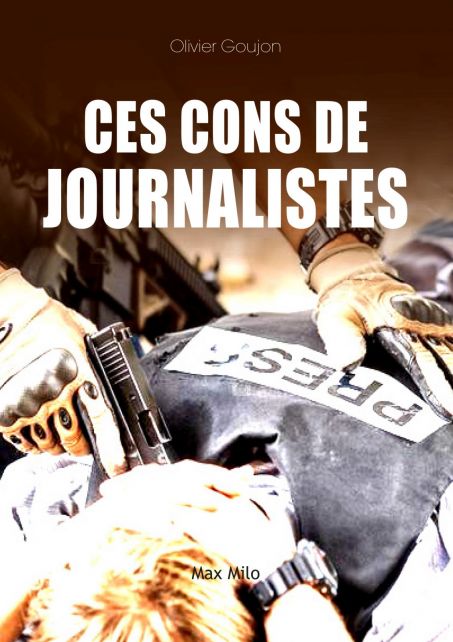
"Ces cons de journalistes". Le titre de l'ouvrage du journaliste Olivier Goujon est ironique. La réalité l'est tout autant. Où l'on peut accepter de gagner 500 euros par mois après 40 ans de métier et se laisser acheter à coups de voyages, de foulards, et de stylos.


Le livre d'Olivier Goujon "Ces cons de journalistes" est publié aux éditions Max Milo

"Mon métier meurt et je veux bien mourir avec. Mais pas comme un con". C'est ainsi que commence l'ouvrage du journaliste Olivier Goujon, Ces cons de journalistes, qui épingle avec un humour acerbe la précarisation d'un métier où l'on peut gagner 500 euros par mois après 40 ans de métier et se laisser acheter à coups de voyages, de foulards et de stylos. Alors, "faut-il vraiment être con pour être journaliste?". En sous-texte, voilà l'épineuse question que pose cet ouvrage dont le titre de travail était "La fin du journalisme". "Le terme de cons est utilisé de manière ironique", reconnaît son auteur qui a réalisé plus de 500 reportages dans 160 pays, dont de nombreux terrains en guerre, comme l'Afrique et le Moyen-Orient. "Mais oui, il faut être con pour aimer ce métier à ce point-là, vouloir le faire dans l'adversité, voire même dans l'hostilité et continuer à y croire encore".
"Toutes les planètes s'alignent pour affirmer que le journalisme se trouve en grande difficulté et la précarisation du métier est l'élément central de la crise du journalisme", juge Olivier Goujon. Cible des gilets jaunes, cette profession n'a jamais autant attiré la défiance des Français. Selon un récent sondage Kantar La Croix sur la crédibilité des médias, 51% des sondés sont mécontents du traitement de cet épisode mouvementé par les médias, 32% seulement, moins d’un Français sur trois, en sont au contraire satisfaits.
En France, il s'agit de bien s'accrocher si l'on ambitionne de prendre la voie du journalisme. Selon une étude menée par le site de recherche d'emploi Qapa et publiée par L'Etudiant, le métier de journaliste arrive en 2018 en tête des professions les moins attractives. "Ambitionner d'être journaliste est le plus sûr moyen de devenir chômeur à brève ou moyenne échéance", souligne cet ouvrage. Pourtant, la commission de la Carte de presse dénombre 35.047 journalistes en France, dont 7.000 pigistes. Et le salaire médian d'un journaliste en CDI était en 2017 de 3.591 euros brut mensuels en 2017, selon les données actualisées de l'Observatoire des métiers de la presse. Mais il existe dans la profession une zone grise qui "a tendance à se développer dans la périphérie de la profession", observe le sociologue des médias Jean-Marie Charon. C'est notamment à cette zone qui n'est pas prise en compte par la Commission de la carte de presse qu'Olivier Goujon a choisi de s'intéresser dans cet ouvrage douloureusement pessimiste.
"Comment des journalistes s’endettent pour aller risquer leur vie à l’autre bout du monde pour 500 euros"
En 2015, Olivier Goujon se voit accepter par un grand hebdomadaire la publication web d'un reportage réalisé dans "des conditions périlleuses" en Syrie pour... 500 euros. Finalement, le chef de service ne publiera pas son papier, lui adressant un mail laconique: "Je me rends compte que nous avons atteint notre plafond de piges pour 2015. Donc nous ne pourrons pas prendre votre papier". "Difficile d'expliquer la nature du sentiment que j'ai alors éprouvé: l'humiliation est sans doute l'état qui s'en approche le mieux", écrit Olivier Goujon. "La précarisation du métier et la baisse des tarifs des piges font que la compétition est de plus en plus rude", souligne son auteur, qui rappelle les conditions extrêmes dans lesquelles les photo-reporters pratiquent leur métier. Il faut savoir que la commande écrite et signée est aujourd'hui très rare, et la plupart du temps, le reporter n'est pas couvert par une assurance. "Or, dans les années 80 et 90, quand les journalistes partaient dans de bonnes conditions, ils étaient bien considérés dans l'opinion. Aujourd'hui, alors que c'est de plus en plus dur de travailler et que les conditions sont devenues précaires, les journalistes sont de plus en plus confrontés à une opinion hostile".


"Comment des journalistes donnent leur vie à leur métier pour finir avec 500 euros par mois"
"Sophie travaille pour le plus grand journal de France. Elle gagne 500 euros par mois. Parfois 600". À 60 ans, cette journaliste depuis 40 ans vit au bord de la misère. Mais elle n'a pas envie que ça se sache. "Elle se dit que ça doit être de sa faute", raconte Olivier Goujon. Aujourd'hui, elle ne peut pas payer son loyer et se rend même à la Soupe populaire. Pourtant, la profession compte d'autres Sophie, qui donnent leur vie à leur métier pour finir avec 500 maigres euros par mois. "Elle n'est pas un cas isolé". Pour l'auteur de Ces cons de journalistes, "on fait de plus en plus lourdement reposer le poids de l'information sur les épaules d'une population journalistique qui est devenue de plus en plus fragile socialement et économiquement". "Les tarifs baissent", poursuit-il. "Il y a de plus en plus de pigistes et c'est à eux que l'on demande le plus de charge en matière d'informations". Seulement 7.000 selon la Commission de la Carte d'Identité des Journalistes Professionnels (CCIJP). Et près de 19.000, selon la mutuelle Audiens. "Cette précarisation aura forcément des effets sur la qualité de l'information. Elle créera une situation de défiance dans l'opinion publique". "Il faut dire que "quand vous gagnez 500 euros par mois, votre préoccupation, c'est de bouffer, c'est pas de vérifier l'info".
"Comment les journalistes sont sortis du cadre protecteur et légal du salariat"
"De 1980 à 2000, l'installation durable d'un mode de fonctionnement qui fait du pigiste l'élément central de la production d'information se déroule d'autant plus assurément que les journalistes, se sentant protégés par les récentes dispositions législatives, ne voient pas venir le temps de la précarisation", écrit Olivier Goujon. Pourtant, la proportion de pigistes en France ne cesse de gagner du terrain. Selon la CCIJP, la précarité (pigistes + chômeurs) augmente passant de 22,7% à 26,2% entre 2006 et 2017. Sans compter les "journalistes cachés" rémunérés sous le statut d'intermittents du spectacle et aujourd'hui sous le statut de l'autoentrepreneur. Même si en théorie, "le métier de journaliste devant obligatoirement s'exercer sous le régime du salariat, celui de l'autoentreprenariat lui est naturellement interdit". Cette mutation quasiment invisible, la commission de la carte de presse ne veut pas en entendre parler, dénonce Olivier Goujon. "Aujourd'hui, on délivre des cartes de presse à partir de 400 ou 500 euros à des gens qui présentent en grande partie des facturations. C'est comme ça qu'on maintient artificiellement un chiffre à 35.000 journalistes. Sinon, on en aurait beaucoup moins, peut-être 25.000".

"Comment un pan entier du journalisme s’est laissé acheter à coups de voyages, de foulards, et de stylos"
"Dans les années 90, avec l'arrivée de la presse magazine, on s'est laissé voler des secteurs entiers qu'on considérait à tort comme secondaires dans le journalisme, comme le tourisme ou l'art de vivre, qui sont devenus des ramasse-publicités", observe Olivier Goujon. C'est ainsi que des pans entiers du journalisme ont échappé au journalisme. "On a eu tort", affirme l'auteur de Ces cons de journalistes. "Les agences de communication se sont emparées de ce sujet en payant les journalistes qui ont accepté et tout le monde fermait les yeux". Sauf que dans le journal, on se laissait imposer un rédactionnel, ce qui pouvait ressembler à du publireportage déguisé. "Les journalistes eux-mêmes portent une part de responsabilité", observe Olivier Goujon. "Ironie du sort: ces journalistes qui se croyaient les maîtres du jeu, sont en train de se faire voler la vedette par les blogueurs et les instagrameurs."
L'avis de Challenges:

Ces cons de journalistes, d'Olivier Goujon (éditions Max Milo), 18 euros.

L'humour est caustique et le style vif et terriblement percutant pour cet ouvrage au titre ironique, qui tombe à point nommé en cette période de défiance généralisée d'une profession qui est devenue l'une des cibles des gilets jaunes. Olivier Goujon, lui-même journaliste, s'appuie sur de nombreux témoignages comme Sophie "qui ne veut pas trop qu'on sache qu'elle est pauvre et triste", mais aussi N'Fabteh Minteh que rien ne prédestinait à devenir journaliste. Manquant parfois de distance avec l'expérience personnelle de l'auteur, cet ouvrage a le mérite d'éclairer la précarisation d'un métier qu'il semble urgent de réinventer.
https://www.challenges.fr/media/presse/faut-il-vraiment-etre-con-pour-etre-journaliste_640051#xtor=EPR-2-[ChaActu18h]-20190201