domingo, 4 de abril de 2021

AMENHOTEP III CITY IN LUXOR JUST DICOVERED BY ZAHI HAWASS TEAM. AND, LE DÉFILÉ AU CAIRE, DE 22 MOMIES DE SOUVERAINS. TAMBIÉN EN ESPAÑOL

Egyptologist Zahi Hawass Announces Discovery of Lost ‘Golden’ City in Luxor

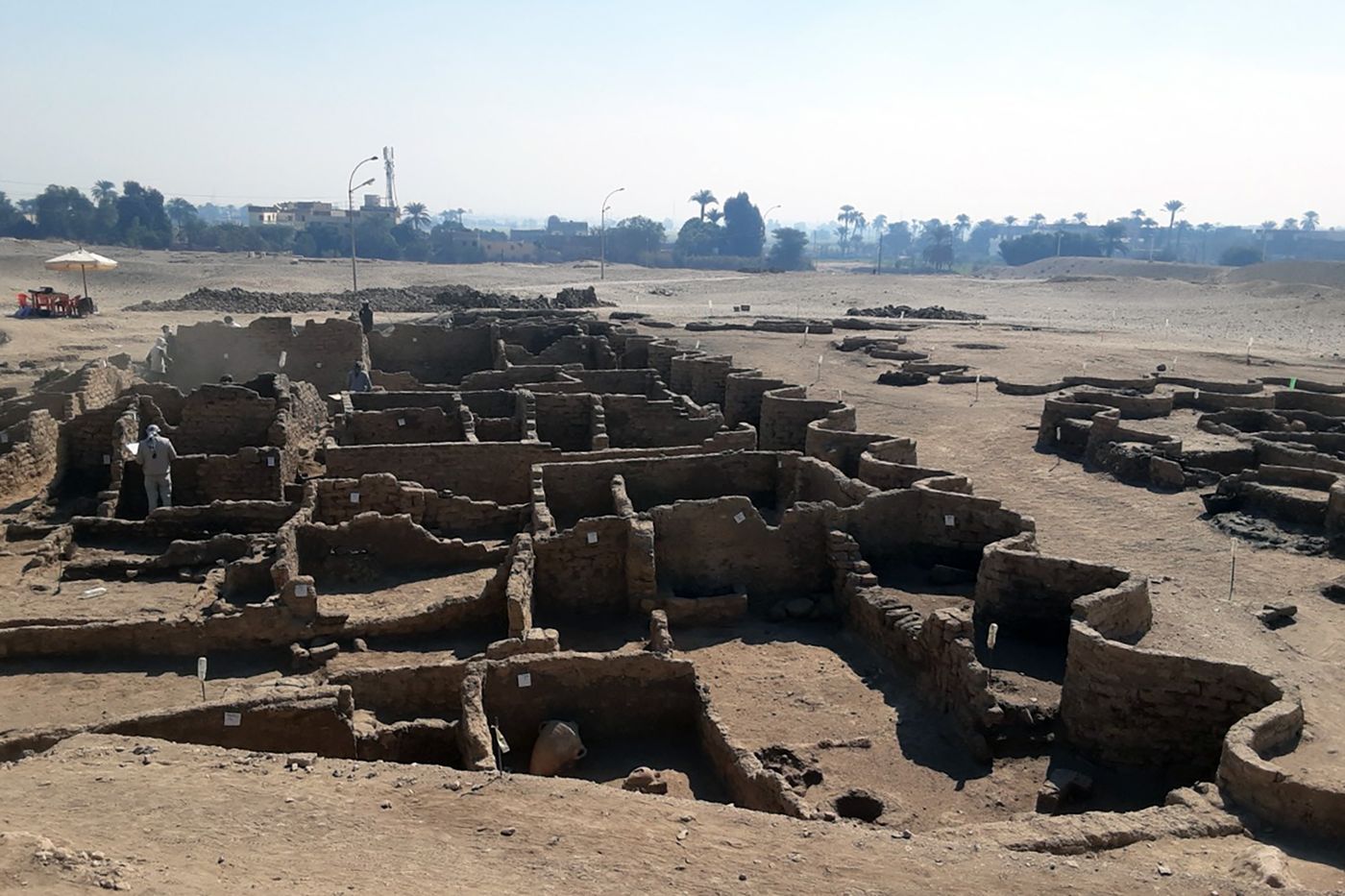
Image courtesy of the Ministry of Tourism and Antiquities.

Egypt’s Ministry of Tourism and Antiquities announced on Thursday that an Egyptian mission under the supervision of Egyptologist Dr. Zahi Hawass discovered a city – dubbed the Rise of Aten – which had been under the sands for 3,000 years, dating back to the reign of Amenhotep III.

The statement, which was shared on  the Ministry’s social media pages, adds that  “the largest city ever found in Egypt” was founded by one of the greatest rulers of Egypt, namely of the New Kingdom, Amenhotep III. The latter had been the ninth king of Dynasty 18, ruling Egypt from 1391 till 1353 B.C.

“Many foreign missions searched for this city and never found it. We began our work searching for the mortuary temple of Tutankhamun because the temples of both Horemheb and Ay were found in this area,” Hawass said. “The city’s streets are flanked by houses, which some of their walls reach 3 meters high. We can reveal that the city extends to the west, all the way to the famous Deir el-Medina.”

Betsy Brian, Professor of Egyptology at John Hopkins University in Baltimore USA, described the discovery as “the second most important archeological discovery since the tomb of Tutankhamun.”

Brian continued to add that it “will not only will give us a rare glimpse into the life of the ancient Egyptians at the time, but will help us shed light on one of history’s greatest mystery: why did Akhenaten and Nefertiti decide to move to Amarna.”

The city is considered a vital clue to the cultural and religious developments of the reign of Amenhotep III whose succession would come at the hands of his son, Akhenaten. The latter’s ambitions had resulted in a move from the capital of Thebes to a newly-built capital near contemporary Minya, Tel-El-Amarna.

Due to organic material from which settlements were constructed from, their survival rates into modern day Egypt is rare. As such, along with the famed settlement of Deir-El Medina, the city’s discovery can provide archaeologists with a glimpse of daily life activities in ancient times.

After Hawass’ team began excavating in September 2020, several areas and neighborhoods were uncovered, such as the administrative and industrial center and a bakery. The statement adds that the city is in good condition of preservation, with almost complete walls and rooms filled with tools of daily life. Photos of the discovery also reveal the discovery of human and animal remains.
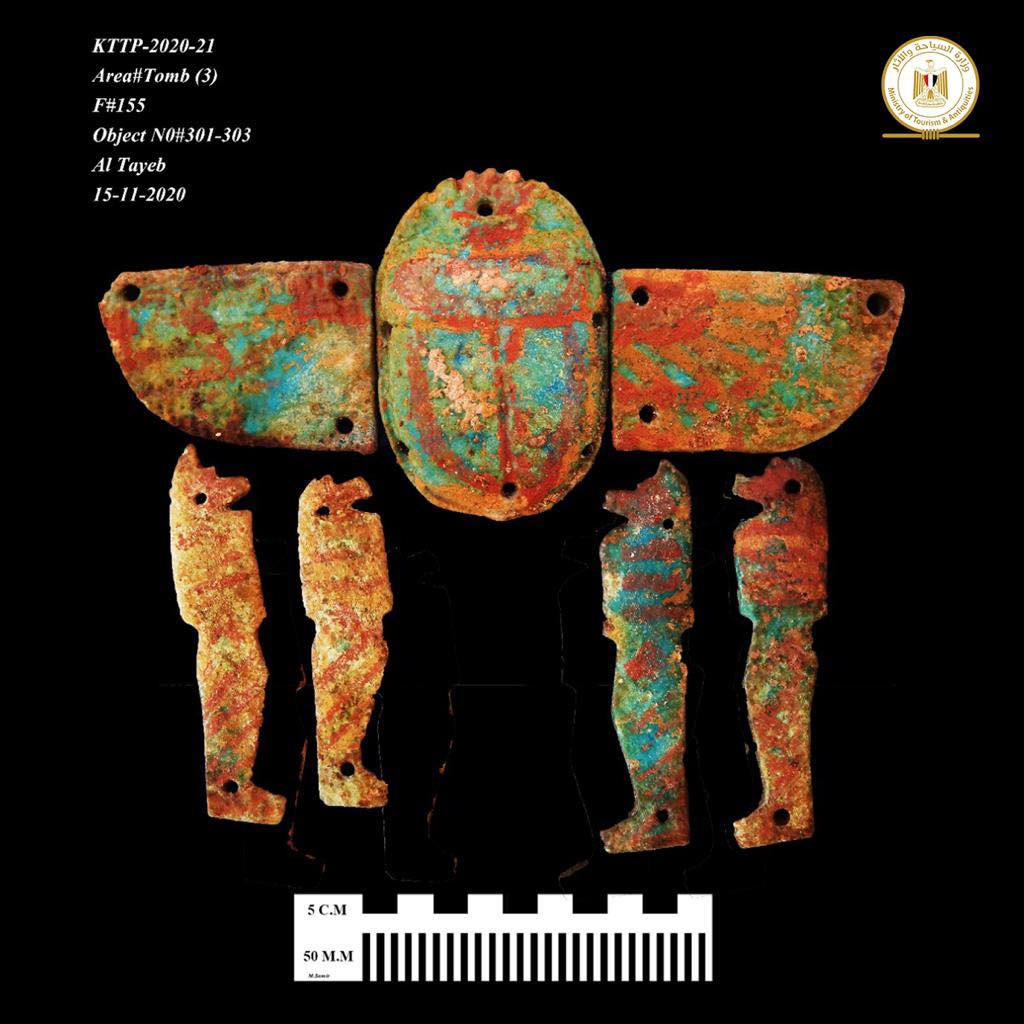
Image courtesy of the Ministry of Tourism and Antiquities.

The discovery comes after Egypt’s historic pharaohs’ golden parade, which saw 22 mummies transported from the Egyptian Museum in Tahrir Square to their new home, the National Museum of Egyptian Civilization, in a glittering display. Among the mummies was the body of Amenhotep III.

Earlier in January 2021, Egypt’s Ministry of Tourism and Antiquities announced new ‘major’ discoveries at Saqqara archaeological site, which included a new trove of treasures and an ancient funerary temple, dating back to the New Kingdom.

Announcements of discoveries highlighting Egypt’s ancient history are significant as they provide a natural boost to the country’s tourism sector. The tourism sector represents the main source of foreign currency income in the country in addition to being an important building block to stabilizing Egypt’s economy.


 Dix-huit momies de rois et quatre momies de reines de l'Antiquité égyptienne vont défiler samedi dans les rues du Caire pour rejoindre le Musée national de la civilisation égyptienne. Le Caire compte sur cet événement très médiatisé pour tenter de relancer le tourisme dans le pays.

MORE


EN ESPAÑOL

Un nuevo museo acoge las momias de 22 faraones egipcios

El espectacular cortejo es seguido en directo por 300 canales de televisión

Texto: Hamdi Zaki y Enrique Sancho

Cientos de miles de egipcios contemplan emocionados, y se diría que con devoción, el paso de un cortejo faraónico como sus antepasados lo hicieron hace más de 3.000 años. Es sábado 3 de abril y las calles y plazas de El Cairo contemplan con estupor el traslado de 22 faraones, 18 reyes y 4 reinas, del Antiguo Egipto desde su sede temporal en el Museo Egipcio, donde reposaban desde hace un siglo al nuevo Museo Nacional de la Civilización Egipcia (NMEC) en Al Fustat, al sur de la capital en el barrio copto, un megamuseo dedicado únicamente a la cultura de los faraones desde la época faraónica hasta nuestros días, incluyendo las épocas grecorromana, copta, e islámica así como la moderna y la contemporánea.

A diferencia con los antiguos enterramientos que trascurrían por recónditos y secretos pasajes del Valle de los Reyes y que solo eran contemplados por los elegidos, en esta ocasión, además de los miles de egipcios y turistas, pueden verlo millones de espectadores de los 300 canales de televisión que lo emiten en directo.

El cortejo, que se ha dado en llamar Desfile Dorado de los Faraones, según informa el egiptólogo Hamdi Zaki, que fue Consejero de Turismo para España y América Latina durante muchos años, va encabezado por el faraón Seqenenre Taa y lo cierra Ramses IX, entre uno y otro, en orden cronológico, están las momias destacadas de Ramsés II, su padre Seti I, Tumotsis III, o las reinas Hatshepsut y Nefertari. La mayoría de estas momias fueron descubiertas cerca de Luxor, al sur de Egipto, a partir de 1881. Entre faraón y faraón, el desfile es amenizado con actuaciones de artistas egipcios como Mona Zaki, Sawsan Badr, Hussein Fahmy, o Yousra.

El recorrido comienza en la emblemática plaza Altahrir donde dan varias vueltas alrededor del obelisco de Ramsés II recién instalado en dicha plaza y sigue con un paseo por las calles de la ciudad de El Cairo. Por supuesto, todo se hace con grandes medidas de seguridad no solo por respeto a los faraones, también por el riesgo del Covid. Egipto ha superado notablemente la pandemia, para un país con más de 100 millones de habitantes, ha habido menos de 12.000 fallecidos y actualmente la incidencia es de solo 9,26 por cada cien mil habitantes.

Como los carros de Tutankhamón

Cada faraón es paseado en su sarcófago transportado por una carroza dorada de estilo antiguo hechas por artistas egipcios imitando a los carros de combate encontrados en la tumba de Tutankhamón pero con tecnología moderna, en un envoltorio que contiene nitrógeno, en condiciones muy similares a las de las urnas en las que estaban en el museo. Los vehículos que las transportan tienen además un mecanismo para evitar los impactos.

A las puertas del nuevo museo, los ilustres faraones serán recibidos por el presidente egipcio Abdelfatah El-Sisi y altas autoridades del país así como expertos arqueólogos, como el reconocido egiptólogo Zahi Hawass. "Por primera vez, las momias se presentarán de una manera bonita, con fines educativos", ha comentado el propio Zahi Hawass.

El nuevo museo de Fustat es el aperitivo del grandioso proyecto del Gran Museo Egipcio (GEM), cerca de las pirámides, que será inaugurado en los próximos meses, y que albergará las colecciones faraónicas del Museo de El Cairo, entre ellas el célebre tesoro del rey Tutankamón. Su tumba, descubierta en 1922, conservaba la momia del joven rey y numerosos objetos de oro, marfil y alabastro.

Dos nuevos atractivos culturales y turísticos con los que Egipto confía en recuperar la buena racha de visitantes turísticos que tuvo hasta 2019, cuando recibió 13,6 millones de turistas, con un incremento ese año del 21% respecto al anterior.

REFIK ANADOL, AN EXHIBITION – MACHINE MEMOIRS: SPACE. PILEVNELI, DOLAPDERE, TURKEY

PILEVNELI, is pleased to present Refik Anadol’s new solo exhibition after three years. On view through March 19 – April 25, 2021 at PILEVNELI’s location in Dolapdere, the exhibition includes Anadol’s new body of works to be exhibited for the first time. “Machine Memoirs: Space” is the artist’s third exhibition under PILEVNELI’s roof. Anadol’s first gallery exhibition “Sceptical Interventions” was also presented by PILEVNELI in 2012.


“Machine Memoirs: Space” is realized with the special support of Istanbul Metropolitan Municipality and is sponsored by BMW distributed by Borusan Otomotiv in Turkey, IMM subsidiary Kültür AŞ and Samsung Galaxy S21 Series. Also supported by Beyoğlu Municipality, the exhibition’s contributors are ABC Deterjan, Atelier Rebul, Fuudy, Jotun, Kahve Dünyası Algötür, MG International Fragrance Company, Swissôtel the Bosphorus Istanbul, its media sponsor is Joy Fm and its advertisement and publicity sponsors are City’s, IstanbulArtNews, Just Work, Kentvizyon, Panoffect and Panout.

As the symbiotic relationship between human life, science and technology continually transforms, the role of machines in pushing the boundaries of imagination generates intriguing discussions about successful human-machine teams. Refik Anadol, who sees artificial intelligence as collaborator rather than a mere tool, has been exploring interrelated key concepts for challenging our conventional understanding of the cosmos, human senses, machines, and the mind. Machine Memoirs: Space, the most comprehensive solo exhibition by Refik Anadol Studio in Istanbul to date, speculates a new conceptual framework to turn the spotlight on the vast photographic archives that document the history of space exploration.

In Machine Memoirs: Space, machine-based visual speculations about space, and humanity’s historical attempts to explore its depths unveil intricate connections between obscurity and openness, creating an alternate data universe of abstract forms where reams of information produce open-ended aesthetic possibilities. In 1980, in an episode of his TV show Cosmos, astrophysicist Carl Sagan said, “Imagination will often carry us to worlds that never were. But without it we go nowhere.” Forty-one years after Sagan’s statement, Refik Anadol Studio presents yet another speculation of imagining a (data) universe as a first step to reach its unseen dimensions with a poetic flow of metaphors that connect photographic astronomic data with observable human emotions formed around public art.

Memoirs and Dreams

The exhibition consists of two interrelated chapters titled Memoirs and Dreams both of them approaching humanity’s explorations of space from a distinct aesthetic perspective and thematic orientation. Revealing the artistic expressions of the Studio’s long-term groundbreaking research projects on space-related data visualization through machine learning, these chapters will walk the audience through simulations of how an artificial intelligence generates novel experiences to be perceived collectively.

The first chapter, Memoirs, will exhibit a series of Anadol’s un-interpreted, raw datadriven installations, each with a unique path and journey throughout our machine’s collection of space-related visual data. These data paintings utilize over 2 million images that were captured and recorded by the ISS, Hubble, and MRO telescopes and other sensors and satellites – the largest dataset ever used to train a generative adversarial network (GAN) on the possible shapes of varied celestial bodies. When viewed together as the most advanced astronomic “machine memories,” these works disclose the functionality of the tools that give rise to their aesthetic content in an interactive component that allow the audience engage with raw data. The aim is to expand our sense of the universe not only through abstract images, but also through fragmented evidence of a sublime totality that we can only imagine.

The second chapter, Dreams, will feature 3D data sculptures and a 15-minute immersive AI cinema installation. The sculptures generated by the latest 3D printing techniques to represent synthetic landscapes inspired by the Hubble, ISS, and MRO telescope’s visual memories. These sculpture pieces exhibit multiple flow of networks between data points made up of Earth’s and other celestial objects’ topologies. Storytelling with data to reach the collective unconscious has been a foundational aspect of Refik Anadol’s body of work since his first exhibition in Istanbul in 2011. The cinematic part of this chapter, titled Machine Memoirs v.2, explores this theme in the form of a 15-minute immersive AI cinema that invites the audience to step into the mind of a machine. Experiencing a multi-dimensional, dynamic visualization of how artificial intelligence makes connections between these vast data clusters, the audience finds themselves in an expanding data universe. This space not only represents the interpolation of photographic space archives as synthesis, but also becomes a latent cosmos in which dreams are the main currency of artistic creativity. As a masterfully curated multi-channel experience, Dreams offers an avant-garde form of multi-dimensional cartographic aesthetics. The installation’s intricate and abstract layers of machine-generated space dreams allude to a connection with a cosmos of unimaginable vastness while its natural pigments trigger a sense of belonging to the earth and to our immediate environments................

https://www.art50.net/en/refik-anadol-machine-memoirs-space/

ALICE NEEL: PEOPLE COME FIRST IS THE FIRST MUSEUM RETROSPECTIVE IN NEW YORK OF AMERICAN ARTIST

Alice Neel: People Come First is the first museum retrospective in New York of American artist Alice Neel (1900–1984) in twenty years. This ambitious survey positions Neel as one of the century’s most radical painters, a champion of social justice whose longstanding commitment to humanist principles inspired her life as well as her art, as demonstrated in the approximately one hundred paintings, drawings, and watercolors that will appear in The Met’s survey.

Images of activists demonstrating against fascism and racism appear alongside paintings of impoverished victims of the Great Depression, as well as portraits of Neel’s neighbors in Spanish Harlem, leaders from a wide range of political organizations, queer artists and performers, and members of New York’s global diaspora. The exhibition also highlights Neel’s erotic watercolors and pastels from the 1930s, her depictions of mothers, and her paintings of nude figures (some of them visibly pregnant), all of whose candor and irreverence are without precedent in the history of Western art.

Neel was a longtime resident of New York, and the city served as her most faithful subject. Indeed, the sum total of her work testifies to the drama of its streets, the quotidian beauty of its buildings, and, most importantly, the diversity, resilience, and passion of its residents. “For me, people come first,” Neel declared in 1950. “I have tried to assert the dignity and eternal importance of the human being.”


https://www.metmuseum.org/exhibitions/listings/2021/alice-neel

viernes, 2 de abril de 2021

VIERNES 2 DE ABRIL, 2021. MOZART - AVE VERUM CORPUS E REQUIEM . LIVE, TEATRO LA FENICE. GRAZIE. MERCI, GRACIAS, DANKE, THANK YOU ALL.


Precioso programa mozartiano Live desde La Fenice, con cantantes de primera línea, una dirección sensible, un coro y una orquesta afinadísimos y vestidos de gala para la ocasión.

Se subraya que se apoye la música y los espectáculos teatrales en vivo. Esperemos que pronto se pueda retomar la vida. mientras tanto, intentemos cuidarnos y cuidar a los demás.

Felices Pascuas y Jag Pésaj Saméaj. Los que no la festejan, buen y sereno fin de semana. Si puede ser. Les desean, Alicia Perris, redactora y Julio Serrano, webmaster de este blog.

PROGRAMMA

Wolfgang Amadeus Mozart

«Ave verum corpus» kv 618

Requiem in re minore kv 626

versione completata da Franz Xaver Süßmeyer, Joseph Eybler e Franz Beyer


Orchestra e Coro del Teatro La Fenice

direttore Claus Peter Flor

maestro del Coro Claudio Marino Moretti

soprano Ruth Iniesta

mezzosoprano Cecilia Molinari

tenore Anicio Zorzi Giustiniani

basso Alex Esposito

riprese video a cura di Zeta Group

audio Teatro La Fenice


LIRIOS Y LAUREL CON FLORES EN LA DACHA PRIMAVERAL: VENENO Y COLOR EN UN PERFUME DENSO Y RECONOCIBLE, FINO


Planta mítica y venenosa (no es comestible aunque perfuma los alimentos), embriagaba a las sacerdotisas griegas que aspiraban sus vapores para predecir el futuro de los elegidos.

Los lirios fragantes tienen una configuración especial, grácil y elegante, tersa. Recuerdan los tiempos que conocimos y hemos perdido o- tal vez- los que están por venir, inseguros pero tentadores. Sin pesos muertos, sin cargas.

Tempus fugit y eso está bien...es de esperar que para todos.

Alicia Perris
Fotos del webmastewr, Julio Serrano.

SAO PAOLO: MALE NUDES, A SALON FROM 1800 TO 2021. MENDES WOOD DM


Exhibition views

Jean Cocteau, Adriano Costa, Solange Pessoa, Tarsila do Amaral, Sarah Lucas and Julian Simmons, Eliseu Visconti, Erika Verzutti, Daniel Correa Mejía, Xie Lei, Athos Bulcão, Francis Picabia, Antonio Obá, Daniel Lannes, Robert Mapplethorpe, Soufiane Ababri, Andy Warhol, Jean-Daniel Cadinot, Joseph Caprio, Tom of Finland, Martine Riviere, Luc Geslin, Osmar Schindler, Patrick Safarti, Alexandre Maspoli, Pierre Paul Montagnac, Bruce Weber, Wilhelm Von Gloeden, Raymond Carrance, Guglielmo Von Plüschow, Mark Beard, Larry Clark, C.J Wielhorski, Léon Galand, Ugo Cipriani, Agence Fulgur, Jean Ferrero, Sacha Schneider, Gustavo Silvamaral, Fernanda Azou, Matthew Lutz-Kinoy, Patrick Angus, Rodolpho Parigi, Luiz Roque, Wolfgang Tillmans, Wallace Pato, Paula Siebra, Patricia Leite, Paulo Nazareth

EL NUEVO TENIENTE BLUEBERRY CABALGA AHORA POR SENDAS MÁS FEMENINAS

El célebre personaje de cómic vuelve con nuevas aventuras, dibujadas por Christophe Blain y con guion de este y de Joann Sfar

JACINTO ANTÓN

El teniente Mike Steve Donovan, alias Blueberry, está de vuelta en Fort Navajo y cabalga otra vez por territorio apache. El indisciplinado e intrépido oficial de caballería creado en 1963 por el guionista Jean Michel-Charlier y el dibujante Jean Giraud en las páginas de la revista Pilote y convertido luego a lo largo de medio centenar de álbumes en uno de los personajes más famosos del cómic en el género del wéstern, ha regresado en una nueva aventura con guion de Joann Sfar y Christophe Blain y dibujo de este último.

Rencor apache (Norma) es el estupendo primer álbum de la nueva serie, que vuelve a los paisajes y ambientes de las primeras entregas de la historia original y con un dibujo que las evoca claramente, pero asimismo introduce novedades del signo de los tiempos: una presencia femenina mucho más abundante y empoderada (rifle incluido), y temas como la violencia de género y el maltrato familiar. Pero Blueberry sigue siendo el mismo, los apaches y Fort Navajo también, y sale, igualito, el viejo mulero, buscador de oro y borrachín Jimmy McClure.


Blueberry, en el que Charlier y Giraud volcaron felizmente numerosas influencias cinematográficas, de John Ford al espagueti wéstern, sin olvidar que para los rasgos del teniente protagonista se inspiraron en los de Jean-Paul Belmondo, estrella entonces en boga, ha vivido una existencia peligrosa en el salvaje Oeste en los 30 álbumes del canon creados por sus autores originales, a los que hay que sumar otros 20, con la participación de diversos autores, que incluyen las precuelas sobre la juventud de teniente y la colección independiente Marshall Blueberry. La serie ha tenido momentos esplendorosos, verdaderas cimas del cómic, como los miniciclos de Chihuahua Pearl y de La mina del alemán perdido, en el que un Giraud ya convertido en Moebius volcó su interés por México y la psicodelia (y que dio pie en 2004 a la única película hasta ahora del personaje, interpretado por Vincent Cassel).

En Rencor apache, la estupidez y crueldad de unos adolescentes que matan a unas indias pone en peligro la paz con su tribu, que lanza una batida al estilo jefe chiricahua Ulzana en la película de Robert Aldrich para encontrar a los culpables. Blueberry, que tiene un affaire con la insatisfecha esposa del comandante del fuerte (una novedad: lo habitual en los wésterns de caballería es con la hija), tratará de solucionar la crisis.

Sorprende que el encargado de dar vida al nuevo Blueberry en la árida frontera de Arizona y Nuevo México sea un antiguo marinero (hizo el servicio militar en la Armada) y dibujante de aventuras marinas. “Es cierto”, ríe, en una entrevista con este diario, Christophe Blain (Gennevilliers, Francia, 50 años), autor de El reductor de velocidad, que transcurre en un acorazado, o la serie Isaac el pirata, Gran Premio de Angulema en 2002. “Pero en el fondo, desde niño, siempre he querido ser un cowboy, un fuera de la ley, un sheriff, un tipo con un caballo, un sombrero, botas de montar, un winchester y un colt”.

El coguionista y dibujante explica que conoció a Blueberry a los 11 años. “Mi padre lo leía cuando era adolescente y me regaló mi primer álbum en 1982”. Para Blain, el wéstern sigue muy presente en el cómic franco-belga y en ese terreno Lucky Luke y Blueberry “son las referencias absolutas”. A lo largo de los álbumes, nos hemos podido ir enterando de muchas cosas de la vida del teniente y hasta le hemos visto un desnudo frontal (en la página 38 de Apaches, Norma, 2010). “En La juventud de Blueberry, Charlier explica bastantes cosas del personaje, como que su apodo viene de lo primero que vio, arándanos (blueberries en inglés), al tener que inventarse un nombre falso para salir de un apuro”.

De la serie, prefiere La mina del alemán perdido y su continuación, El fantasma de las balas de oro. “Me gustan mucho también los álbumes del ciclo que arranca con Nariz rota hasta La última carta (La larga marcha y La tribu fantasma)”. Blain señala que su principal desafío para hacer Blueberry ha sido dibujar más realista. “Exige una gran concentración, pero me he habituado, el próximo tomo será mejor, hago progresos”.

¿Prefiere a los apaches o a los sioux, que protagonizaron otro de los ciclos famosos de Blueberry, el de El caballo de hierro? Desde luego, los apaches son más esenciales… “Los prefiero, porque viven en lugares rocosos y desérticos, en el límite de lo fantástico. Me encanta dibujar cañones. Los paisajes del sudoeste de Estados Unidos me fascinan. Me siento bien ahí. He realizado muchos viajes a esos sitios”. En cuanto a haber optado por un dibujo más cercano al de los orígenes de la serie en lugar del más claro y virtuosista de los álbumes posteriores, señala: “Es una opción personal. No es que quisiera copiar a Giraud, quería un trazo que lo evocara. Un dibujo cercano al de los años sesenta. Aunque yo, como lector, prefiero un dibujo de Blueberry más al estilo Moebius”.

‘El loto azul’: la polémica tras la venta (por tres millones de euros) del original de cómic más caro de la historia

¿Qué margen de innovación ha tenido para Rencor apache y qué posibilidad hay de novedad? “Puede que nuestra historia sea más dura en ciertos aspectos, hablamos de violaciones, de asesinatos de mujeres, por ejemplo. En su origen, Blueberry estaba dirigido a adolescentes de los años sesenta. Pero en realidad no innovamos, simplemente estamos en una sociedad que cambia. Charlier escribía aventuras diferentes. Tras su muerte en 1989, Giraud escribió historias más duras en los últimos blueberrys”.

¿Cree Blain que hay un lugar en el mundo de hoy para Blueberry? ¿Cómo puede aproximarse el viejo teniente a las nuevas generaciones? ¿Y al público femenino? En Rencor apache hay varias mujeres muy fuertes… “No sé, puede que la presencia de esos personajes femeninos ayude, en efecto”. Sobre sus influencias personales para hacer Blueberry, explica: “Películas como La venganza de Ulzana, de la que he tomado algunos de los personajes, El fuerte de la matanza, La legión invencible, Fort Apache, Hostiles…”. El que el coronel Tyreen de Fort Navajo le explique a Blueberry que de joven persiguió al rebelde apache Toriano, remite a Hoguera de odios. ¿Y cuál es el secreto para dibujar una buena escena de acción de wéstern? “No debe extenderse en demasiadas páginas, ni ser demasiado verbosa, ni demasiado silenciosa”.

https://elpais.com/cultura/2021-03-31/el-nuevo-teniente-blueberry-cabalga-por-sendas-mas-femeninas.html