miércoles, 2 de febrero de 2022

EXPOSICIÓN DE JACOB EL HANANI EN MADRID. EL MICRÓFONO DE ALICIA PERRIS

Audio:

https://www.radiosefarad.com/wp-content/uploads/2022/01/220202microfono.mp3

El Micrófono se traslada en el día de la inauguración de esta muestra a la galería Leandro Navarro (que se puede visitar hasta el 25 de marzo), donde charla con su responsable, Íñigo Navarro, hijo y heredero del fundador.


Jacob El Hanani, artista nacido en Casablanca (Marruecos), con una aclamada trayectoria artística en Estados Unidos, está presente en  el MOMA, losl Museos Guggenheim y el Metropolitan de Nueva York, el Art Institute of Chicago, The National Gallery of Art (Washington, DC), The British Museum de Londres o el Centro Pompidou de París, entre otras instituciones. Según las explicaciones del catálogo, “la suya es una producción de variaciones de gris que en ocasiones evocan mapas difusos o hasta paisajes, que de lejos, la sensación que transmiten es la de titilantes, es el caso de obras como Circles and Linescapes, Partition o Linescape (de la serie J.W. Turner).

Este proceso artístico, que El Hanani realiza sin la ayuda de ningún tipo de aumento y en intervalos de diez minutos para descansar los ojos, entronca con la tradición judía de la “micrografía” o el empleo una caligrafía diminuta para la transcripción de textos sagrados. Nos habla a su vez del paso del tiempo, de la relación entre lo microscópico y lo infinito, y de los límites de la visibilidad y del trabajo manual del artista. La influencia de la religión judía es aquí especialmente relevante. Se percibe a través de los títulos de algunas de las obras y en ciertos motivos caligráficos empleados por el autor. Por ejemplo, la obra Magen David hace referencia a la Estrella de David, símbolo identitario del judaísmo que se repite en múltiples ocasiones sobre el papel.

Three Kav incluye la palabra “kav”, que significa literalmente “línea” en hebreo, pero que además hace referencia al rayo de Luz Divina emanado de Dios dentro de la “oscuridad” (joshej), del vacío creado por el Tsimtsum. La teoría del Tsimtsum deriva de las enseñanzas del rabino y cabalista Isaac Luria y se puede resumir como “el fenómeno de contracción divina con el objetivo de permitir la creación”.

En su poema Diálogo, Dulce María Loynaz- citada en el prólogo al catálogo de la muestra escrito por Estrella de Diego, se puede leer, abreviándolo: “Están cayendo las estrellas…— ¿Qué estás diciendo, hermano? Son estrellas fugaces…ni caen ni se recogen. — No importa. Pon las manos…. “. “Pongamos las manos”, dice de Diego, “para que caiga la obra de El Hanani”. Cuídense para cuidar a los demás. Hasta el próximo Micrófono, estimados oyentes. Shalom!

      Alicia Perris

https://www.radiosefarad.com/exposicion-de-jacob-el-hanani-en-madrid/

ANDY WARHOL: REVELATION. BROOKLYN MUSEUM Y NOTICIAS DEL MAESTRO JORDI SAVALL


November 19, 2021–June 19, 2022

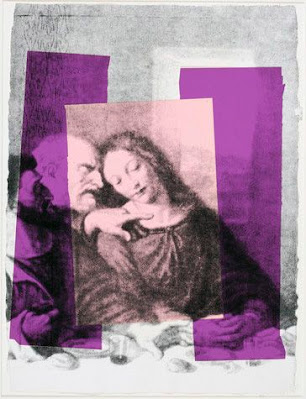
Although Andy Warhol is one of the most celebrated and recognizable artists of the twentieth century, his Byzantine Catholic upbringing, and its profound impact on his life and work, remains a lesser known facet of his career. Andy Warhol: Revelation explores the artist’s lifelong relationship with his faith that frequently appeared in his artworks.

From iconic portraits of celebrities to appropriated Renaissance masterpieces, Warhol played with styles and symbolism from Catholic art history, carefully reframing them within the context of Pop art and culture. Throughout his life, Warhol retained some of his Catholic rituals, while also unapologetically living as an out gay man.

Andy Warhol: Revelation examines themes such as life and death, power and desire, the role and representation of women, Renaissance imagery, family and immigrant traditions and rituals, depictions and duplications of Christ, and the Catholic body and queer desire. Among the more than one hundred objects on view are rare source materials and newly discovered items that provide a fresh and intimate look at Warhol's creative process, as well as major paintings from his epic Last Supper series (1986), the experimental film The Chelsea Girls (1966), an unfinished film depicting the setting sun, commissioned by the de Menil family and funded by the Roman Catholic Church, and drawings created by Warhol’s mother, Julia Warhola, when she lived with her son in New York City.

Andy Warhol: Revelation is organized by the Andy Warhol Museum and curated by José Carlos Diaz, Chief Curator. The Brooklyn presentation is organized by Carmen Hermo, Associate Curator, Elizabeth A. Sackler Center for Feminist Art, Brooklyn Museum.

https://www.brooklynmuseum.org/exhibitions/andy_warhol_revelation


Y TAMBIÉN, INFORMACIÓN DEL MAESTRO JORDI SAVALL...
JORDI SAVALL ÉS DISTINGIT COM A MEMBRE D’HONORDE LA ROYAL PHILHARMONIC SOCIETY
 
Dimarts, 1 de febrer, en el marc del concert que va oferir al Wigmore Hall de Londres amb les entrades esgotades, la Royal Philharmonic Society va distingir Jordi Savall com a Membre d’Honor d’aquesta entitat “per la seva valuosa aportació en la recuperació de tresors musicals que s’haurien pogut perdre sense el seu mestratge,” en paraules James Murphy, al capdavant d’aquesta institució que va fer-li lliurament d’aquesta distinció.La Royal Philharmonic Society, creada el 1813, és una de les entitats musicals més antigues i prestigioses del Regne Unit i d’Europa. El 1826, va crear aquesta distinció honorífica per reconèixer el “servei a la música “ que han fet músics excepcionals al llarg de la història. En aquests dos segles, han fet membres d’honor personalitats com Fèlix Mendelssohn, Franz Liszt, Richard Wagner, Giuseppe Verdi, Antonin, Dvorák, Clara Schumann, Maurice Ravel, Igor Stravinski, György Ligeti, Pierre Boulez, i més recentment George Benjamin i Stephen Sondheim, que va ser el darrer músic a qui es va distingir el 2019. Pablo de Sarasate i Pau Casals són els únics músics espanyols que també formen part d’aquesta llista històrica que són reconeguts per la Royal Philharmonic Society.Savall ha entrat a formar part d’aquest grup selecte dins la història de la Royal Philharmonic Society “per haver preservat el llegat de la viola de gamba fins als nostres dies, perquè en les teves mans, la música històrica no sona mai acadèmica,” va afegir James Murphy.Jordi Savall va agrair aquesta distinció davant del públic present al Wigmore Hall amb unes paraules en les que va remarcar el fet que la seva vida musical ha estat sempre guiada per “la passió, la disciplina i l’energia.” I va afegir que “la música només existeix quan els músics toquen. I aquesta distinció també pertany a tots els músics que han tocat amb mi al llarg de cinquanta anys. Llavors, fa cinquanta anys, quan vaig arribar a Londres per consultar els fons musicals del British Museum, em vaig adonar de la quantitat de música extraordinària que dormia en aquells arxius. Hem de convèncer les persones que toquin aquesta música, perquè és la nostra música, perquè la música és el llenguatge veritable de tots els europeus.”  Enllaç a altres reconeixements que ha rebut Jordi Savall.

Podeu descarregar-vos aquí el comunicat de laRoyal Philharmonic Society

ULYSSES: CELEBRATING 100 YEARS OF A LITERARY MASTERPIECE. FESTIVAL CASTELL PERALADA Y EL BALLET DEL TEATRO MARIINSKY ESTE VERANO

By Colm Kelpie

BBC News NI


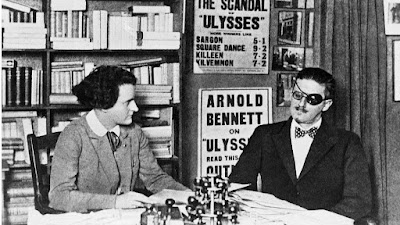
James Joyce met publisher Sylvia Beach in 1920 shortly after he moved to Paris

In the spring of 1921, Paris bookseller Sylvia Beach boasted about her plans to publish a novel she deemed a masterpiece that would be "ranked among the classics in English literature".

"Ulysses is going to make my place famous," she wrote of James Joyce's acclaimed and challenging novel, written over seven years in three cities depicting the events of a single day in Dublin.

And it did.

On 2 February 1922, Beach published the first book edition of Ulysses, just in time for Joyce's 40th birthday.

Stylistically dense in parts, it tells the stories of three central characters - Stephen Dedalus, Leopold Bloom and his wife, Molly - and is now celebrated as one of the world's most influential texts.

'Tosh'

TS Eliot, writing in 1923, believed Ulysses was "the most important expression which the present age has found".

But the path to publication was not a smooth one. The novel sparked controversy and was greeted with revulsion by many - even among some in the literary community.

Parts had been serialised by US magazine Little Review in 1920, resulting in an obscenity trial that concluded with the editors being fined and ordered to cease further publication. It was also censured in Great Britain.

Beach, the owner of Shakespeare & Company on the Rue Dupuytren, was determined to have it published in book form, which she did, bankrolled in part by her own money on the promise of subscribers.

Writing about the task at the time, she said she had to "put every single centime aside to pay" the book's printer.

Prof Keri Walsh, director of the Institute of Irish Studies at New York's Fordham University, says Beach's decision to publish turned her into a "culture-hero of the avant-garde".

"There was a sense that people knew that this was going to be one of the defining books of modernism, so she understood that she would assure her own place in literary history by being the publisher of it," Prof Walsh tells BBC News NI.

Joyce and Beach first met in 1920, not long after he moved to Paris.

He had long left Ireland in self-imposed exile, living in Trieste, Zurich and the French capital.

Beach described that meeting as a powerful moment, says Prof Walsh.

"Joyce was very tired at this point. He had spent so much time fighting to finish Ulysses, and get through [World War One] and survive, he felt she could provide some sort of stability and support for him and his family," she adds.

"She was much more than a publisher - a banker, agent, administrator, friend of the family. For a very long time that relationship worked well."

But following disputes over publishing rights, the relationship between Joyce and Beach soured and the latter ultimately ceded the novel's rights, writes Prof Walsh in The Letters of Sylvia Beach.................

https://www.bbc.com/news/world-europe-60080683


AND ALSO, 


El Festival 2022 te brinda la oportunidad de disfrutar de dos noches excepcionales con la presencia en escena de una de las mejores compañías de danza del mundo: el BALLET DEL TEATRO MARIÏNSKY.
El día 8 de julio llegarán a Peralada para inaugurar el Festival con la espectacularidad de CARMEN SUITE, una pieza creada por el coreógrafo Alberto Alonso donde brilla siempre una protagonista llena de virtuosismo y de pasión latina. En la segunda parte, presentarán LE DIVERTISSEMENT DU ROI, una fantasía neoclásica inspirada en el ballet más barroco.
La segunda noche, el 9 de julio, la prestigiosa compañía interpretará tres piezas, SEVEN SONATAS, A FLASHBACK y  CONCERTO DSCH, de dos de los coreógrafos más aclamados internacionalmente: Alexei Ratmansky e Ilva Jivoy. En esta ocasión, contaremos con la participación de la bailarina Maria Khoreva quien debutó en el Festival después de recibir el Carmen Mateu Young Artist Award.

JAMES MCNEILL WHISTLER (1834-1903), LA FRICK COLLECTION, AU MUSÉE D´ORSAY ET LA TATE ST IVES, HAN NEFKENS FOUNDATION

Exposition

 - Du 08 février au 08 mai 2022

James Abbott McNeill Whistler, Symphony in Flesh Color and Pink: Portrait of Mrs. Frances Leyland (1871)

The Frick Collection, New York ©2021 ©The Frick Collection / Joseph Coscia Jr.

La Frick Collection, ouverte au public en 1935 dans la « mansion » new-yorkaise du magnat de l’industrie et grand collectionneur Henry Clay Frick (1849-1919), est l’un des plus importants musées d’art européen des États-Unis. À la faveur de la fermeture de l’institution pour travaux et de la présentation temporaire des collections au « Frick Madison » entre 2021 et 2023, un important ensemble d’œuvres du peintre américain James Abbott McNeill Whistler (1834-1903) quitte New York pour la première fois depuis plus d’un siècle pour être présenté au musée d’Orsay au début de l’année 2022. Cette présentation exceptionnelle rassemble 22 œuvres dont 4 peintures, 3 pastels et 12 eaux-fortes de la Frick Collection ainsi que 3 peintures des collections du musée d’Orsay.

Avec les États-Unis et le Royaume-Uni, la France est une des trois patries du peintre. Né en 1834 dans le Massachussetts, Whistler fait son apprentissage et ses débuts à Paris entre 1855 et 1859. Après son installation à Londres, l’artiste garde un lien privilégié avec la scène artistique parisienne, exposant aux côtés des refusés en 1863 et devenant dans les années 1890 l’un des « phares » de la nouvelle génération symboliste. En 1891, l’État français achète son chef-d’œuvre : Arrangement en gris et noir : portrait de la mère de l’artiste. À la même date, Henry Clay Frick bâtit sa collection, et au début des années 1910, l’ouvre à l’art de la fin du XIXe siècle. Il achète dix-huit œuvres de Whistler – peintures et arts graphiques – faisant ainsi de cet artiste l‘un des mieux représentés de sa collection. Aujourd’hui, les grands portraits en pieds de Whistler comptent parmi les œuvres les plus admirées des visiteurs au côté des remarquables peintures d’Holbein, Rembrandt, Van Dyck ou Gainsborough de la collection.

Au Musée d’Orsay seront présentés l’étonnant paysage L’Océan, peint par Whistler lors d’un voyage au Chili, trois pastels et douze estampes à sujets vénitiens, et trois grands portraits représentatifs de ses célèbres « symphonies en blanc » et « arrangements en noir » : le portrait de Mrs Frederick Leyland (chef-d’œuvre de l’Aesthetic Movement) , le portrait de Rosa Corder, et enfin celui de l’extravagant esthète Robert de Montesquiou-Fezensac. Ce dernier, l’un des ultimes tableaux peints par Whistler, est probablement l’œuvre la plus moderne de la collection de Frick. Alors que l’année 2022 sera placée sous le signe de Marcel Proust, dont nous célébrerons le centenaire de la mort, cette effigie nous rappellera aussi l’influence de Montesquiou et de Whistler dans l’élaboration de La Recherche et la création des personnages du baron de Charlus et du peintre Elstir.

https://www.musee-orsay.fr/fr/expositions/james-mcneill-whistler-1834-1903-chefs-doeuvre-de-la-frick-collection-new-york-200934


ET AUSSI HAN NEFKENS FOUNDATION

Exhibition:Thao Nguyen PhanFebruary 5–May 2, 2022 

Tate St IvesPorthmeor BeachSt Ives TR26 1TGUKwww.tate.org.uk 

The Han Nefkens Foundation is glad to announce the exhibition of Vietnamese artist Thao Nguyen Phan at Tate St. Ives, which will take place from the 5th February to the 2nd May 2022.

 The exhibition will include two productions by the Han Nefkens Foundation: Becoming Alluvium, result of Phan winning the Han Nefkens Foundation-LOOP Barcelona Video Art Production Grant 2018, in collaboration with Fundació Joan Miró; and Mute Grain, Brise Soleil (2021), a recently produced three-channel video installation.  

© Thao Nguyen Phan, First Rain, Brise Soleil, video still, 2021.

Thao Nguyen Phan is internationally renowned for her poetic, multi-layered artworks which explore the historical and ecological issues facing her homeland Vietnam, while speaking to broader ideas around tradition, ideology, ritual and environmental change.

Phan’s mesmerising work intertwines mythology and folklore with urgent issues around industrialisation, food security and the environment. The threat posed by the destruction and excessive consumption of Earth’s resources is a recurring theme across her practice.

Through storytelling, and the mixing of official and unofficial histories, her work often amplifies narratives that are less well documented, or in some cases obscured.

This exhibition will bring together a selection of Phan’s videos, paintings and sculptures from the past five years, alongside new work exhibited for the first time. This includes First Rain, Brise Soleil (2021–ongoing), a major new multi-channel film commission, and an accompanying series of paintings.

This is Thao Nguyen Phan’s most extensive UK exhibition to date.

Han Nefkens Foundation

https://www.hnfoundation.com/

Tate St Ives

https://www.tate.org.uk/


martes, 1 de febrero de 2022

EL EMBAJADOR DE SUECIA, TEPPO TAURIAINEN, PRESENTA LA EXPOSICIÓN SOBRE RAOUL WALLENBERG EN MADRID

INFORMACIÓN INSTITUCIONAL: 

"La Embajada de Suecia y el Centro Sefarad-Israel ofrecen, con esta exposición, la posibilidad de acercarse a la labor realizada por el diplomático sueco Raoul Wallenberg.

Una persona puede marcar la diferencia. Armado tan solo con su valor y coraje moral, el conocido diplomático sueco Raoul Wallenberg salvó del Holocausto a decenas de miles de judíos. Su historia ha inspirado al mundo y sus logros nos recuerdan la continua necesidad de combatir el racismo y luchar por los derechos humanos y la democracia.

La exposición "Para mí, no hay otra opción" recorre la vida de Raoul Wallenberg. Sin embargo, el contenido va mucho más allá de la mera semblanza biográfica. En última instancia, se trata de una historia sobre todos nosotros, nuestras responsabilidades como individuos y las elecciones morales que tomamos en la vida. Y un recordatorio del hecho de que todos podemos cambiar las cosas.

"Para mí, no hay otra opción" está comisariada y producida por el Instituto Sueco en colaboración con The Living History Forum en 2012. Ha realizado giras tanto por Suecia como a nivel internacional y ahora podrá verse en Centro Sefarad-Israel hasta el 28 de febrero".

Centro Sefarad-Israel

Calle Mayor, 69. Madrid

Del 1 al 28 de febrero, 2022

De lunes a viernes de 10:30h a 14:30 h y de 16:30h a 20:00h. Sábados de 10:00h a 14:00h. Entrada gratuita.

http://www.sefarad-israel.es/Exposicion_Para_mi_no_hay_otra_opcion

RESEÑA DE LA PRESENTACIÓN DE LA EXPOSICIÓN

 1 de febrero, 2022

Se encontraban presentes, además de las autoridades diplomáticas mencionadas, las hijas del legado español, Ángel Sanz Briz, de destacada actuación durante la II Guerra Mundial, salvando a unos 5.200 judíos de los nazis y colaboracionistas húngaros, la de Violeta Friedman, superviviente de Auschwitz-Birkenau, fallecida en el 2000 en la capital española, representantes de las comunidades sefardíes y otros asistentes, en un acto sobrio, austero   y conmovedor, con una muestra que ha estado en Málaga (la de Madrid es más reducida) y seguirá a continuación a Melilla, según explicó el Embajador sueco.

Audio de la inauguración con presentación por el responsable de Prensa de Centro Sefarad-Israel, Israel Doncel, palabras de su director, Miguel de Lucas, discurso del Embajador de Suecia, Teppo Tauriainen, la Portavoz de la Embajada de Israel en Madrid, y  seguimiento explicativo de la muestra por integrantes de la Fundación Wallenberg (en inglés).

Fotos y texto de la reseña,

Alicia Perris

El Micrófono de Radio Sefarad


F