miércoles, 24 de febrero de 2021

"FLEETING – SCENTS IN COLOUR", EXHIBITION AT THE MAURITSHUIS MUSEUM. IN AUGUST

 As soon as the Mauritshuis reopens – 29 August 2021 - Scented flowers and perfumes, foul-smelling canals and unpleasant body odours, smell and well-being, new aromas from far-away lands (spices, tobacco, coffee and tea), the disappearing smells of the bleaching fields, old crafts and more. Can life in the seventeenth century be captured in smell? How are smell (and scent) portrayed? What significance did people attach to smell? And what aromatic connotations do artworks have? In this exhibition, the Mauritshuis will undertake smell-historical research. In the vicinity of the art, various historic scents will be prepared to bring the paintings in the exhibition to life.

Please note: In connection with the nationally tightened Corona measures, we will unfortunately have to keep the doors of the Royal Picture Gallery Mauritshuis closed again until further notice. As soon as the museum reopens, this exhibition will open as well. We will keep you posted on our website, newsletter and social media channels


 Detail from Frans Hals’s painting, Portrait of Aletta Olycan, 1625, during restoration

Facelifts & make-overs

7 October 2021 t/m 9 January 2022 - Very few people know that there is a conservation studio in the Mauritshuis attic. A team of in-house conservators works there, dedicating their time to conservation, restoration and research and ensuring that the collection remains in top condition. In 2021 it will be some 25 years since the studio was installed in the attic. In Facelifts and Makeovers the most intriguing restorations of the past twenty years will be unveiled, including paintings by Rembrandt, Vermeer, Hals, Steen and Rubens, but also by some lesser-known artists such as Cornelis de Heem and Jacob Ochtervelt. Restoring centuries-old paintings appeals to the imagination. What does it involve? What can we learn from conservation treatment? What do paintings look like ‘before’ and ‘after’? And what have been the most surprising findings?

https://www.mauritshuis.nl/en/discover/exhibitions/upcoming/s.nl/en/discover/exhibitions/upcoming/

martes, 23 de febrero de 2021

BORIS CYRULNIK, RETOMA Y ACTUALIZA SUS TEMAS. FEBRERO 2023. DE NUEVO AHORA EN MADRID, CON PHILIPPE LANÇON.

VUELVE EL PSIQUIATRA Y ESPECIALISTA EN RESILIENCIA FRANCÉS. 

JUNTO CON PHILIPPE LANÇON, EN EL ESPACIO TELEFÓNICA.

23 DE FEBRERO, 2023
FORO DE LA CULTURA


En presentaciones anteriores del famoso médico, etólogo y humanista, dijimos, escuchamos esto:

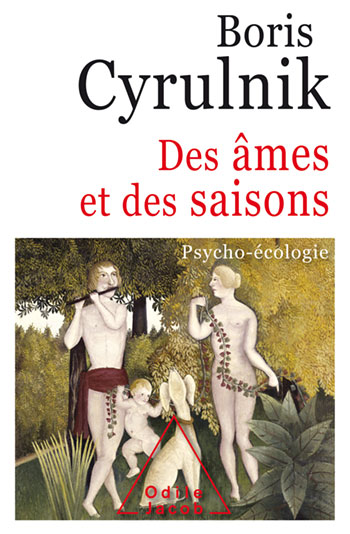
Vuelve Boris Cyrulnik, con “Almas y estaciones”, su último libro, de psicoecología

Boris Cyrulnik, psiquiatra, psicoanalista, judío y francés, escribe en su libro “Almas y estaciones”, publicado en enero de este año, “Las catástrofes ecológicas y sociales  a menudo son una ocasión para emprender nuevos derroteros, así que, para hablar del tema, démonos cita dentro de cincuenta años.”

Y sigue diciendo el superviviente de la Shoah, donde fueron sacrificados sus padres, ”El impacto del medio no tiene el mismo efecto sobre un bebé, que sobre un adulto, por la construcción mental de cada uno. Lo que somos hoy no es lo que seremos mañana, marcados, con experiencia, y a menudo heridos por la existencia. Nuestro cuerpo y nuestro espíritu modificados por la vida tendrán que adaptarse a un mundo siempre nuevo.

Nuestra cultura perdió la brújula, navegamos a ciegas, sacudidos por los acontecimientos, errando allí por donde nos arrastre el viento. Es necesario que encontremos un rumbo, porque hemos comprendido que el Hombre no está por encima de la Naturaleza, no es superior a los animales, vive en la naturaleza. La dominación, que fue adaptativa en su día para sobrevivir, no  trae (ahora) más que desgracias. Una estrella vespertina nos indica sin embargo la nueva ruta, hacia la unidad de la Tierra y del mundo viviente”.

ESCUCHEN UN PROGRAMA-AUDIO SOBRE EL AUTOR Y SU OBRA MÁS RECIENTE Y UN VÍDEO EN EL QUE HABLA, EN FRANCÉS, DE SU TRABAJO

Alicia Perris


BORIS CYRULNIK: "LA LIBÉRATION DE LA PAROLE DOIT PERMETTRE DE COMPRENDRE"-ON EST EN DIRECT 20/02/21


y también dejamos el enlace a Radio Sefarad, donde encontrarán una ampliación del programa, con referencias a la cantante Barbara, su canción Göttigen, sobre la herida francoalemana de la II Guerra Mundial y su relación de amistad y mutua admiración con Boris Cyrulnik. 

https://www.radiosefarad.com/vuelve-boris-cyrulnik-con-almas-y-estaciones-su-ultimo-libro-de-psicoecologia/


LE DERNIE LIVRE: Chérif Mécheri: Préfet courage sous le gouvernement de Vichy (French Edition) Versión Kindle


Qu’est-ce qui fait que, sous l’Occupation, certains hauts fonctionnaires ont non seulement servi le régime de Vichy, mais collaboré avec l’occupant, alors que d’autres hauts fonctionnaires ont essayé de contrer les ordres, et parfois réussi à sauver ce qui pouvait l’être ? Le cas de Chérif Mécheri, premier préfet musulman, mérite qu’on y consacre un livre. Pourquoi Chérif Mécheri ne s’est-il pas laissé embarquer par le régime ? Pourquoi Germaine Tillion s’est-elle engagée contre toutes les formes de totalitarisme ? Pourquoi Maurice Papon a-t-il continué à obéir ? 
C’est dans la psychologie des hommes que l’on trouve les raisons qui les font agir - et ici, à l’époque trouble et sombre de Vichy -, qui les font obéir et se soumettre, ou désobéir et résister. 
Qu’aurions-nous fait à leur place ? Bien plus qu’une biographie, une plongée dans les profondeurs de l’âme humaine. Boris Cyrulnik est neuropsychiatre. Il est l’auteur de nombreux ouvrages qui ont tous été d’immenses succès. Parmi les plus récents, La nuit, j’écrirai des soleils, Des âmes et des saisons. José Lenzini est écrivain et journaliste. 

‘A CUT ABOVE ANYTHING I HAVE EVER DONE’ . WINSTON CHURCHILL GAVE HIS ONLY WARTIME LANDSCAPE TO FRANKLIN D. ROOSEVELT

 Christie’s specialist Nick Orchard explains how Churchill’s Tower of the Koutoubia Mosque reinforced the Anglo-American relationship at a pivotal moment in the Second World War

January 1943 and the Second World War is at a turning point. In Casablanca, two political giants, the British Prime Minister Winston Churchill (1874-1965) and the US President Franklin D. Roosevelt (1882-1945), meet to discuss the Allies’ future strategy. After 10 days of hard negotiations, it is decided that Germany, Italy and Japan should surrender unconditionally.

In its struggle against Nazi Germany, Britain depends on the strength of the American alliance. FDR is keen to return to the United States, but Churchill persuades him to stay an extra day in Morocco and take the 150-mile drive to Marrakech. ‘You cannot come all this way to North Africa without seeing Marrakech,’ he says. ‘I must be with you when you see the sun set on the Atlas Mountains.’

The two statesmen stay at the Villa Taylor on the outskirts of the city, and from its five-storey tower watch the sun go down over the snow-capped mountains. As Churchill’s doctor, Lord Moran, later recalled: ‘We stood gazing at the purple hills, where the light was changing every minute.’


According to Nick Orchard, Christie’s head of Modern British & Irish Art, Roosevelt was mesmerised by the scene. ‘It is an incredibly poignant moment,’ he says. ‘Here are two great leaders sharing the briefest respite from the traumas of war.’ Days later, the Americans mounted their first air strike inside Germany.

After the American delegation had departed, Churchill remained at the villa an extra day, taking the opportunity to paint the view of the Koutoubia Mosque framed by the Atlas Mountains. He then sent the artwork to Roosevelt, as a present for his birthday on 30 January.

‘This is Churchill’s diplomacy at its most personal and intense,’ says Orchard. ‘It is not an ordinary gift between leaders. This is soft power, and it is what the special relationship is all about.’

Offered for sale on 1 March, Tower of the Koutoubia Mosque, 1943, is Churchill’s most important work. Aside from its distinguished provenance, it is the only landscape he made during the Second World War.

Unsurprisingly, the conflict afforded Churchill little time for art. For a politician who had taken up painting in his forties to escape the ‘black dog’ of depression, this must have been particularly hard.

‘It was an absolute passion for him, and he did it for himself. He never sold a work of art, but sometimes gave them to friends and family,’ says Orchard. ‘When he died in 1965, many of his 500 or so paintings were still in his estate.’ It might have surprised the British PM that his paintings are so highly sought-after today, fetching up to £1.8 million at auction.

‘It wasn’t just a case of political manoeuvring. They had a great deal of empathy for one another’s position. There was a real friendship there’ — specialist Nick Orchard

Churchill considered the landscape he executed that day ‘a cut above anything I have ever done so far’.

Orchard agrees: ‘He’s handled the light brilliantly. You can see the strong shadows of the late afternoon and the real sense of movement in the figures as they walk back to the gates at the end of a long day.’

The Prime Minister had no illusions about Britain’s chances of winning the war without America, but Roosevelt’s re-election in 1940 had been on a pledge to keep the country out of the European conflict. For 18 months the wily British statesman had done everything he could to draw the United States in.

https://www.christies.com/features/Churchills-only-wartime-painting-Tower-of-the-Koutoubia-Mosque-11505-3.aspx?sc_lang=en&cid=EM_EMLcontent04144B55Section_A_Story_1_0&COSID=42665747&cid=DM441490&bid=253581299

GETTY FOUNDATION REVISITS ANCIENT PALMYRA, BUT THE MODERN CITY IS MOSTLY INVISIBLE

Life in Palmyra did not stop in the third century but has gone on more or less continuously at the site for the 1,700 years since.


Louis Vignes, “Temple of Bel” (1864), albumen print (the Getty Research Institute, 2015)

If news outlets thrust the ancient Syrian city of Palmyra (known as Tadmur in Arabic) into the public eye in 2015, when it was captured by ISIS, then museums have helped keep it there ever since. Most recently, the Getty Research Institute launched the online exhibition Return to Palmyra. Promotional material says the exhibition “re-presents” the Getty’s first online exhibition, The Legacy of Ancient Palmyra, from 2017. As with that earlier exhibition, Return to Palmyra centers on two rich sets of material illustrating Palmyra that the Getty owns: 18th-century etchings made after drawings by Louis-François Cassas (acquired in 1984); and 19th-century photographs by Louis Vignes (acquired in that fateful year of 2015). All of these, of course, are put in context of the recent devastation of the site during the Syrian Civil War.

One drawback of the original format of the exhibition was that it almost completely ignored life in post-classical Palmyra, which did not stop in the third century but has gone on more or less continuously at the site for the 1,700 years since. This absence was striking, since the Getty’s collections provide a wealth of detail about the Ottoman-period village at Palmyra, including the only known plan of the village’s mosque, in the cella of the Temple of Bel. The Getty’s prior focus on Roman-era Palmyra was so extreme that at least one reviewer concluded that the city was long deserted by the 19th century, merely hosting Bedouin squatters.

So, how does the re-presentation compare? At first, it appears mostly the same. The “exhibition” portion of the site is a verbatim copy of the earlier exhibition, with the added feature of an Arabic translation of the original text. The rich recent history of Palmyra and its people is still ignored.

Now, however, there is an added essay by curator Joan Aruz, entitled “Palmyra: Caravan City and Cultural Crossroads.” The focus is on the classical city, but Aruz also looks briefly at the rest of its history. Unusually, Aruz mentions that there was a village centered on the Temple of Bel compound into the 1930s and that the French (who controlled Syria under a League of Nations mandate) forcibly relocated the inhabitants at that time to a new town adjacent to the ancient ruins, in the name of excavation and preservation.

That recent history of the site is also pointedly referred to in a featured interview, conducted with Waleed Khaled al-As’ad, son of the archaeologist Khaled al-As’ad (murdered by ISIS in 2015 — because of his ties to the government and the Ba’ath party, not, as was rumored, because he refused to reveal the location of treasures for ISIS to destroy or loot). Al-As’ad’s family is from Palmyra — he can trace them back six generations in the town — and he himself grew up there. “To be the child of such a place, and to have lived alongside these great monuments,” al-As’ad reflects, “… is always a point of happiness and pride.” The interview also touches on the fate of the contemporary town: four years after Syrian and Russian forces pushed ISIS out, the city still lies in rubble; al-As’ad suggests only 1,000 to 1,500 inhabitants are left, of the tens of thousands who lived there before the war.

The exhibition, and the images it contains, are visually impressive. But this visual impressiveness of Palmyra’s ancient past has also served propaganda purposes for all sides in the Syrian Civil War: ISIS, the Syrian government and Russia (as restorers of cultural heritage), and the US and UK (fighting for “civilization” against “barbarism”). The modern city, not as photogenic, is usually ignored. In re-presenting the exhibition, the Getty has taken some small steps to address Palmyra’s rich history over the last 1,700 years, not just its Roman-era past. But it still has a long way to go.

https://hyperallergic.com/623729/the-getty-return-to-palmyra/?utm_campaign=daily&utm_content=20210223&utm_medium=email&utm_source=newsletter

domingo, 21 de febrero de 2021

AIDA À BASTILLE À HUIS CLOS : UNE NUIT AU MUSÉE AVEC KAUFMANN, RADVANOVSKY, TÉZIER


L'Opéra de Paris sauve sa nouvelle production d'Aïda de Verdi pour une retransmission en direct depuis la Bastille sans public. La mise en scène de Lotte de Beer est placée dans un musée animé où les tableaux et sculptures prennent vie :

Le plateau est une grande salle de musée où les interprètes semblent d'abord être des visiteurs, bourgeois venus apprécier les œuvres des arts premiers et occidentaux, de l'Antiquité à nos jours. Mais bien vite, ces interprètes sur le plateau vont eux-mêmes reproduire et faire vivre ces œuvres d'art, avec une opposition aussi claire que cette histoire : les personnages vainqueurs de cet opéra (les Égyptiens Radamès et Amneris) forment les tableaux vivants des Beaux-Arts occidentaux, face aux vaincus (les Éthiopiens Aida et Amonasro) dés-incarnés par des sculptures-mannequins d'art brut. Une manière éloquente de représenter les conflits entre les peuples (et entre les périodes, questionnant les représentations d'aujourd'hui et d'hier) par le biais des arts visuels. Une manière aussi de montrer le pouvoir de l'opéra pour ranimer les êtres, les œuvres et les histoires d'antan.

Le point culminant de ce musée vivant arrive bien entendu au moment des fameuses trompettes d'Aïda où les figurants changent à vue et à toute vitesse de costumes tout en installant des accessoires en carton-pâte devant des toiles peintes déroulées : formant des tableaux vivants et connus, de l'Antiquité grecque, romaine, égyptienne, revue par César et Napoléon en passant par La Liberté guidant le peuple jusqu'aux soldats dressant le drapeau américain à Iwo Jima (et bien d'autres). Un déroulé en forme de quizz sur l'histoire de l'art, et d'un ballet de tableaux qui, confrontés à la marche des trompettes d'Aïda, déclenche des sourires sous masques et même des rires parmi les quelques spectateurs (professionnels et du protocole) assistant sinon silencieusement à la représentation depuis la salle.

Jonas Kaufmann (dans le rôle de Radamès) est habillé en soldat puis déguisé en César Bonaparte montant littéralement sur un piédestal avec armure et casque à brosse devant un faisceau de lances formant un trône de fer, puis couronné par Amneris, elle-même en déesse Niké aux ailes et à la robes immaculées. Le ténor dans cette tenue et cet apparat héroïques modère et mesure pourtant ses élans vocaux (contrôlés soit dans leur vibrato soit dans leur longueur), mais apportant ainsi à la mise en scène son contre-champ de subtilité, par son chant et notamment ses fameux aigus à mezza voce. Leur tendresse mais intensité à la fois veloutée et lumineuse vient parachever son corps vocal concentré notamment dans de grands crescendi-decrescendi. Adressant son chant énamouré au mannequin granitique représentant Aïda, Jonas Kaufmann illustre ainsi littéralement l'expression "émouvoir les pierres", comme Sondra Radvanovsky et Ludovic Tézier illustrent celle de faire vivre et vibrer les pierres.

Aïda et son père Amonasro sont représentés par des marionnettes et chantés par les grandes voix de Sondra Radvanovsky et Ludovic Tézier. Les mannequins (conception et direction signées Mervyn Millar) à l'apparence de pierres noires brutes et lacérées, animés par leurs manipulateurs traduisent la soumission des personnages, leur rang d'esclaves privés jusqu'à la liberté de leurs mouvements. Les deux solistes lyriques deviennent l'ombre de l'ombre de leur pantin : tout en noir, derrière les marionnettistes tout en noir derrière les marionnettes toutes noirs, démantibulées, celle du Roi d'Éthiopie Amonasro étant même privée de ses jambes et d'une main (illustration des sévices infligés aux esclaves et aux vaincus). Ce procédé diminue d'autant les possibilités expressives des interprètes et notamment pour Sondra Radvanovsky (pourtant dans le rôle-titre) lorsqu'elle doit suivre les contorsions du mannequin qui se traîne au sol (ce qu'elle ne fait pas). C'est en fait et au contraire lorsque la chanteuse et la marionnette se comportent différemment que le procédé se révèle le plus éloquent : Aida pouvant ainsi paraître meurtrie en mannequin tandis que la chanteuse en montre la force debout (et la marionnette peut flotter dans les airs quand la chanteuse plonge vers les graves). Le visuel rejoint alors cette double possibilité expressive simultanée qui est celle, sublime sur le plan musical à l'opéra, du dialogue entre le chant et l'orchestre. D'autant que la chanteuse peut ainsi faire une nouvelle démonstration de son expressivité vocale et de combien, à l'opéra justement, la voix sublime toutes les contraintes corporelles et physiques, les genres, les couleurs, les âges et apparences. Sondra Radvanovsky déploie un chant vivant et vibrant, incarné dans toute la tessiture, hormis quelques imprécisions et inconforts dans les notes les plus aiguës avec les nuances les plus faibles, mais dont elle fait le point de départ de grands et forts phrasés lyriques puis de tenues sûres. La voix intense et délicate, irise les pierres. Son personnage s'étrangle de douleur mais la voix nullement et jamais.

Ludovic Tézier en retrait derrière les marionnettistes et sa demi-marionnette est d'abord tout aussi en retrait vocalement et comme amputé d'une partie de son ambitus. Mais à l'image de son personnage, il gagne en caractère, vocal en tout cas. Si le corps reste doublement contraint par sa raideur et celle imposée par le dispositif scénique, la voix gagne en volume et en couleurs, comme le Roi d'Éthiopie regagne en honneur et dignité (mais le personnage et l'artiste paraissent éprouvés).

Ksenia Dudnikova qui avait remporté les oreilles dans la Carmen Corrida pour ses débuts à Bastille insuffle aussi à son Amneris ce caractère vocal chaud et piquant, fondé sur des graves poitrinés, un ample souffle et médium. Son Amneris, de fait égypto-andalouse, aussi suave que jalouse, cajole et menace Radames autant que les tympans (d'autant qu'elle accomplit tout cela dans une robe grand-bourgeoise caricaturale, rose bonbon et "à tournure" aussi nommée "faux-cul").

Soloman Howard impose en Roi d'Egypte un caractère franc et massif, la voix également, mais un peu engorgée. Le Grand Prêtre Ramfis a la voix ample de Dmitry Belosselskiy, qui résonne sur des appuis marqués et tendus vers leur projection, vrombissant un peu court.

Le messager Alessandro Liberatore est un ténor impliqué et appliqué, vocalement et dans son caractère, tendu et projeté : il peut s'appuyer sur tout son ambitus et notamment un aigu couvert, mais sans excès de largesse. Enfin la prêtresse Roberta Mantegna accomplit son office avec précision et subtilité, d'une fine ligne nette et juste.

Les Chœurs participent pleinement au spectacle, formant les figurants des tableaux dans un mariage de costumes XIXe et de masques sanitaires noirs tristement contemporains (à l'unisson de la rencontre des époques dans toute cette production). Leurs voix soutiennent pleinement les solistes et passent avec volume et justesse même masquées. Les trompettes et timbales restent justes et en place mais mesurées et modérées, à l'unisson d'une direction très équilibrée du chef Michele Mariotti. Choristes et instrumentistes respectent les distanciations autant que les équilibres sonores, laissant de fait naturellement la partition de Verdi offrir ses infinies nuances et ses élans.


Jonas Kaufmann, s'appuyant sur ses voyelles et ses graves toujours aussi sombres, garde un sommet vocal lyrique pour sa déchéance militaire, sa passion amoureuse et le drame final. L'artiste finit, bouleversé et bouleversant, la voix résonant de toute sa tristesse lyrique dans le musée et la Bastille vide : un éloquent Requiem pour la culture vivante. D'autant que Sondra Radvanovsky l'a rejoint, enfin débarrassée de sa marionnette, libérée par son amour sacrificiel (quoique le héros replonge dans les bras d'un mannequin abandonné au sol, laissant Aida partir seule dans l'obscurité).

es amants finissent emmurés dans la pyramide qui est en fait ici la réserve du département Antiquité égyptienne d'un musée, lui-même dans la Bastille fermée au public : la mise en scène offre ainsi une complète mise en abyme de l'œuvre et de la tragique situation pour la culture de nos jours. Heureusement ces amants-là ont accès aux ondes télévisées et le spectacle peut être vu et revu en intégralité.

https://www.olyrix.com/articles/production/4633/aida-verdi-opera-paris-bastille-article-critique-compte-rendu-18-fevrier-2021-video-streaming-direct-mariotti-beer-hetzer-chihota-beek-brok-nuyl-millar-basso-howard-dudnikova-radvanovsky-kaufmann-belosselskiy-tezier-liberatore-mantegna-orchestre-choeurs

BOOK, ON FIRE. GREEN NEW DEAL. NAOMI KLEIN’S


Twenty years after No Logo, and five years after This Changes Everything, On Fire explains how the bold ideas and action within the Green New Deal could avert climate catastrophe and be a blueprint for a just and thriving society.

Naomi Klein’s seventh book, On Fire: The Burning Case for a Green New Deal gathers for the first time Naomi’s impassioned reporting from the frontlines of climate breakdown, and pairs it with new material on the high stakes of what we choose to do next.

Published in hardcover in the US, UK and Canada in 2019, it was an instant New York Times bestseller and was serialized in The Guardian UK and in the Covering Climate Now news syndicate worldwide. Naomi completed a multi-country book in 2019/early 2020.  The paperback was released in 2020 with a New Foreword written during the Covid-19 Pandemic.

Jane Fonda said, “I didn’t know this [book] would change my life.  It told me what I had to do, and it motivated me to do it.”

Watch the Emmy nominated viral video “Message from the Future” produced by Naomi about the Green New Deal, co-written and narrated by Rep. Alexandria Ocasio-Cortez.

DESCRIPTION

For more than a decade, Naomi Klein has documented the movement of the climate crisis from future threat to a burning emergency.  She has been among the first to make the case for what is now called the Green New Deal – a vision for transforming our economies to battle climate breakdown and rampant inequality at the same time. In our era of rising seas and rising hate, she argues that only this kind of bold, roots-up action has a chance of rousing us to fight for our lives while there is still time.

On Fire’s long-form essays, based on her extensive research and reporting, show Klein at her most prophetic and philosophical, investigating the climate crisis not only as a profound political challenge but as a spiritual and imaginative one as well. Delving into the clash between ecological time and our culture of “perpetual now”; the soaring history of rapid human change in the face of grave threats; rising white supremacy and fortressed borders as a form of “climate barbarism” and more, this is a rousing call to transformation – and a dire warning about what awaits if we fail to act.

With dispatches from the ghostly Great Barrier Reef to the smoke-choked skies of the Pacific Northwest, to post-hurricane Puerto Rico, to a Vatican waking up to the case for radical change, recognizing that we will rise to the existential challenge of climate change only if we are willing to transform the systems that produced this crisis — On Fire captures the burning urgency of the climate crisis, as well as the fiery energy of a global movement demanding a catalytic Green New Deal.

Learn about the Green New Deal in The Leap’s online book club for On Fire. Over three webinars the bookclub speakers dove into topics like wealth redistribution and reparations; tapping into the power of strikes to win a Green New Deal; what big tech has to do with the climate crisis; and more. The line-up of speakers — including brilliant writers, organizers, and journalists — spanned movements and geographies and ended with a live Q&A with Naomi. Watch all three bookclub webinars here: http://theleap.org/book-club

https://naomiklein.org/on-fire/

IRIS APFEL INVITED TO EXHIBIT AT LE BON MARCHÉ (WINTER 2016) AND L´AMAZONE EROGÈNE

iris apfel 

« L’AMAZONE ÉROGÈNE » PAR PRUNE NOURRY ENVAHIT LE BON MARCHÉ JUSQU'AU 21 FÉVRIER

Le Bon Marché Rive Gauche renouvelle son engagement en faveur de l’art contemporain avec une exposition événement, à découvrir jusqu’au 21 février.


Après Leandro Erlich en 2018, Joana Vasconcelos en 2019 et Oki Sato et son studio nendo en 2020, c’est au tour de l’artiste, plasticienne et sculptrice Prune Nourry, d’investir Le Bon Marché Rive Gauche avec une œuvre monumentale, pensée spécifiquement pour cette carte blanche : « L’Amazone Érogène ».

Découvrez le clip de la chanson inédite composée et interprétée par Matthieu Chedid, co-écrite par Prune Nourry et Daniel Pennac, et avec la collaboration d’Ibeyi à l’occasion de l’installation « L’Amazone Erogène » de Prune Nourry au Bon Marché

Prune Nourry est une artiste qui pratique avec autant de talent la sculpture, la vidéo, l’installation ou encore la performance. À travers ses différentes créations, elle interroge les notions de genre, de féminité, de génétique et questionne notre rapport au corps. Son travail a aussi une résonnance très personnelle puisque Prune Nourry s'imprègne de sa propre expérience pour imaginer une œuvre époustouflante, à la croisée entre esthétique et symbolique.


L’installation au Bon Marché Rive Gauche prolonge la série d’oeuvres « Catharsis », exposées à la Galerie Templon en 2019. Prune Nourry s’inspire du mythe des amazones dont la légende raconte qu’elles se mutilaient le sein droit pour être de meilleures archères. L’artiste joue avec les symboles caractéristiques de la guerrière et compose une installation autour de trois éléments majeurs : la cible en forme de sein, l’arc et les flèches.


Découvrir les œuvres de Prune Nourry

UNE EXPOSITION QUI PREND PLACE DANS TOUT LE MAGASIN


Les vitrines


L’exposition consiste en une succession d’installations présentées dans les vitrines de la rue de Sèvres. D’un bout à l’autre de cet ensemble de dix vitrines, un arc envoie ses flèches (pas moins de 1800 !) vers une cible en forme de sein, imprimant une dynamique le long de la façade du Bon Marche Rive Gauche. Chaque vitrine, composée comme un tableau, convoque la figure de l’Amazone, directement suggérée par l’apparition de l’arc et des flèches. Celles-ci forment des motifs géométriques inspirés des œuvres d’artistes du minimalisme américain, Sol LeWitt et Franck Stella notamment.

Les verrières


C’est sous les verrières centrales du Bon Marché, qui culminent à 16 mètres de hauteur, que se trouve le cœur de l’exposition. Des centaines de flèches (888 précisément) en bois blanc et plumes prennent leur envol sous la première verrière, dessinant une nuée pointée en direction d’une cible-sein large de quatre mètres suspendue devant les mythiques escalators du grand magasin. Sous la seconde verrière, un arc bandé au galbe évocateur, grand de 5 mètres de haut, se dirige en miroir vers une seconde cible et offre un pendant à la volée de flèches. La tranche de l’arc, comme celle de la cible, présentent un profil de sein coupé, évocateur du mythe des amazones.


L'Entrée sur l'Art Contemporain


L’espace de « L’Entrée sur l’Art Contemporain », situé à l’angle des rues du Bac et de Babylone, offre une seconde entrée en matière à travers la diffusion d’un film making-of de l’exposition. Prune Nourry y raconte l’inspiration et la genèse de cette exposition.

LA SYMBOLIQUE DE L'ŒUVRE


L’installation s’inspire de la mythologie mais offre également une métaphore du cancer du sein, expérience personnelle que l’artiste a traversé ces dernières années. Véritable catharsis, l’installation prolonge la série d’œuvres du même nom et le film documentaire « Serendipity », réalisé en 2019 par Prune Nourry. Diffusé en salles de cinéma aux Etats-Unis ainsi qu’en France, le film retrace son parcours à travers la maladie et explore les liens inattendus entre ses œuvres passées et son histoire personnelle.

« L’Amazone Érogène » fait également écho à d’autres thématiques chères à l’artiste, dont celle de la procréation. La nuée de flèches s’approchant de la cible n’est pas sans évoquer les millions de spermatozoïdes se dirigeant vers l’ovule lors de la fécondation. Œuvre sensible et forte, mais également généreuse, « L’Amazone Érogène » offre plusieurs niveaux de lecture, et se révèle in fine, pleine d’espoir. Inspirée, en termes biographiques, par une épreuve, l’expérience personnelle du cancer du sein, l’œuvre rend hommage aux forces de vie ainsi qu’aux femmes.

Pour prolonger l’expérience…


Le Bon Marché Rive Gauche et la Grande Epicerie de Paris vous proposent des rendez-vous inédits en lien avec l’exposition à travers la programmation des OFF : visite guidée par l’artiste, conversation et dédicace du catalogue de l’exposition en présence de Prune Nourry et Daniel Pennac, événement gastronomique expérimental autour de l’alimentation saine pour le corps et l’esprit, jeu concours...


IRIS APFEL EXHIBITION


On the occasion of the forthcoming Paris Fashion Week, the Bon Marché Rive Gauche department store will host Iris Apfel and the 'Iris in Paris' exhibition, from 27th February to 16th April.

Now 94, the New York designer and interior decorator, recognizable for her extra-large round eyeglasses, colourful oversize necklaces and extraordinary attire, is regarded as one of the USA's major fashion and interior design personalities.

Apfel, with her husband, was at the heart of the creation of a textile company called Old World Weavers in 1950, and notably a well-known interior decorator at the White House and a writer at the Women’s Wear Daily professional magazine. Apfel's renown already earned her an exhibition at the Metropolitan Museum of Art in 2005, now on tour, as well as a documentary film by Albert Maysles entitled 'Iris'.

At the Bon Marché Rive Gauche's invitation, Iris Apfel decided for this Paris exhibition to conjure up an ideal day in the French capital, revealing items from her clothing and jewellery collection by staging, in ten trunks/display cabinets, ten typical situations (the museum, a cocktail, the river boats, etc.), accompanied by ten short films in which she illustrates the outfits she has created.

Pictured by Eric Giriat, whose sketches are on display on the first floor, the ten looks by Iris Apfel become three-dimensional outfits for the display cabinets.

Finally, together with the looks on show, the Bon Marché design team lead by Iris Apfel will showcase a capsule collection, 'Iris' collection', produced in collaboration with a series of brands or conceived through Le Bon Marché's own brand.

Among the items on display there are Iris' fetish handbag, red or black, in Mongolian wool; oversize sunglasses, black or red, by Selima Optique; a large, 120x120cm silk muslin headscarf printed with an Eric Giriat design; a bow tie by Cinabre Paris; oversize pearl necklaces by Marion Vidal; bracelets by Luc Kieffer, as well as a transparent umbrella, a tote bag and a mug.

https://uk.fashionnetwork.com/news/iris-apfel-invited-to-exhibit-at-le-bon-marche,655616.html